
We earn a commission if you buy through these links. Learn more
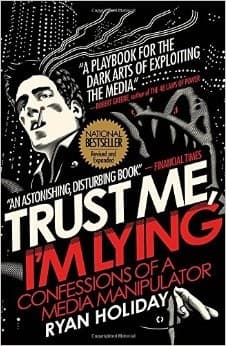
Trust Me, I'm Lying
by Ryan Holiday
A former media manipulator explains how blogs and news outlets can be steered by anyone who understands their need for attention, and why readers should care.
What It's About
Trust Me, I'm Lying is a confession from someone who spent years on the other side of the news. Holiday describes how he worked as a media manipulator, getting clients' products, causes and personal brands into blogs and newspapers by understanding what editors and writers needed: a fresh angle, a steady supply of content, and a story that would travel. The book is less a how-to than a look at an industry that had quietly reorganized itself around page views.
Holiday writes in a brisk, first-person voice, mixing anecdotes from his campaigns with observations about how outrage, exclusives and recycled posts spread online. Much of the reading is uncomfortable, because the tactics he describes depend on the same habits most readers have when they click, share and believe. He does not present himself as a reformed saint, and that ambiguity is part of the point.
The experience is closer to a tour of a backstage room than a textbook. Readers who already follow media criticism will recognize the broad outline, but the specifics of how a story gets planted, how a blogger's deadline gets exploited, and how a small item can be inflated into a national conversation make the case vivid. Expect a short, fast read that leaves you more skeptical of your own feed.
Read this if you…
- are curious how news stories get made and why certain ones spread
- want a critical look at the economics of blogs and online media
- enjoy short, sharp nonfiction that needs no background knowledge
Skip it if you…
- want a current guide to social media algorithms, since the book is anchored in the blog era
- prefer a balanced, research-heavy account of journalism rather than one insider's perspective
Key Ideas
- 1
Media runs on the need for content
Online outlets, especially blogs of the early 2010s, were judged by traffic and needed a steady stream of posts. Holiday argues that this hunger, more than any editorial plan, shaped what got covered. Writers under deadline lean on tips, exclusives and easily sourced items, which gives a well-prepared outsider leverage over the news agenda.
- 2
Exclusives are a currency to trade
A scoop is valuable to a reporter because it brings attention that others cannot get. Holiday explains how giving one outlet a story first buys goodwill and coverage, and how that leverage can be used to shape a narrative. The point is less that individual reporters are corrupt than that a system built on speed and access rewards whoever controls the first version of a story.
- 3
Outrage and attention are easily manufactured
Holiday describes how a provocative angle, a controversy or a manufactured reaction can travel further than a careful piece of journalism. Attention is the scarce resource, and emotionally charged content gets amplified by sharing and by other outlets chasing the same story. For readers, the lesson is to notice when a story seems built to make you react rather than inform you.
- 4
Why the author's confession is a warning
Holiday frames the book as an exposé written from inside the machine, and he is candid about the ethical compromises he made. The value is in seeing how the tactics work from someone who used them, not in a moral lecture. Readers should treat his account as one insider's view, while using it to become a more skeptical consumer of news and online recommendations.
Limitations
The book is rooted in the blog-driven media of the early 2010s, so its specific examples feel dated next to today's social platforms, algorithmic feeds and creator economies, though the underlying dynamics persist. Some readers find it is a single insider's account with little independent reporting or systematic evidence, and Holiday's own role makes the book partly self-serving. It also offers limited guidance on the other side of the problem, such as how newsrooms can resist manipulation.
Questions Readers Ask
- Is Trust Me, I'm Lying still relevant today?
- The specific examples come from the blog era, but the core dynamics are still visible in newsfeeds, creator platforms and the pressure on reporters to publish fast. Holiday's central point, that attention is the currency and that an organized outsider can influence coverage, translates well. Read it as a framework for skepticism rather than a snapshot of current platforms.
- Who is this book best suited for?
- It suits anyone who reads news or follows brands online, especially students of media, marketers curious about the ethics of their field and writers who want to understand how stories are shaped. It is short and direct, so it works well as a first book on the subject. Readers expecting a deep study of journalism will want something more rigorous.
- Published
- 2012
- ISBN
- 9781591846284
- Difficulty
- beginner
- Category
- Business
Book details and cover from Google Books.
Ready to read Trust Me, I'm Lying?
Get your copy on Amazon, or listen to it on Audible. We earn a commission if you buy through these links.