
We earn a commission if you buy through these links. Learn more
Trout Fishing in America
Guide by the Books of the Day editors · Updated · How we write our guides
A short, deadpan, dreamlike novel of tiny fragments that uses one fishing image to mourn an America that may never have existed, and it reads in an afternoon.
What Creators Say About Trout Fishing in America
2 creators reviewed Trout Fishing in America on YouTube between 2020 and 2022, with 869 views between them. Their opinions are their own; we picked these reviews, we didn't write them.
What It's About
Trout Fishing in America is a short, strange novel first published in 1967, and it reads less like a conventional story than like a stack of postcards, half-remembered dreams, and overheard jokes fitted together. The narrator drifts through a version of Northern California that is part real and part mythic, and the title keeps returning as a place, a symbol, and a half-remembered promise of an America with clear streams and open country.
The sections are often only a few lines or a page long, and the sentences are plain, flat, and oddly tender. Brautigan lets a practical detail sit beside a sudden lyrical image, so the book moves between the ordinary and the absurd without warning. There is less plot than mood. Its emotional logic builds through repetition and small turns rather than cause and effect, so the experience is quick, funny, and melancholy, and it rewards readers who stop expecting every section to connect neatly.
Because it is so brief, it can be finished in one sitting, but it tends to linger. Many readers close it feeling they have been let in on a private joke about longing. It belongs to the 1960s counterculture moment without being preachy, and its deadpan voice has been widely imitated since.
Read this if you…
- Enjoy short, playful fiction where mood and images matter more than plot
- Are curious about 1960s American counterculture writing and its deadpan voice
- Want a quick read that rewards slow, rereading attention
Skip it if you…
- Need a clear storyline, consistent characters, and a satisfying arc
- Find jokes that undercut sincere emotion more annoying than affecting
Key Ideas
- 1
Fishing as a symbol of lost America
The trout and the streams stand for a pastoral, unspoiled country that the narrator keeps reaching for. The book never fully settles whether that country was ever real. Its power comes from the gap between the image of clean water and the messier, more urban world the narrator actually moves through.
- 2
Fragments as the engine of the story
Brautigan builds the book from very short, self-contained sections rather than chapters that advance a plot. Each piece is a small scene, observation, or joke. Meaning accumulates through juxtaposition, so the reader assembles the larger picture from pieces that often seem unrelated at first.
- 3
Deadpan humor laced with melancholy
The narrator's flat, matter-of-fact tone makes odd events feel perfectly normal, which is often funny. Underneath the humor runs a steady sadness about loss, wandering, and the distance between hope and what is available. The tension between those two registers is central to the book's effect.
- 4
Place and myth blurred together
The title refers to a real-sounding setting, a state of mind, and a kind of longing all at once. Brautigan does not separate geography from myth, which makes the book feel like a map of a dream. Readers who want a clear sense of where they are may find this disorienting, but it is deliberate.
Limitations
The fragmentary structure is the book's main strength and its main obstacle. Readers who want character development or cause-and-effect plotting will find little of either, and the episodic style can feel slight or self-indulgent to some. Its hippie-era sensibility and nostalgic view of the American landscape have also drawn criticism as dated or romanticized. The book offers a mood and a voice rather than a full picture of its world, so it works best as an impression rather than a complete account.
Questions Readers Ask
- Is Trout Fishing in America a good first Brautigan book?
- Yes, for many readers it is a good place to start. It is short, the sentences are simple, and the structure is easy to pick up. Some readers prefer his later or more fully realized novels, but this one shows his voice and method clearly, so it works well as an introduction.
- How does it compare to other experimental American novels?
- It is much shorter and lighter than many experimental books of its era, and it relies more on humor and mood than on dense language or formal difficulty. Readers who like its fragmentary method may also enjoy other short, dreamlike American works that prize image and tone over plot.
- Published
- 1967
- ISBN
- 9780385290838
- Difficulty
- beginner
- Category
- Fiction
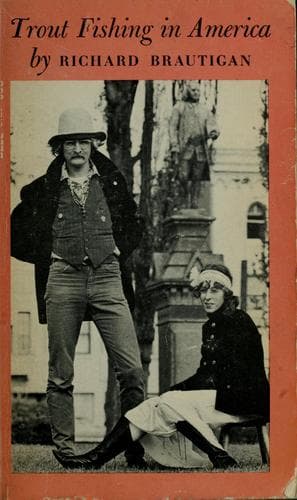
Book details and cover from Google Books.
Ready to read Trout Fishing in America?
Get your copy on Amazon, or listen to it on Audible. We earn a commission if you buy through these links.