
We earn a commission if you buy through these links. Learn more
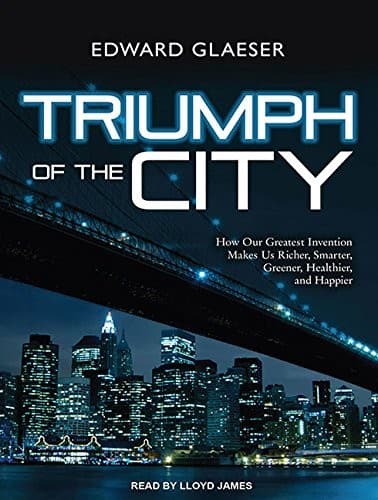
Triumph of the City
Guide by the Books of the Day editors · Updated · How we write our guides
An economist's argument that dense cities make people richer and more inventive, illustrated with vivid case studies from Mumbai, Detroit, and Medellín.
What Creators Say About Triumph of the City
2 creators reviewed Triumph of the City on YouTube between 2011 and 2014, with 11.6K views between them. Their opinions are their own; we picked these reviews, we didn't write them.
What It's About
Triumph of the City, published in 2011, is Edward Glaeser's sweeping argument that cities are humanity's most important invention. He starts from a simple observation: people cluster together because proximity makes trading goods, sharing ideas, and learning skills cheaper and faster. Where that contact is dense, knowledge compounds, and the book treats the city as a machine for turning talent into wealth.
The approach is that of an economist who thinks in incentives and tradeoffs, but the writing stays readable and focused on the story it is telling. Glaeser moves between the Old World and the New, between slums and skyscrapers, and between triumph and ruin. Much of the pleasure lies in these case studies, which carry the argument more effectively than any chart could, and in the way he keeps asking why some places flourish while others stall.
Reading it feels like being walked through a series of arguments by someone who clearly likes his conclusions but admits the tensions. It is brisk, opinionated, and sometimes provocative, especially on housing and zoning, where he is blunt about the costs of restricting construction. Expect a book that will make you look at your own neighborhood's rules, and the reasons behind them, very differently.
Read this if you…
- Want an economic case for dense cities that goes beyond urbanist sentiment
- Are curious why some cities thrive while others stagnate for decades
- Follow housing and zoning debates and want the reasoning behind the arguments
Skip it if you…
- Want a practical guide to living in or moving to a particular city
- Prefer history that focuses on culture, art, and daily street life over economic argument
Key Ideas
- 1
Density makes people more productive
Glaeser's central claim is that proximity lowers the cost of face-to-face contact, so ideas spread faster and skilled workers learn from one another. The value of a city comes less from its size than from the concentrated interaction it allows, which is why the benefits of urban living show up in wages and innovation rather than just in convenience.
- 2
Human capital drives urban success
The book treats the skills and education of a city's residents as more decisive than natural resources or old industries. Places that attract and keep talented people tend to reinvent themselves, while places that lose them struggle, even when they once had enormous advantages. This reframes urban growth as a question of who lives there.
- 3
Decline is serious but not destiny
Glaeser uses Detroit as a cautionary tale about what happens when a city loses its reason to exist and its people. He argues that policy, institutions, and choices about education and housing shape whether a city recovers, though he does not pretend reversal is easy. The lesson is that failing cities can change, but only if their leaders address the underlying causes.
- 4
Restrictive housing rules hurt everyone
Perhaps the most pointed argument is that limits on building push up prices and keep workers away from the places where they would be most productive. Glaeser makes the case that allowing more construction, especially upward, would benefit newcomers and lower-income residents, even though existing homeowners often resist it. This section will be the most debated part of the book.
Limitations
Critics argue that Glaeser underplays the real costs of density, including congestion, displacement of existing residents, and rising inequality within booming cities. Some readers also find his enthusiasm for tall, dense development too quick to dismiss environmental and neighborhood concerns. The book is also a snapshot of its moment, and several case studies have moved on since it was written, so the outcomes it describes may look different today.
Questions Readers Ask
- Is Triumph of the City still relevant today?
- Yes, especially for its core arguments about agglomeration, human capital, and housing supply, which remain central to debates about urban growth and affordability. Some specific examples and figures reflect the early 2010s, so readers should check current data on the cities discussed before drawing firm conclusions about recent trends.
- How does it compare to Jane Jacobs's The Death and Life of Great American Cities?
- Jacobs offers close observation of street life and neighborhood design, with an intuitive sense of how cities feel. Glaeser is more economic, focusing on productivity, housing markets, and policy. Readers who want the texture of everyday urban life may prefer Jacobs, while those who want the underlying economic logic will likely find Glaeser clearer and more direct.
- Published
- 2011
- ISBN
- 9780330458078
- Difficulty
- intermediate
- Category
- History
Book details and cover from Google Books.
Ready to read Triumph of the City?
Get your copy on Amazon, or listen to it on Audible. We earn a commission if you buy through these links.