
We earn a commission if you buy through these links. Learn more
Trauma and Recovery
The classic, still-essential account of how abuse and political terror wound the mind and how survivors rebuild, from a psychiatrist who takes lived experience seriously.
What It's About
Trauma and Recovery, first published in 1992, is a work of clinical psychology rather than technology, despite the category it has been filed under here. Judith Lewis Herman, a psychiatrist, draws on her work with survivors of rape, domestic violence, and childhood abuse, and sets it against the history of how society has responded to such injuries. She argues that the same patterns of response appear whether the harm happened in a family, a workplace, or a political prison, and that these injuries have repeatedly been dismissed or disbelieved.
The book is organized around a three-stage model of recovery: first establishing safety, then remembering and mourning what happened, and finally reconnecting with ordinary life. Herman is clear that the stages overlap and that people move back and forth between them. Her prose is measured and direct, closer to a careful, case-informed argument than a self-help manual. It stays with the emotional reality of symptoms like dissociation, shame, and hypervigilance without sensationalizing them.
Reading it is sobering and, for many, validating. It can feel like being handed language for something that had no name. It is not a step-by-step guide to therapy, and it is more persuasive as a map of the territory than as a practical toolkit. Expect to finish it with a clearer sense of why survivors are so often not believed.
Read this if you…
- want a serious, historically grounded account of how trauma is understood
- are a survivor, clinician, or advocate looking for language and a framework
- are interested in how social denial shapes which harms get taken seriously
Skip it if you…
- need a practical, step-by-step self-help workbook for healing
- want the latest neuroscience or current evidence on specific treatments, since the book predates much of that research
Key Ideas
- 1
Trauma as a relational injury
Herman argues that cruelty inflicted by other people, especially when it is repeated within relationships of dependence, damages a person's sense of self and their capacity to trust others. The harm goes beyond fear responses to a single threat, reaching identity, relationships, and meaning.
- 2
Complex trauma and the case for a new diagnosis
She proposed complex post-traumatic stress disorder to describe prolonged, repeated abuse, such as captivity or chronic childhood maltreatment. Her case was that the existing PTSD label, built largely around single events, fit these survivors poorly. The idea has shaped later diagnostic thinking.
- 3
Recovery in three overlapping stages
Safety comes first, then remembrance and mourning of what happened, then reconnection with ordinary life. Herman stresses that these phases are not a neat sequence, and that rushing into telling the trauma story before safety is established can do harm. The framework gives structure without promising a tidy path.
- 4
Politics and the silencing of survivors
Herman connects domestic violence, incest, war trauma, and political terror, showing how social denial repeats across them. She argues that the history of trauma is partly a history of who gets believed, and that recovery is shaped by whether a survivor's account is acknowledged by the community around them.
Limitations
Written in 1992 and centered on Western, largely American clinical settings, the book predates much later research on trauma neurobiology and on newer treatments, so readers should look elsewhere for current evidence on specific therapies. Its three-stage model has been criticized as too linear for many people's experience, though Herman herself stresses that the stages overlap. Some readers find the feminist and political framing more prominent than they expect, and the book gives less space to men, children, and people from non-Western or marginalized communities than a modern text might.
Questions Readers Ask
- Is Trauma and Recovery still relevant today?
- Yes, mainly for its framework. Herman's account of complex trauma influenced later diagnostic thinking, and the book remains widely read by clinicians and survivors. Treatment research has moved on considerably since 1992, so pair it with newer clinical reviews if you want up-to-date guidance on specific therapies.
- How does it compare to The Body Keeps the Score?
- Bessel van der Kolk's 2014 book is broader and more neuroscience-driven, aimed at a wide popular audience. Herman's book is more clinical, historical, and political, with stronger attention to social context and to the staged process of recovery. Many readers find the two complement each other well.
- Published
- 1901
- ISBN
- 9788467014730
- Difficulty
- intermediate
- Category
- Tech
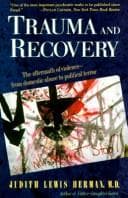
Book details and cover from Google Books.
Ready to read Trauma and Recovery?
Get your copy on Amazon, or listen to it on Audible. We earn a commission if you buy through these links.