
We earn a commission if you buy through these links. Learn more
Tobacco Road
A bleakly funny, short Depression-era novel about a Georgia sharecropping family who refuse to give up a worn-out patch of land, told with startling bluntness.
What It's About
Tobacco Road follows the Lester family, poor white tenant farmers in rural Georgia during the Great Depression. Jeeter Lester, the patriarch, clings to a played-out plot of soil that no longer yields a crop, while his household goes hungry around him. The book is less a conventional plot than a run of episodes involving neighbors, relatives, and a series of desperate schemes. Its characters often seem ridiculous, and the reader is invited to laugh before realizing the joke is on them and on the system that shaped them.
Caldwell writes in a spare, unadorned style, with short declarative sentences, heavy reliance on dialogue, and a deadpan narrator who reports cruelty and absurdity in the same flat tone. The effect is closer to comic grotesque than to earnest social protest, and it can feel shocking. The book deals frankly with sex, violence, and hunger in ways that were controversial when it appeared. Much of the dialogue uses regional dialect, which takes a few pages to settle into.
Reading it is an uneasy experience. You are rarely moved by sentiment and rarely given a hero to root for. Instead you watch people who have accepted almost nothing as normal, and you are left to weigh how much of their situation comes from character and how much from the land, the economy, and decisions made far away from it. The novel is short, so the experience is quick, but it lingers.
Read this if you…
- want a short, unsentimental novel about rural poverty that offers no easy hope
- enjoy dark comedy and grotesque, unlikable characters
- are curious how American fiction treated the rural South during the 1930s
Skip it if you…
- need likable characters or a story with a clear emotional arc
- find frank sexual content, cruelty, and heavy dialect hard to read without a payoff
Key Ideas
- 1
Land that has stopped giving back
The Lesters' soil is exhausted, and the book treats the farm as both livelihood and trap. Their refusal to leave is rooted in attachment and habit, which Caldwell presents without fully excusing or mocking them. The land becomes a kind of stubborn character in its own right.
- 2
Poverty as a source of dark comedy
The humor comes from characters whose priorities look absurd from outside: Jeeter's schemes, the family's indifference to propriety, and the way hunger shapes ordinary choices. Caldwell laughs at them and also at the reader's discomfort, which makes the comedy unsettling rather than warm.
- 3
A detached narrator and flat prose
Caldwell reports events without moral commentary. Sentences are short and often repetitive, so violence and sexual behavior arrive matter-of-factly. This restraint is the book's most distinctive feature and the reason it still reads as strange rather than merely sad.
- 4
Who is responsible for the wreckage
The novel never gives a clean answer. Individual failings, economic forces, inherited habits, and a declining farming system all sit side by side, leaving readers to decide how much weight each deserves.
Limitations
The book's portrayal of Black characters is minimal and stereotyped, and it uses period slurs that many readers find jarring today. Its satire can overwhelm its social argument, so the characters sometimes read more as caricatures than as people. The novel shows the Lester family closely but says little about the wider community or the mechanics of tenant farming and credit. Readers wanting an economic or historical account will need to look elsewhere.
Questions Readers Ask
- Is Tobacco Road still worth reading today?
- Yes, mainly as a vivid portrait of rural poverty in the Depression and as an example of a deliberately cool, comic style. It is not a reliable guide to farm economics, so readers interested in its social background may want to pair it with nonfiction about tenancy and the rural South.
- How does Tobacco Road compare to The Grapes of Wrath?
- Steinbeck's novel is earnest, sprawling, and openly political, moving toward a vision of solidarity. Caldwell's book is shorter, cooler, and more absurd. If you want hope and collective struggle, choose Steinbeck; if you want something bleak, strange, and sharply funny, choose Caldwell.
- Published
- 1932
- ISBN
- 9780451121561
- Difficulty
- beginner
- Category
- Fiction
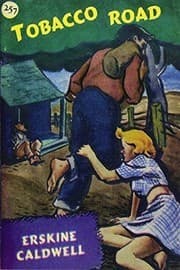
Book details and cover from Google Books.
Ready to read Tobacco Road?
Get your copy on Amazon, or listen to it on Audible. We earn a commission if you buy through these links.