
We earn a commission if you buy through these links. Learn more
Time reborn
by Lee Smolin
Smolin makes a sharp, opinionated case that time is fundamental and that modern physics has stalled by ignoring it, which makes this a provocative read even where you disagree.
What It's About
Time Reborn is Lee Smolin's argument that time is not an illusion or a bookkeeping device but a basic feature of reality, and that modern physics has gone wrong by building its most ambitious theories on the assumption that it is not. Smolin, a theoretical physicist and co-founder of the Perimeter Institute, writes from inside the field about its stalled state since the mid-1970s, when the Standard Model was largely assembled and few experiments have forced theorists to revise it.
The book is part history of ideas, part manifesto. Smolin moves between Newton, Leibniz, Einstein and quantum gravity research, asking why so many leading approaches treat the universe as a timeless whole and what that costs. The tone is conversational but opinionated. He states his positions plainly and argues against colleagues by name rather than hiding behind hedges. Expect long stretches of philosophy alongside technical explanation, with the equations kept fairly light.
Reading it feels like sitting in on a debate. Some chapters are clear enough for a determined general reader, while others assume familiarity with general relativity and quantum theory. Smolin is more persuasive when diagnosing problems than when sketching his preferred replacement, so the book works best as a provocation that sends you to other sources rather than a finished account.
Read this if you…
- want a clear, opinionated introduction to the debate over whether time is real
- are curious how working physicists argue about the foundations of their field
- already know some physics and want a provocative counterpoint to string theory enthusiasm
Skip it if you…
- want a step-by-step explanation of relativity or quantum mechanics with no philosophical detours
- prefer neutral surveys that give every position equal weight
Key Ideas
- 1
Time as a fundamental feature of reality
Smolin argues that the passage of time and the distinction between past and present are real rather than emergent or illusory. He contends that physics should start from change and becoming, not from a fixed, complete description of the universe laid out in timeless form. This single claim drives nearly everything else in the book and is where most of his disagreement with colleagues begins.
- 2
Why physics has stalled since the 1970s
Smolin looks at the decades since the Standard Model took shape and asks why theory has produced so little confirmed progress. He points to a research culture that prizes elegant mathematical frameworks, particularly string theory and its descendants, over testable predictions. His diagnosis is pointed, and readers who follow the debate will recognize the terrain even if they do not accept his conclusions.
- 3
The problem with timeless descriptions of the universe
Many quantum gravity approaches describe the cosmos as a static whole in which time is only a convenient label for relationships between states. Smolin argues this approach removes the very thing physics most needs to explain, namely why events happen in one order rather than another. The chapters on this tension are some of the most technically demanding in the book.
- 4
Laws of nature that may evolve over time
Smolin suggests that the laws of physics themselves might change or be shaped by history, rather than being fixed for all time. This idea is speculative, and he presents it as a direction for research rather than a proven result. It is the part of the book most likely to divide readers, and the one that gives it its distinctive character.
Limitations
Critics argue that Smolin overstates the failures of string theory and quantum gravity, and that his alternatives remain largely speculative. Some physicists regard the philosophical sections as repetitive or underdeveloped. The book is also a snapshot of a debate that has continued since its 2013 publication, so some of the specific research programs it discusses have since moved on. It does not offer a complete, worked-out replacement theory.
Questions Readers Ask
- Do I need a physics background to read Time Reborn?
- Not strictly, but it helps. Smolin explains the big ideas in plain language, and the general argument is accessible to an attentive reader. Some chapters on relativity, quantum theory, and quantum gravity assume you can follow basic concepts without much help, so expect to slow down or look up terms in places.
- How does Time Reborn compare with The Trouble with Physics?
- Smolin's earlier book is broader and more concerned with the sociology of the field and the case against string theory. Time Reborn narrows its focus to time and argues for a specific position on it. If you want the wider critique first, start with the earlier book, but Time Reborn is the better choice if the philosophy of time is what interests you most.
- Published
- 2013
- ISBN
- 9780547511726
- Difficulty
- intermediate
- Category
- Science
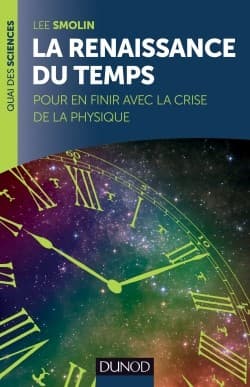
Book details and cover from Google Books.
Ready to read Time reborn?
Get your copy on Amazon, or listen to it on Audible. We earn a commission if you buy through these links.