
We earn a commission if you buy through these links. Learn more
Tigana
Guide by the Books of the Day editors · Updated · How we write our guides
A lush, politically charged fantasy about a conquered land whose very name has been erased from memory, asking what a people owes to remembrance and revenge.
What Creators Say About Tigana
2 creators reviewed Tigana on YouTube in 2020, with 64.6K views between them. Their opinions are their own; we picked these reviews, we didn't write them.
What It's About
Tigana is a secondary-world fantasy set on a peninsula modeled loosely on Renaissance Italy, a region of rival city-states, poets, merchant courts, and shifting alliances. Years before the story opens, the sorcerer-king Brandin of Ygrath conquers the eight provinces of Palm and, through a spell, strikes the name of one of them, Tigana, from the minds of everyone who was not born there. The novel follows a scattered group, including exiles, a bard, a warrior, and a woman caught between two courts, as they pursue a restoration that seems almost impossible.
Kay writes in a rich, deliberate style, with long sentences, shifting points of view, and frequent flashes back into the histories that shaped each character. Much of the pleasure lies in the texture: the music, the intrigues, the rivalries between cities, and the way ordinary people carry a loss they cannot quite name. The pace is unhurried, and the book rewards patience more than plot-driven urgency.
Reading it feels less like following a quest than like listening to a long, mournful song that keeps circling back to one question: what a homeland is when no one can say its name. It is emotionally heavy and often melancholy, written for readers who enjoy being slowly drawn in rather than thrown into action.
Read this if you…
- enjoy lush, historically flavored fantasy with a strong sense of place
- like ensemble stories that weave many viewpoints into one arc
- are interested in politics, exile, and what loyalty means under occupation
Skip it if you…
- want fast pacing, clear action, or a single hero to follow
- find lyrical, emotionally heavy prose tiring over several hundred pages
Key Ideas
- 1
Memory as the core of identity
The spell cuts people off from their own past, and the book keeps asking whether a place can survive if nobody remembers it. Kay treats names, stories, and inherited loyalty as the threads that hold a culture together, and shows how fragile those threads become under occupation.
- 2
Vengeance versus restoration
The characters argue over whether reclaiming their homeland requires revenge, and how grief hardens into a cause that can consume the people pursuing it. The novel does not offer easy answers, and it lets its heroes pay real prices for the choices they make.
- 3
Art and music as acts of resistance
Poets, singers, and craftsmen carry a culture forward when its institutions are taken away. Kay treats song and storytelling as ways a people keeps existing, and he returns often to the idea that art can outlast the rulers who try to suppress it.
- 4
An ensemble built from many viewpoints
Rather than following a single hero, the story moves among many characters, building a mosaic of private histories. This structure makes the cost of the struggle feel widely shared and gives the political story an emotional depth that a single protagonist could not supply.
Limitations
The book is long and deliberately slow, and its large cast can make the early chapters hard to track. Its Renaissance Italian inspiration is openly visible, which some readers find charming and others find too close to the source. Critics sometimes say the emotional register runs high and that the romance threads lean on melodrama. The treatment of women and gender roles reflects the book's era and source culture, and some readers find certain scenes dated.
Questions Readers Ask
- Do I need to read anything before Tigana?
- No. Tigana works as a standalone novel and is not a sequel to Kay's earlier Fionavar books. You can start here without any background in his other work, though readers who enjoy it may want to explore his later historically inspired novels next.
- How does Tigana compare to A Song of Ice and Fire?
- Both feature ensemble casts and political intrigue across rival realms. Tigana is more lyrical and centers on memory and a single lost homeland, with less of the grim brutality that defines George R. R. Martin's series and a more intimate focus on cultural loss.
- Is Tigana still worth reading today?
- Yes. Its themes of memory, occupation, and cultural survival remain relevant, and its layered characters still hold up. The prose style is more old-fashioned than much current fantasy, so it suits readers who enjoy a slower, more literary approach.
- Published
- 1990
- ISBN
- 9780140130102
- Difficulty
- intermediate
- Category
- Fiction
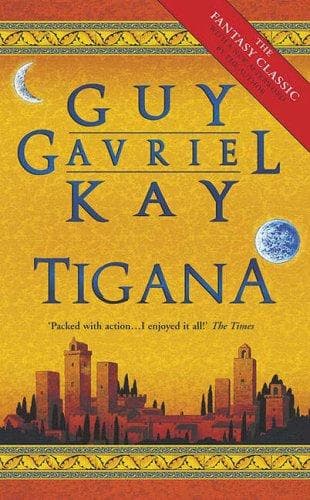
Book details and cover from Google Books.
Ready to read Tigana?
Get your copy on Amazon, or listen to it on Audible. We earn a commission if you buy through these links.