
We earn a commission if you buy through these links. Learn more
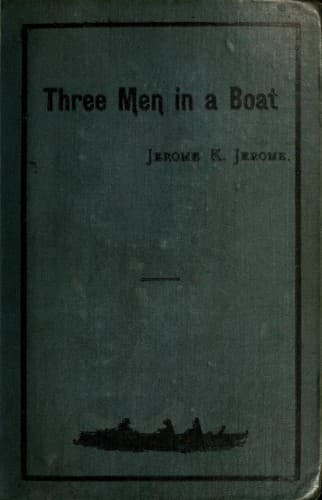
Three Men in a Boat (to say nothing of the dog)
Guide by the Books of the Day editors · Updated · How we write our guides
A Victorian comic classic in which three friends and a fox terrier make a riverboat trip up the Thames, and the digressions and self-mocking narrator are the real pleasure.
What Creators Say About Three Men in a Boat (to say nothing of the dog)
2 creators reviewed Three Men in a Boat (to say nothing of the dog) on YouTube in 2012, with 50.5K views between them. Their opinions are their own; we picked these reviews, we didn't write them.
What It's About
Three Men in a Boat follows a narrator called J., his friends George and Harris, and a fox terrier named Montmorency on a boating holiday up the Thames from London toward Oxford. It was published in 1889, and it is mostly remembered as a comic book, though it is also a portrait of late Victorian middle-class leisure.
Don't expect a tightly built plot. The book works as a string of episodes, mishaps, and detours, many of them loosely tied to the river. Jerome leans on deadpan exaggeration, mock-serious asides, lists, and a narrator who is confident about nothing, least of all his own competence. Much of the humour comes from the gap between what J. claims to be doing and what he is actually doing. Some digressions wander far from the boat, and that is intentional.
Reading it feels like sitting with an old friend who is telling you about a disastrous holiday and cannot stop adding details. The chapters are short, so it suits dipping in and out. It also reads well aloud, because its rhythms are built for it. The affection between the men is real, even when it is being gently mocked, and the dog is a constant source of trouble and delight.
Read this if you…
- Want light, funny reading that you can pick up for ten minutes at a time
- Enjoy deadpan, self-deprecating narrators who are wrong about everything
- Like travel writing that cares more about people and mishaps than scenery
Skip it if you…
- Need a story with forward momentum, a clear plot, or real stakes
- Find Victorian-era humour and rambling digressions tiresome rather than charming
Key Ideas
- 1
Comedy born from small domestic disasters
Most of the laughs come from ordinary tasks going wrong: packing, cooking, pitching a tent, managing a boat in a crowd. Jerome takes these minor frustrations and inflates them until they feel like epic struggles. The humour is recognisable to anyone who has tried to enjoy an outing and been defeated by logistics.
- 2
A narrator who undermines himself
J. presents himself as sensible and well-meaning, but his confidence keeps collapsing under his own hypochondria, vanity, and poor judgement. Readers quickly learn to trust the gaps between his claims and the evidence. This self-deprecating voice is the book's central comic engine and the reason it still feels modern.
- 3
Digression as the book's main method
The river journey is often just a frame for tangents on history, local lore, and the foibles of other people. These detours are not padding; they are where Jerome is most playful and most observant. Readers who enjoy being led off the path will find the book rewards wandering.
- 4
Affectionate friendship with gentle satire
The three men are close, loyal, and very much in each other's business, and the book treats their bond warmly. At the same time, it pokes fun at their pretensions and their habit of making every plan worse. The result is a portrait of male friendship that is teasing rather than sentimental.
- 5
Victorian leisure seen through satire
Jerome's men are self-consciously recreational, and the book gently skewers the Victorian ideal of the improving holiday. Their attempts at healthy, respectable outdoor fun keep collapsing into farce. Some of the satire lands more sharply for readers who know the period's manners.
Limitations
The book's humour is very much of its time, and some jokes rely on Victorian manners and references that modern readers may not recognise without help. The episodic structure means energy rises and falls, and some digressions drag for readers who want the boat trip to stay central. Gender and class attitudes reflect the period, and women are largely peripheral. Some critics find the slapstick repetitive over the book's length, and the dog's antics can wear thin for those who do not enjoy animal comedy.
Questions Readers Ask
- Is Three Men in a Boat still funny today?
- For many readers, yes. The narrator's self-deception, the escalating small disasters, and the deadpan asides still work well. Some references and social conventions are dated, so a few jokes may need a moment of explanation. The humour depends more on character and tone than on period topicality, which is why it has lasted.
- How does it compare to P.G. Wodehouse?
- Both are comic writers with a gift for the self-deluded narrator, but Wodehouse usually offers tighter plotting and more polished dialogue. Jerome is looser and more episodic, with the river trip acting as a loose frame for digressions. If you enjoy Wodehouse's voice, you will probably enjoy this, but expect a more wandering structure.
- Published
- 1889
- ISBN
- 9798454570248
- Difficulty
- beginner
- Category
- Fiction
Book details and cover from Google Books.
Ready to read Three Men in a Boat (to say nothing of the dog)?
Get your copy on Amazon, or listen to it on Audible. We earn a commission if you buy through these links.