
We earn a commission if you buy through these links. Learn more
Those shoes
A short, emotionally direct picture book about a boy who badly wants one pair of shoes and what that longing teaches him and the people who love him.
What It's About
Those Shoes is a picture book for early elementary readers, and most adults will finish it in minutes. The story follows a young boy whose family has little money and who has set his heart on a pair of boots that his classmates all seem to have. Boelts keeps the scope small on purpose: the drama lives in ordinary moments at home and at school, where wanting something and not being able to afford it can feel enormous.
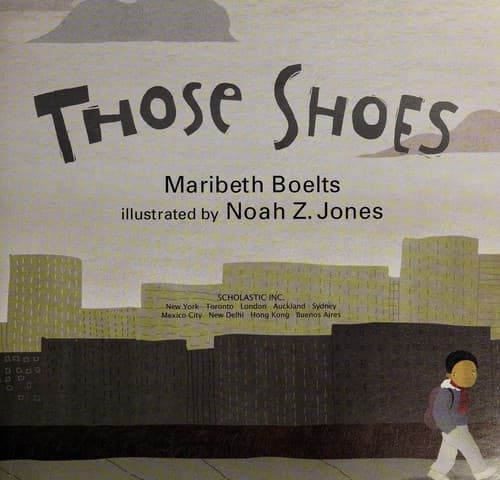
The writing is spare and plain, with short sentences that a child can read aloud and an adult can read without feeling talked down to. Boelts does not moralize at length. Instead she lets the emotional situation carry the weight, trusting young readers to notice what the characters feel even when no one says it outright. Noah Z. Jones's illustrations do much of the quiet work, and the pictures often show what the words leave unsaid.
Reading it is less like being told a lesson and more like sitting with a child through a hard week. It works well as a read-aloud for families and classrooms, and it opens natural conversations about money, fairness, and generosity without forcing them. Adults should expect a gentle, brief experience rather than a complex one, and that is part of its appeal.
Read this if you…
- want a gentle picture book that opens conversations about money and fairness
- are reading aloud to a child who is starting to notice differences in income and possessions
- want a short, emotionally honest book for a classroom or family library
Skip it if you…
- want bright, playful, or silly picture books with lots of humor
- need a book that states its lesson clearly or has a fast-moving plot
Key Ideas
- 1
Wanting something you cannot have
The core of the book is the ache of desire when a purchase is out of reach. Rather than treating the boy's longing as a flaw to correct, the story takes it seriously. Young readers who have felt left out of a trend will recognize the feeling, and adults can use it to talk about why some wants feel so urgent to children.
- 2
How family money shapes daily life
The book shows financial strain through small, concrete details rather than explanation. Decisions about what the family can buy ripple into school, friendships, and the boy's sense of himself. It gives children a way to see that money limits are real without turning the story into a lecture about poverty.
- 3
Kindness that involves real sacrifice
Generosity in this book is not free. Choices about sharing or giving up something one wants carry a genuine cost, which makes them more meaningful than easy gestures. The theme invites readers to ask what kindness actually asks of a person, and whether it still counts when it hurts a little.
- 4
Restraint as a storytelling choice
Boelts and the illustrator trust the reader to fill gaps. The understatement means the emotional payoff depends on what is implied, not stated. This makes the book a good example for older children and adults interested in how a short picture book can say a lot with very few words.
Limitations
The book is brief and quiet, which some readers find too understated, especially those who want more plot or a fuller resolution. Its focus on one family's financial strain is narrow, and it does not explore the wider causes of poverty or the experience of families who face these pressures over many years. Some parents may find the emotional tone heavy for very young children, and the school setting it depicts may not match every child's experience.
Questions Readers Ask
- Is Those Shoes suitable for young children?
- Yes, it is aimed at early elementary readers and works well for roughly ages four to eight, both as a read-aloud and for independent readers ready for short text. Because it deals with a child feeling left out over money, it is best read with room for questions afterward. Parents who want something lighter might start with a playful picture book first.
- Is it a good book for teaching about money and fairness?
- It can be, because it shows financial limits from a child's point of view without lecturing. It works better as a starting point for conversation than as a full lesson. Asking what the boy wants, how his family decides what to buy, and how he feels can get more out of a single reading.
- Published
- 2007
- ISBN
- 9780545117890
- Difficulty
- beginner
- Category
- Children's Books
Book details and cover from Google Books.
Ready to read Those shoes?
Get your copy on Amazon, or listen to it on Audible. We earn a commission if you buy through these links.