
We earn a commission if you buy through these links. Learn more
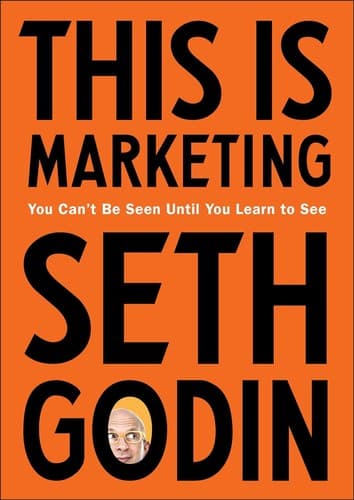
This is marketing
by Seth Godin
Guide by the Books of the Day editors · Updated · How we write our guides
Seth Godin reframes marketing as the work of choosing who you serve and earning their trust, in short, practical essays that reward slow rereading.
What Creators Say About This is marketing
2 creators reviewed This is marketing on YouTube in 2020, with 75.8K views between them. Their opinions are their own; we picked these reviews, we didn't write them.
What It's About
This Is Marketing is Seth Godin's argument that marketing is less about selling and more about deciding who you are making something for, and then earning their trust. Instead of a playbook of tactics, he offers a run of short, self-contained essays, many only a page or two, that circle back to the same handful of questions. The result reads more like a series of provocations than a textbook, and you can open it at any point.
The style is deliberately plain and conversational. Godin writes in short sentences, uses few charts or case studies, and asks you to think about your own work rather than copy someone else's. Much of the book is about mindset: how to pick a small group of people you can truly serve, how to make things worth talking about, and why generosity and consistency beat volume. Expect to nod along, then pause and ask whether you are doing the thing you just agreed with.
Reading it feels less like studying a subject and more like being nudged by a persistent, opinionated mentor. Some passages land as obvious, others as challenging, and the repetition is part of the design, with each return to empathy or permission adding a layer. If you are looking for step-by-step instructions on ads, algorithms, or funnels, this will feel thin. It is built to change how you approach the work, not to hand you a checklist.
Read this if you…
- run a small business, freelance practice, or nonprofit and want to market without feeling sleazy
- want a short, mindset-level book you can finish in an evening and revisit later
- are tired of hype and want a grounded view of trust, audience, and attention
Skip it if you…
- need concrete tactics for ads, search optimization, social platforms, or analytics
- prefer dense, evidence-heavy books full of research, data, and detailed case studies
Key Ideas
- 1
Marketing starts with a specific group of people
Godin argues that trying to reach everyone guarantees reaching no one. The book pushes you to define a small audience you can genuinely help, and to measure success by how well you serve them rather than by how many people you touch. The idea is less about targeting tools and more about the discipline of deciding who the work is for.
- 2
Earning permission before asking for attention
Attention is scarce, and people only want to hear from you when they have agreed to it in some sense. Godin explores how marketing built on consent, anticipation, and relevance outperforms interruption. The key shift is treating the audience's time and trust as something you borrow and must repay with value.
- 3
Stories that help people see themselves
People choose products and ideas that fit their identity, worldview, and the story they want to tell about themselves. The book suggests that the narrative around a thing often matters as much as the thing itself. Marketers, in this view, are less like advertisers and more like authors of meaning for the people they serve.
- 4
Empathy as the core professional skill
The book's central claim is that good marketing depends on seeing the world through other people's eyes. Godin treats empathy not as a soft virtue but as a practical skill that shapes what you make, how you describe it, and whom you choose to serve. Much of the text is a sustained exercise in noticing perspectives you would otherwise miss.
- 5
Showing up consistently as an ongoing practice
Rather than treating marketing as a campaign with a start and end, Godin frames it as a habit of regular, generous, well-considered work. Consistency builds trust over time in a way that bursts of effort rarely do. The idea is encouraging for small creators and businesses that cannot outspend larger rivals.
Limitations
Critics note that the book is light on evidence and specifics, and many of its claims rest on the author's own experience and observation. Its repetitive, aphoristic style is inspiring to some readers and padded to others. It says little about the mechanics of modern digital marketing, measurement, budgets, or running marketing inside large organizations. The advice also assumes a degree of freedom to choose your audience that not everyone has, and it can read as optimistic about how reliably generosity pays off.
Questions Readers Ask
- Is This Is Marketing useful if I have no marketing background?
- Yes. The book is written for a general reader and avoids jargon, so it works well as a first marketing book. Experienced marketers may find much of it familiar, but it still offers a useful reset on who the work is for and why it matters.
- Is This Is Marketing still relevant given how much marketing has changed?
- The core ideas about trust, audience choice, and attention hold up better than the specific channels discussed. Readers should treat any references to platforms or tools as dated context and focus on the underlying questions about whom you serve and how you earn their attention.
- Published
- 2018
- ISBN
- 9780525540830
- Difficulty
- beginner
- Category
- Business
Book details and cover from Google Books.
Ready to read This is marketing?
Get your copy on Amazon, or listen to it on Audible. We earn a commission if you buy through these links.