
We earn a commission if you buy through these links. Learn more
This House of Sky
by Ivan Doig
Ivan Doig's memoir of growing up on Montana's high plains with a sheepherding father and a formidable grandmother, written with a novelist's ear for place and voice.
What It's About
This House of Sky is Doig's memoir of his boyhood in a small community on the Montana plains, where he was raised largely by his father, Charlie, a sheep man, and his grandmother Bessie. It is a memoir rather than a novel, though Doig's novelist's instincts are everywhere in it. The book treats the family not as a sentimental portrait but as a set of working relationships shaped by weather, money, and the distance between towns.
Doig writes in a voice that moves easily between close observation and reflection. He is less interested in a neat arc than in how a place and a family got into a person, so the book is built more from scenes, sayings, and sharp portraits than from a straight chronology. The prose is patient and exact, and it rewards slow reading, especially for anyone who has never seen the wide, windy country he describes.
Reading it feels less like following a life story than like sitting in a kitchen while someone who knows the country talks about the people who shaped him. Some passages are funny, some are quietly grieving, and the difficult, affectionate bond between a son and a father who was hard to know gives the book its weight. It works best as an act of remembering rather than as a documentary of the era.
Read this if you…
- love place-based memoir and writing about rural America
- want to understand the Mountain West beyond the cowboy stereotype
- liked Doig's fiction and want to see where his material came from
Skip it if you…
- need a tightly structured narrative with a clear arc and momentum
- are looking for a broad history of Montana or of the sheep industry
Key Ideas
- 1
Place as the force that shapes people
Doig argues that the high, open landscape of his childhood did not just form the background of his life but set its terms. Distance, isolation, and the constant presence of weather determined what people valued, how they spoke, and what they expected from one another. The book makes the reader feel how a town of a few families can be a world, and how leaving it is never entirely a clean break.
- 2
A father who is hard to know
Charlie Doig is the emotional center of the book, and Doig does not pretend to fully understand him. The memoir circles his father's reticence, his work, and his choices, asking what a child can know about a parent's inner life. The result is a portrait built from partial evidence, which makes it more honest and more moving than a tidy reconciliation would have been.
- 3
Work, weather, and the economics of ranch life
Sheep and ranch work run through the book as a daily reality rather than a picturesque backdrop. Doig shows how money was tight, how livelihoods depended on forces no one controlled, and how labor structured family life. Readers who want a sense of what a working rural household actually involved will find this one of the book's most useful threads.
- 4
Memory as careful reconstruction
Doig is aware that recollection is selective and that a child's view is incomplete. He returns to scenes and sayings with a writer's suspicion of easy meaning, which gives the book a reflective quality. Readers interested in how autobiography is made, not just what it contains, will find the choices he makes instructive.
Limitations
The memoir is narrow by design. It speaks from the vantage point of one white ranching family and says relatively little about the Indigenous communities whose land surrounded that world, or about the wider social forces around them. Its pace is unhurried, and some readers will find the emotional restraint frustrating rather than moving. It also reflects the late-1970s moment in which it was written, so readers should not expect a current account of the region.
Questions Readers Ask
- Is This House of Sky a good starting point for Ivan Doig?
- It can be. The memoir gives context for the themes of place, family, and work that run through his novels, such as English Creek and Dancing at the Rascal Fair. Readers who prefer fiction may want to start with a novel, then return to this book for the real-life roots of his material.
- How does it compare to Wallace Stegner's Wolf Willow?
- Both are memoirs of prairie childhoods, and both are attentive to landscape and history. Stegner is more reflective and historically wide-ranging, while Doig is warmer, more concrete, and more focused on his family. Readers who enjoy one will likely appreciate the other.
- Is it still worth reading today?
- Yes, especially for the portrait of a family and a landscape that rarely appear in mainstream memoir. The economics of sheep ranching have changed a great deal, but the book's concerns with work, distance, and parental silence remain relevant to many readers.
- Published
- 1978
- ISBN
- 9781299882294
- Difficulty
- intermediate
- Category
- Biographies
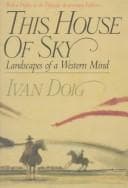
Book details and cover from Google Books.
Ready to read This House of Sky?
Get your copy on Amazon, or listen to it on Audible. We earn a commission if you buy through these links.