
We earn a commission if you buy through these links. Learn more
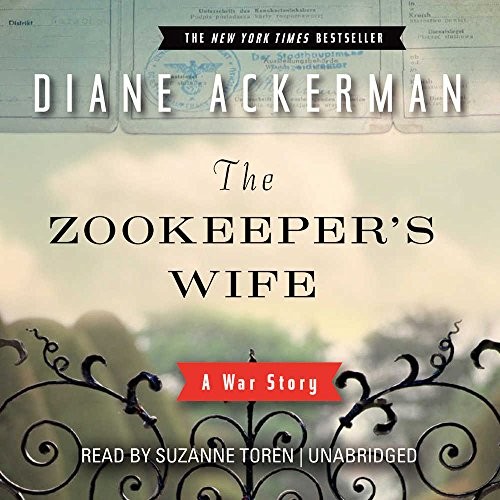
The Zookeeper's Wife
A true wartime story of a Warsaw zookeeper and his wife who sheltered Jews among the animals, told with unusual tenderness and close attention to daily risk.
What It's About
The Zookeeper's Wife follows Antonina and Jan Żabiński, who ran the Warsaw Zoo before and during the German occupation of Poland. After the zoo was damaged in the 1939 bombing and later turned to the occupiers' purposes, the couple began sheltering Jews in their villa on the grounds and in empty animal enclosures, working with the resistance to move people out of the city.
Diane Ackerman, a poet and naturalist writer, tells the story in lyrical, close-up prose that moves between the zoo's animals and the family's daily dangers. Much of the emotional texture comes from Antonina's diary, which Ackerman uses as a central source, and she often imagines scenes and inner states that no record can confirm. The result reads more like a novel than a historical monograph, though the events themselves are real.
Expect a gripping, humane read rather than a dense analysis of the occupation. The book offers little military or political context and is best approached as a portrait of one household and the moral choices it faced. That focus makes it a good entry point into Holocaust rescue narratives, and it rewards readers who enjoy nature writing as much as history.
Read this if you…
- Want a human-scale Holocaust story rather than a sweeping history of the war
- Enjoy nature writing and lyrical prose that pays close attention to animals
- Are curious about ordinary people who chose to help Jews under occupation
Skip it if you…
- Want a rigorous, source-by-source historical account with full scholarly apparatus
- Find invented dialogue and imagined interior scenes distracting in nonfiction
Key Ideas
- 1
Ordinary care as moral resistance
Ackerman shows how small, daily acts of attention, such as feeding, cleaning, and keeping routines going, became the means of saving lives. The book argues that resistance often looks domestic and unglamorous, carried out by people who had no formal power and no wish to be heroes.
- 2
Animals as cover and as a mirror
The zoo gave the family a plausible reason for moving through the grounds and for keeping strange sounds and visitors around. Ackerman also uses the animals to reflect the regime, especially through the story of a zoo director who collaborated with Nazi breeding schemes.
- 3
A marriage working as a team
Antonina and Jan divide the work of rescue between them, with her often at the center of the hidden network and him handling the zoo's public and official duties. The partnership, with its quiet courage and disagreements, is one of the book's strongest threads.
- 4
Rescue as improvised logistics
The book shows rescue as a constant problem of hiding places, false papers, timing, and trust. Ackerman keeps the focus on how fragile these arrangements were, and how much depended on a few people willing to take risks for strangers.
Limitations
Critics have questioned how much of the book is reconstruction, since Ackerman fills gaps in the record with imagined scenes and conversations, and some readers find the prose too sentimental for the subject. The book is also thin on the wider occupation, the resistance structure, and the wartime politics surrounding Poland. Readers wanting that context will need to look to other histories. Its portrayal of some figures is necessarily limited by what sources survive.
Questions Readers Ask
- Is The Zookeeper's Wife a true story?
- Yes, it is based on the real Warsaw Zoo and the Żabiński family, who hid Jews during the occupation. Ackerman draws heavily on Antonina's diary, but she also imagines scenes and dialogue to fill gaps, so it is best read as narrative nonfiction rather than a strict documentary record.
- Should I read it before the 2017 film?
- Reading the book first gives you more of the family's inner life, the zoo's history, and the animal-centered detail that the film only touches on. The film is more streamlined and emotionally direct, so the book is the richer experience if you have time for it.
- Published
- 2008
- ISBN
- 9781594132964
- Difficulty
- beginner
- Category
- History
Book details and cover from Google Books.
Ready to read The Zookeeper's Wife?
Get your copy on Amazon, or listen to it on Audible. We earn a commission if you buy through these links.