
We earn a commission if you buy through these links. Learn more
The Yearling
A patient, unsentimental coming-of-age novel about a Florida boy, a fawn he raises, and the hard choices of frontier life, with prose that rewards slow reading.
What It's About
The Yearling follows Jody Baxter, a boy growing up on a remote homestead in the Florida backwoods, where his family lives close to hunger and weather. His father, Penny, is a quiet, hardworking man, and his mother is a sharp, practical woman who keeps the household running with little patience for sentiment. Jody's world is the surrounding scrub, the creek, and the animals that share it, and the book spends most of its time there, watching a child learn what it means to care for something when caring has a real cost.
The style is patient and sensory. Rawlings writes long, unhurried passages about the land, the seasons, hunting, planting, and the daily labor of a farm that barely feeds itself. Her dialogue carries the rhythms of rural speech, and the narration sometimes moves into the minds of the adults, so you hear them talking about Jody as much as to him. Reading it feels like sitting on a porch with someone who knows the place intimately and has no interest in hurrying.
It is a book about responsibility more than adventure. Jody's attachments test his sense of fairness, and the family's survival keeps forcing choices that a child should not have to make. The result is less a plot you race through than a slow buildup of small decisions, each carrying more weight than it first appears.
Read this if you…
- want a slow, immersive portrait of rural life and a child growing up in it
- are comfortable with a book where the land and daily work set the pace
- want a classic coming-of-age novel that treats young readers' feelings seriously
Skip it if you…
- need fast plot, constant suspense, or a clear forward drive
- find long descriptive passages and regional dialect tiring
Key Ideas
- 1
Childhood measured against survival
The family's need for food and labor shapes what Jody is allowed to feel. Affection is never free in this household, and the book keeps asking what a child owes to a family that has little to spare. Its emotional weight comes from that constant pressure rather than from any single dramatic event.
- 2
Affection as a form of responsibility
Loving an animal means taking on obligations: feeding it, protecting it, and accepting that it may not stay. Jody learns that tenderness and duty are tied together. The book treats this lesson seriously rather than as a sweet moral, which is why it lingers.
- 3
Nature as both provider and hard teacher
The land feeds the Baxters and also takes from them. Rawlings describes the woods with precision and without sentimentality, so the natural world reads as indifferent, not cozy. Much of Jody's education comes from watching how plants, animals, and weather behave on their own terms.
- 4
Parents seen through a child's uneven eyes
Jody's understanding of his mother's severity and his father's quiet strength shifts over the course of the book. The novel is effective at showing how a child misreads adults, and how those readings change as he grows. Adult readers often find the parental stories as absorbing as Jody's own.
- 5
Regional voice and sensory texture
Rawlings builds the novel from close attention to rural Florida speech, customs, and daily routines. This texture is the main pleasure of the book. It makes the setting feel lived in, though it also means the prose asks for patience from the first chapter.
Limitations
Some readers find the dialect and attitudes of the rural characters dated, and the treatment of animals and violence is hard to read for many people. Women's roles are narrow by modern standards. The book covers one family in one place, so it offers little view of the wider world. Rawlings drew on her own time in rural Florida, and some critics have questioned how much of that life she romanticized. Its pace will also feel slow to readers used to contemporary fiction.
Questions Readers Ask
- Is The Yearling suitable for children?
- It is often assigned to middle-grade and high-school readers, and many children read it happily. Its content, including animal death and hard family choices, is more serious than typical children's fiction, though. Parents may want to read it alongside a younger child, and adults often find it richer on a second reading than on a first.
- How does The Yearling compare to Old Yeller?
- Both are about a boy and an animal on a frontier farm, and both deal with hard lessons. The Yearling is longer, slower, and more interested in the family and the land than in a single emotional arc. Readers who want a shorter, more direct story may prefer the other book, while those who like immersive setting usually prefer this one.
- Published
- 1938
- ISBN
- 9781439194799
- Difficulty
- intermediate
- Category
- Fiction
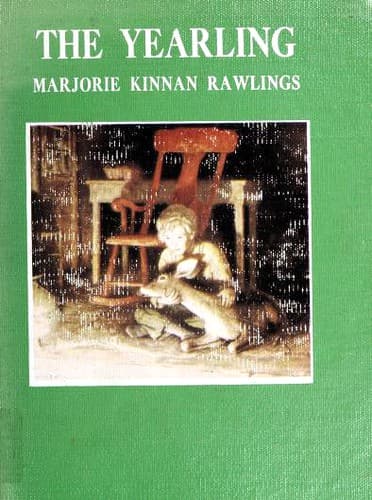
Book details and cover from Google Books.
Ready to read The Yearling?
Get your copy on Amazon, or listen to it on Audible. We earn a commission if you buy through these links.