
We earn a commission if you buy through these links. Learn more
The Wonderful Wizard of Oz
On screen: The Wizard of Oz (film, 1939) · Wicked (film, 2024)
Guide by the Books of the Day editors · Updated · How we write our guides
A brisk, inventive 1900 children's fantasy that works as a gentle American fairy tale, with a memorable cast and a warm argument that cleverness and kindness beat menace.
What Creators Say About The Wonderful Wizard of Oz
2 creators reviewed The Wonderful Wizard of Oz on YouTube in 2017, with 1.8M views between them. Their opinions are their own; we picked these reviews, we didn't write them.
What It's About
The Wonderful Wizard of Oz is a short children's fantasy first published in 1900, and it reads more like a sequence of linked episodes than a tightly built novel. A Kansas girl named Dorothy is carried by a storm into a strange land of odd people and stranger creatures, and she sets out along a yellow road toward a famous city, collecting companions as she goes. L. Frank Baum wrote it as a deliberately modern fairy tale, trading the grim menace of older European stories for wonder, gentle humor, and the sense that good sense and kindness matter more than cruelty.
The prose is plain and quick, with short chapters that each pose a new problem and resolve it. Nobody here is a deep psychological study. The pleasure comes from the inventiveness of the set pieces and the easy rhythm of the travel. The original illustrations by W. W. Denslow, when you find an edition that includes them, are part of the experience and give the book a storybook feel that later films have largely overwritten in many readers' minds.
Reading it as an adult is different from reading it as a child. You notice how often the travelers discover that the qualities they wanted were already within them, and how the book plays with the distance between a grand public image and the ordinary person behind it. It can be finished in an evening or two, and it rewards a reader who accepts its loose, wandering shape.
Read this if you…
- enjoy classic fantasy built on wonder, invention, and gentle humor rather than dark stakes
- want a short, quick read that works well for reading aloud to a child
- are curious about the roots of American children's fantasy and how it differs from older European fairy tales
Skip it if you…
- need a tightly plotted novel with a steady escalation of danger and character development
- are looking for a complex heroine with deep inner conflict or a richly drawn ensemble
Key Ideas
- 1
Wishes that were already fulfilled
Several of Dorothy's companions set out believing they lack something essential, such as a brain, a heart, or courage. The book keeps suggesting that the capacities they want are already theirs and only need to be recognized and used. It is a gentle lesson in self-belief that avoids preaching, because the characters learn it through action rather than speeches.
- 2
A capable heroine who solves problems
Dorothy is not a passive child waiting to be rescued. She makes decisions, keeps her head in tight spots, and holds the group together with ordinary good sense and loyalty. Baum gives her few traits beyond kindness and practicality, but that plainness is part of her appeal and makes her an easy figure for young readers to follow.
- 3
Appearances versus the person behind them
The Emerald City and its ruler are built up through rumor and spectacle, and the journey slowly deflates that spectacle. The book is playful about authority and about the tricks that make powerful people seem larger than they are. This theme gives the adventure a satirical edge that adults often notice more than children do.
- 4
An episodic, wonder-first structure
Rather than building toward one dramatic climax, the story moves from encounter to encounter, each with its own strange setting and small obstacle. This structure keeps the pace brisk and the imagination busy. Some readers find it loose, but it suits a book meant to be read aloud, and it explains why the adventure feels more like a sequence of vivid scenes than a single arc.
Limitations
The episodic plot can feel loose to modern readers used to tightly structured fantasy, and the characters are sketched rather than fully developed. Some depictions of the people of Oz, especially the Munchkins, lean on simple, patronizing stereotypes that read poorly today. The book also does not explore its own world in depth; much of its texture is left to imagination. Baum wrote many sequels, and the original is best appreciated as a self-contained, lighter book rather than the start of a sprawling saga.
Questions Readers Ask
- Is The Wonderful Wizard of Oz still worth reading today?
- Yes, especially if you want a short, inventive fantasy with a clear sense of humor. Its prose is simple and its episodes are vivid, so it holds up as a read-aloud or a quick adult read. Be prepared for dated portrayals of some characters, and read it as a historical children's book as much as an adventure.
- How is the book different from the 1939 movie?
- The film changed a great deal, including the magical footwear, which is silver in the book rather than ruby, and it added songs and a more tightly shaped story. The book is plainer, more episodic, and less sentimental. Many readers are surprised by how different the original feels once the film's imagery is set aside.
- Who is this book best suited to?
- It suits younger readers, parents reading aloud, and adults who want a light, quick break with classic fantasy. It is less suited to readers who expect modern pacing, deep character arcs, or complex worldbuilding. Its charm lies in its simplicity and sense of wonder rather than in intricate plotting.
- Published
- 1899
- ISBN
- 9798538967940
- Difficulty
- beginner
- Category
- Fiction
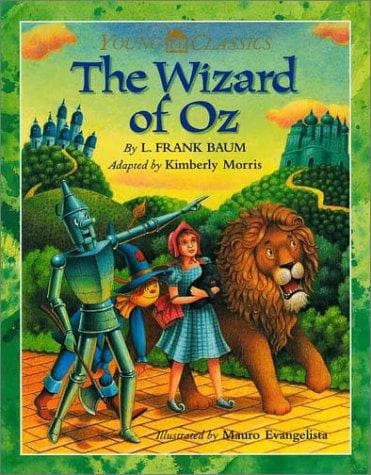
Book details and cover from Google Books.
Ready to read The Wonderful Wizard of Oz?
Get your copy on Amazon, or listen to it on Audible. We earn a commission if you buy through these links.