
We earn a commission if you buy through these links. Learn more
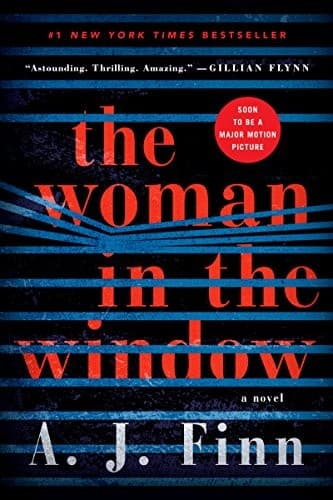
The Woman in the Window: A Novel
by A. J. Finn
A tense, twisty thriller built on an unreliable narrator, a housebound psychologist, and a suspected murder across the street, best for readers who want a fast, unsettling page-turner.
What It's About
The Woman in the Window follows Anna Fox, a former child psychologist who has not left her New York townhouse in months. She fills her days with wine, old films, and a habit of watching the people across the street through her camera lenses. When she believes she sees something violent happen in a neighbor's home, she tries to raise the alarm, and almost no one takes her seriously.
Finn builds the book as a page-turner, with short chapters, sharp cliffhangers, and a claustrophobic first-person voice. The novel openly borrows from Hitchcock's Rear Window, and readers who know that film will enjoy spotting the echoes, though the book takes its own turns. Much of the pleasure comes from the growing sense that Anna's perception may not be trustworthy, so each new piece of evidence arrives shadowed by doubt.
Reading it feels like being pulled along on a nervous late-night binge: quick to finish, often unsettling, and more interested in suspense than in literary depth. The characters are sketched broadly, and the prose favors momentum over texture. It rewards readers who want a tense, twisty evening rather than a slow study of a single mind.
Read this if you…
- enjoy fast, twisty psychological suspense with short chapters
- like unreliable narrators and want to question what you are reading
- love Hitchcock-style thrillers such as Rear Window
Skip it if you…
- want a deep character study or literary, richly textured prose
- find plot twists that stretch plausibility or dislike being unsure of the narrator's reliability
Key Ideas
- 1
Unreliable narration as the engine
Anna's medication, drinking, and fear cloud what she sees and remembers. The book keeps you inside her uncertainty, so you are never fully sure whether the events she reports happened as she describes them, and that doubt drives the suspense more than any single clue.
- 2
Watching and being watched
The novel is preoccupied with surveillance, voyeurism, and the way a window turns private family life into a spectacle. Anna is both an observer and an object of observation, and the book asks how much a person can really know about the lives they only glimpse from a distance.
- 3
Confinement as both premise and wound
Anna's agoraphobia is not just a plot device. Her house becomes a psychological prison, and her isolation shapes how others dismiss her. The story treats fear and confinement as things that distort judgment, which gives the thriller an emotional core beneath the mystery.
- 4
Homage to classic suspense
Finn draws on mid-century thriller conventions, including the imperiled woman no one believes and the witness who looks like the least credible person in the room. Readers who love those old films will recognize the choreography, even as the book leans into modern psychological twists.
- 5
Distrust of the people meant to help
Police, family, and acquaintances repeatedly brush Anna aside, which deepens both her isolation and your frustration. That pattern keeps the tension rising, because you share her sense that the truth is being ignored by everyone around her.
Limitations
Critics often point to plot twists that strain believability and to a middle section that repeats the same beats of watching, doubting, and being dismissed. The characters around Anna are functional rather than fully developed, and the prose is serviceable more than memorable. Readers who have encountered the premise in other domestic thrillers may find the mechanics familiar. The book is also more interested in misdirection than in exploring agoraphobia or trauma in depth.
Questions Readers Ask
- Is The Woman in the Window worth reading if I have already seen the film?
- The 2021 film adaptation starring Amy Adams follows the basic setup, but it changes details and cannot match the book's access to Anna's thoughts. The novel's first-person voice makes her doubts more intimate and makes the reader's uncertainty feel more personal. If you enjoyed the film, the book offers a different, more internal version of the same tension.
- How does it compare to Gone Girl?
- Both are twisty domestic thrillers built on unreliable narrators, and both are quick, plot-driven reads. Gone Girl is sharper in its satire of marriage and its characterization, while this book is more claustrophobic and more openly indebted to classic suspense films. If you want a sly, character-driven twist, Gone Girl may suit you better. If you want an old-fashioned thriller with a modern edge, this one fits.
- Published
- 2017
- ISBN
- 9786059441643
- Difficulty
- beginner
- Category
- Fiction
Book details and cover from Google Books.
Ready to read The Woman in the Window: A Novel?
Get your copy on Amazon, or listen to it on Audible. We earn a commission if you buy through these links.