
We earn a commission if you buy through these links. Learn more
The Wealthy Barber
Guide by the Books of the Day editors · Updated · How we write our guides
A short, friendly introduction to saving, debt, and protection that gets beginners moving, though its Canadian tax details now need checking.
What Creators Say About The Wealthy Barber
2 creators reviewed The Wealthy Barber on YouTube between 2016 and 2021, with 31K views between them. Their opinions are their own; we picked these reviews, we didn't write them.
What It's About
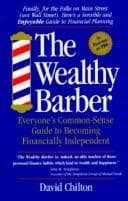
The Wealthy Barber is a short personal finance book written as a light parable. Its narrator is a financial planner who keeps hearing the same question from clients and friends: why do some people with ordinary incomes end up comfortable while others earning more never get ahead? The answer comes through a series of conversations, framed around everyday scenes, that gradually build a plan for saving, spending, and protecting a household.
The tone is friendly and playful, with simple examples rather than spreadsheets. The chapters are short, so the book is easy to finish in a sitting or two, and you don't need any finance vocabulary beforehand. Chilton leans on basic arithmetic to make the case for starting early, and the sections on debt and everyday spending are the most practical parts.
Reading it feels like being walked through a set of habits by a patient, slightly cheeky guide. It rewards a reader who wants a first framework and a push to act, and it is less useful as a source of detailed strategy. Because it comes from a Canadian context, the registered account and tax details need checking against your own country's rules.
Read this if you…
- want a short, friendly starting point for personal finance
- have never saved much and need a push to begin
- prefer a practical, human tone over spreadsheets and jargon
Skip it if you…
- already invest and want detailed portfolio or asset allocation strategy
- need current tax-advantaged account rules for a country outside Canada
Key Ideas
- 1
Pay yourself first
Treat saving as a fixed bill rather than money left over at the end of the month. Setting a set amount aside on payday, before discretionary spending, changes the default outcome. The book argues that many people who struggle to save are not short of income but of a system that makes saving optional.
- 2
Time does more work than amount
Starting early matters more than starting big. Money left to grow over decades benefits from compounding, so modest early contributions can outpace larger ones made late. The book uses simple illustrations to make this concrete, and it is the strongest case in the book for acting in your twenties or thirties.
- 3
Debt as a drag on everything
Consumer debt, especially at high interest, works against saving because its payments compete with every other goal. Chilton treats paying down expensive debt as something close to a guaranteed return, and he frames the choice between buying and borrowing in plain terms rather than as a matter of lifestyle judgment.
- 4
Protecting income and family
Savings only help if a household can survive a bad event. The book covers the basics of insurance and simple estate planning, such as having a will and naming beneficiaries, and argues that these belong to the same plan rather than being a concern for later life.
Limitations
The most obvious limitation is age and jurisdiction. The book was written for a Canadian audience and reflects the tax rules and interest rate environment of its time, so registered plans and examples need checking against current rules and your country's system. It is also deliberately simple. It offers principles rather than an investment plan, says little about index funds, asset allocation, or retirement withdrawals, and will not replace advice tailored to your income and family. Some readers find the parable framing and jokes more padded than helpful.
Questions Readers Ask
- Is The Wealthy Barber still worth reading today?
- Yes, for its core habits: saving first, avoiding high-interest debt, starting early, and putting basic protection in place. These principles don't expire. The specific numbers, Canadian account types, and market assumptions are dated, so treat the book as a framework and verify the details before acting on them.
- How does it compare to The Millionaire Next Door?
- The Wealthy Barber is a lighter, more practical how-to with a warm narrative voice. The Millionaire Next Door is more research-driven and focuses on the habits and profiles of wealthy households, mostly in the United States. Read Chilton first if you want actions; read Stanley and Danko if you want to understand who builds wealth and why.
- Does it work for readers outside Canada?
- The general principles travel well, since saving before spending and avoiding expensive debt apply anywhere. The registered savings plans, tax treatment, and government benefit details are Canadian, so they won't match your situation. Use the book for habits, then check your own country's rules or pair it with a local guide.
- Published
- 1990
- ISBN
- 9780773762169
- Difficulty
- beginner
- Category
- Finance
Book details and cover from Google Books.
Ready to read The Wealthy Barber?
Get your copy on Amazon, or listen to it on Audible. We earn a commission if you buy through these links.