
We earn a commission if you buy through these links. Learn more
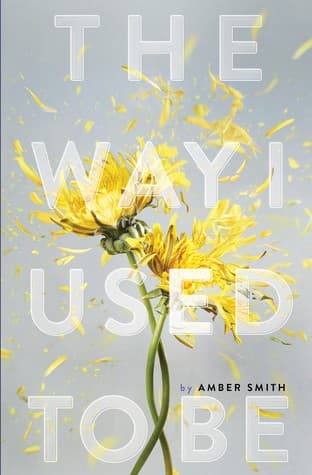
The Way I Used To Be
by Amber Smith
Guide by the Books of the Day editors · Updated · How we write our guides
A raw, fragmented YA novel about a teenager's life after sexual assault, worth reading for its honest portrait of trauma, silence, and the slow, uneven work of coming back to yourself.
What Creators Say About The Way I Used To Be
2 creators reviewed The Way I Used To Be on YouTube between 2016 and 2018, with 26K views between them. Their opinions are their own; we picked these reviews, we didn't write them.
What It's About
The Way I Used to Be follows Eden, a teenager whose life splits into a before and an after when something terrible happens to her. The novel moves between her earlier years and the period that follows, so the reader sees the girl she was alongside the young woman she is becoming. The story is less about the event itself than about its aftermath: the drinking, the risky choices, the friendships that strain and the family that does not quite know how to help. Eden's voice is sharp and guarded, and she is rarely willing to explain herself, which makes the reader work to understand what she is carrying.
The book's structure is one of its defining features. Short, uneven sections give the prose a restless, clipped rhythm that mirrors Eden's state of mind. Some passages are blunt and some are oblique, and the gaps are part of the point. Reading it feels closer to sitting with someone than being told a story, and it can be an uncomfortable, emotionally heavy experience.
The novel is written for teen readers but does not soften its subject. Its power comes from restraint and specificity rather than from big speeches, and it leaves room for the reader to notice what Eden herself avoids saying.
Read this if you…
- want a YA novel that takes trauma seriously without neat resolutions
- are drawn to experimental, fragmented storytelling with a strong narrator
- are interested in how survivors reconstruct their sense of self over time
Skip it if you…
- need a story with a clear plot, steady pacing, or a hopeful ending in sight
- are not in a place to read about sexual assault, self-harm, and heavy drinking
Key Ideas
- 1
Trauma as a fracture in identity
The novel treats sexual assault less as a single event than as something that splits a person's sense of who they are. Eden's memories of who she was before become a kind of measuring stick she cannot stop using. The book is useful for seeing how survivors can feel like strangers to their own past selves, and how that gap shapes every decision they make afterward.
- 2
Silence and the cost of keeping secrets
Much of the tension comes from what Eden does not say, to her family, her friends, and herself. The book shows how secrecy can feel like protection while quietly isolating the person keeping it. Readers may notice how the adults around her miss signals, and how the absence of direct conversation becomes its own form of harm.
- 3
Self-destruction as a way of coping
Eden's drinking, reckless behavior, and other self-harming choices are presented without tidy explanations. The novel does not make them into a lesson, but it lets readers see how they can start as attempts to feel something or to numb something. This is one of the parts of the book that can prompt the most reflection and the most discomfort.
- 4
A fragmented form that mirrors the mind
Amber Smith uses short, uneven sections and shifts in time to make the reading experience match Eden's scattered memory. The style is the book's most distinctive quality. It asks for patience and rewards close attention, because meaning often lives in the spaces between passages rather than in any single scene.
Limitations
The fragmented structure can feel disorienting, and some readers find the jumps in time hard to follow or the emotional register relentlessly bleak. Eden's refusal to explain herself is powerful but can also keep the reader at a distance from her. Because the book is aimed at teens, adult readers may find its characters and reasoning less nuanced than they would like. Some critics also argue that the novel's ending offers more closure than the rest of the book has earned. It is not a book about recovery as a clean arc, and readers looking for a guide to healing should look elsewhere.
Questions Readers Ask
- Is The Way I Used to Be suitable for teenagers?
- It is marketed to teen and young adult readers and is commonly read by older teens. It deals directly with sexual assault, drinking, and self-destructive behavior, so it is best read by teens who can handle heavy material. Parents or educators may want to read it first or talk through it afterward, since the subject matter is intense and the emotional impact can linger.
- How does it compare to other novels about sexual assault for young readers?
- It is less overtly instructional than many issue-driven YA novels and relies more on voice and structure than on plot. Readers who want a more straightforward narrative might find it demanding. Those who appreciate fragmented, literary styles may find it more memorable than books that focus mainly on the event and its immediate resolution.
- Published
- 2016
- ISBN
- 9781481475860
- Difficulty
- intermediate
- Category
- Young Adult
Book details and cover from Google Books.
Ready to read The Way I Used To Be?
Get your copy on Amazon, or listen to it on Audible. We earn a commission if you buy through these links.