
We earn a commission if you buy through these links. Learn more
The war that Saved my Life
Guide by the Books of the Day editors · Updated · How we write our guides
A wartime story about a neglected London girl with a clubfoot who learns to read, ride, and trust again in the countryside, told with unusual warmth and clarity.
What Creators Say About The war that Saved my Life
2 creators reviewed The war that Saved my Life on YouTube in 2016, with 14.4K views between them. Their opinions are their own; we picked these reviews, we didn't write them.
What It's About
The War That Saved My Life is narrated by Ada, a ten-year-old who has spent most of her life shut inside a cramped London flat, kept out of sight by a mother who treats her with open contempt, partly because of the clubfoot Ada walks on. When the government begins sending city children to the countryside in 1939, Ada gets herself and her younger brother Jamie onto an evacuation train. They are placed with a reluctant woman in rural Kent, and the story follows Ada as she adjusts to a world she has never been allowed to see.
Bradley writes in short, plain sentences, and Ada's voice is direct, observant, and often funny. The war is present mostly through rationing, rumor, and the worries of adults around the children, rather than through battle scenes. The real engine of the book is Ada's gradual discovery that the world is larger than the rooms she knew, and that she is capable of more than anyone told her.
Reading it is emotionally immediate and quick, the kind of book many readers finish in a single sitting. It deals honestly with neglect and disability without lingering on graphic cruelty, and it stays hopeful. Expect a story where the emotional payoff depends on Ada's growing confidence more than on plot twists.
Read this if you…
- want an emotionally direct story about a child finding her own strength
- are interested in how literacy and independence change a young person's life
- enjoy a first-person narrator whose voice carries the whole book
Skip it if you…
- need a detailed, fact-driven account of the Second World War
- want a fast-moving plot with frequent action or surprising twists
Key Ideas
- 1
Disability as a source of shame
Ada's clubfoot shapes how her mother treats her and how Ada sees herself. The book is less interested in the physical condition than in how other people's reactions become a child's private belief about her own worth. Readers will notice how Ada's self-image changes once she is treated as capable rather than hidden.
- 2
Learning as a route to dignity
Ada has never been to school, so learning to read is a major event. Bradley treats literacy as more than a skill: it gives Ada a way to understand her situation, make choices, and stop depending entirely on other people's version of events.
- 3
Belonging that has to be earned
The woman who takes the children in does not want them, and her reluctance is not softened right away. The book shows that acceptance tends to come slowly, through small daily acts, and that it cannot simply be granted by a kind gesture or a change of circumstance.
- 4
War seen from the margins
The wartime setting reaches Ada mostly through what adults say, what they withhold, and what she overhears. Her limited understanding gives the historical events a sense of unease and uncertainty, which many readers find more affecting than a conventional account of battles and bombing.
Limitations
Some readers find the resolution tidier than the rest of the book, and the adult characters, especially the mother, are drawn in fairly broad strokes. The historical detail is light, so anyone wanting a rich portrait of wartime England or of the evacuation scheme will need other sources. Because the story is told from a child's view, the war's larger causes and consequences stay mostly offstage. The book also leans on emotional scenes that some readers find heavy-handed.
Questions Readers Ask
- Is The War That Saved My Life suitable for younger readers?
- It is generally recommended for readers around ten and up. The book deals with neglect and emotional cruelty, but it does not dwell on graphic detail. Many parents read it alongside their children, which can open useful conversations about disability, family, and fear during wartime.
- Do I need to read the sequel?
- No. The book works as a complete story with a satisfying arc. The sequel, The War I Finally Won, continues Ada's story into the next stage of the war and is worth reading if you want to stay with the characters, but it is optional.
- Published
- 2015
- ISBN
- 9780606388436
- Difficulty
- beginner
- Category
- Young Adult
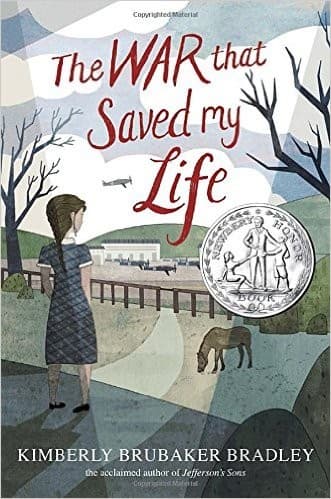
Book details and cover from Google Books.
Ready to read The war that Saved my Life?
Get your copy on Amazon, or listen to it on Audible. We earn a commission if you buy through these links.