
We earn a commission if you buy through these links. Learn more
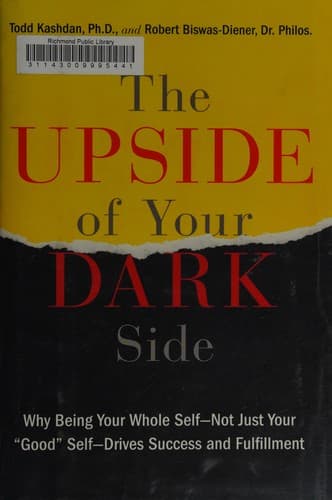
The upside of your dark side
Guide by the Books of the Day editors · Updated · How we write our guides
Kashdan argues that the emotions and traits we label negative can be useful, and that trying to erase them often makes life worse.
What Creators Say About The upside of your dark side
2 creators reviewed The upside of your dark side on YouTube between 2014 and 2018, with 5.2K views between them. Their opinions are their own; we picked these reviews, we didn't write them.
What It's About
The Upside of Your Dark Side, written by psychologist Todd Kashdan with Robert Biswas-Diener, takes on a familiar self-help assumption: that the goal is to feel good most of the time and to be the most agreeable version of yourself. The authors argue that this goal is both unrealistic and counterproductive. Anger, envy, guilt, anxiety and impatience are not malfunctions to be scrubbed away. They are signals and tools, and each can help or hurt depending on the situation and how you use it.
The book is practical rather than purely theoretical. It draws on research in positive and clinical psychology to explain why pushing away unpleasant feelings tends to make them louder, and it offers ways to notice the costs of your habits without judging yourself for having them. The tone is conversational, with plenty of everyday examples, and the chapters are easy to dip into. You will recognize many situations from work, friendships, and family life.
Reading it feels less like being lectured about positivity and more like having an honest conversation about the parts of yourself you usually hide. It is at its best when it makes you reconsider a trait you have always treated as a flaw. It is less satisfying if you want a rigorous, step-by-step program with measurable outcomes, since much of the value lies in reflection and changing how you frame your own reactions.
Read this if you…
- are tired of being told to think positively and want a more honest account of emotion
- often feel guilty or ashamed of irritation, envy or doubt
- want practical psychology for work, relationships and personal growth
Skip it if you…
- want a clinical treatment manual for anxiety, depression or trauma
- prefer dense academic writing with full citations and detailed study methods
Key Ideas
- 1
Unpleasant emotions carry useful information
Feelings like anger, envy and guilt often point to something that matters to you, such as a boundary being crossed or a value under threat. The book encourages you to ask what a difficult feeling is telling you before deciding it is simply bad. This shifts the goal from eliminating discomfort to understanding it well enough to respond sensibly.
- 2
Context decides whether a trait helps
The same tendency, such as skepticism, persistence or bluntness, can be an asset in one setting and a liability in another. The authors stress that no trait is good or bad in isolation. Judging its usefulness depends on the people involved, the stakes, and what you are trying to achieve at that moment.
- 3
Suppression tends to backfire
Trying hard not to feel something often keeps it at the center of your attention and narrows what you are willing to do. The book makes a case for acknowledging unwelcome reactions, letting them be present, and then choosing actions that fit your goals. This is presented as more workable than constant effort to feel upbeat.
- 4
Owning your full personality over self-improvement
Chasing a polished, always-positive self-image can be exhausting and can make relationships feel guarded. The book argues that accepting the full range of your personality supports more authentic connections and more sustainable growth. The emphasis is on knowing yourself accurately rather than presenting an edited version to others.
Limitations
Critics may find the book leans on anecdote and accessible summaries of research, so readers who want detailed methodology will need to follow up with the academic literature. Some advice is general and can feel obvious once read, and the framing of dark side traits is a rhetorical choice that not every reader will find helpful. The book is also not a substitute for professional help when difficult emotions are severe or persistent.
Questions Readers Ask
- Is it still relevant, given how much self-help has changed since 2014?
- Mostly, yes. The core argument about the cost of forcing constant positivity fits current conversations about emotional well-being and has aged well. Some examples and references to research are dated, so treat the specifics as starting points rather than the latest findings.
- How does it compare to Susan David's Emotional Agility?
- Both books argue against forcing yourself to feel only pleasant things. David's Emotional Agility is more structured around a method, while Kashdan and Biswas-Diener focus on reframing specific traits and seeing their upsides. If you want a step-by-step framework, start with David. If you want a sharper case for why the good self ideal fails, this is the better pick.
- Published
- 2014
- ISBN
- 9781594631733
- Difficulty
- beginner
- Category
- Psychology
Book details and cover from Google Books.
Ready to read The upside of your dark side?
Get your copy on Amazon, or listen to it on Audible. We earn a commission if you buy through these links.