
We earn a commission if you buy through these links. Learn more
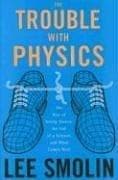
The Trouble With Physics
by Lee Smolin
Guide by the Books of the Day editors · Updated · How we write our guides
An insider's critique of string theory and the research culture around it, still useful for asking how physics decides which ideas deserve support.
What Creators Say About The Trouble With Physics
2 creators reviewed The Trouble With Physics on YouTube between 2011 and 2022, with 11K views between them. Their opinions are their own; we picked these reviews, we didn't write them.
What It's About
The Trouble With Physics is Lee Smolin's 2006 argument that fundamental physics, especially string theory, has stalled. Smolin, a theoretical physicist and co-founder of loop quantum gravity, wrote it partly as an insider's account of a field that had gone decades without a confirmed prediction from its most ambitious theories. He covers what string theory promises, why its supporters found it so compelling, and why he thinks the lack of testable outcomes matters.
Much of the book is less about equations than about how physics gets done. Smolin looks at the social side of research: how hiring, funding, prizes, and conference culture can reward a dominant idea and discourage people who work on alternatives. He writes in a conversational, sometimes combative tone, and includes personal reflections on his career and the people he disagrees with. The science is explained at a level a patient non-specialist can follow, though some sections assume familiarity with quantum mechanics and relativity.
Reading it feels like sitting in on an argument you didn't know was happening. You get a sharp sense of the stakes and of the frustration felt by working researchers, along with a clear case for funding more varied approaches. It asks you to judge the field's habits as well as its theories, and it rewards readers willing to weigh one strongly opinionated author against the wider scientific community.
Read this if you…
- are curious how scientists decide which theories deserve funding and attention
- want an insider's critique of string theory without needing to do the math
- enjoy polemical science writing and are willing to weigh one author's view against the mainstream
Skip it if you…
- want a balanced survey of string theory and the researchers who support it
- need up-to-date experimental results, since much of the picture has changed since 2006
Key Ideas
- 1
Testability as the test of a theory
Smolin argues that a theory which cannot make predictions that experiments could check has drifted away from science. Mathematical elegance, internal consistency, and the authority of respected physicists are not enough. He presses readers to ask what a theory would have to see in the world for it to be proven wrong, and to notice when that question goes unanswered for a long time.
- 2
How the research culture shapes which ideas win
A large part of the book examines the sociology of physics. Smolin describes how a small number of dominant programs can narrow hiring, grant decisions, and the careers of young researchers. He suggests that a field can become locked into one direction not because the evidence demands it, but because the incentives of the community favor staying the course.
- 3
Why string theory's promise has been slow
String theory's appeal lies in its hope of unifying gravity with quantum mechanics. Smolin explains why that ambition has been hard to turn into concrete predictions, including the problem of an enormous number of possible solutions that makes it difficult to say what the theory actually forces nature to be. He treats these difficulties as serious obstacles rather than temporary inconveniences.
- 4
The case for background independence
Smolin's preferred direction is a set of approaches in which space and time are not a fixed backdrop but emerge from more basic physics. He presents loop quantum gravity as an example of this thinking. The book is most useful as a guide to why he believes such alternatives deserve more support, even though their own predictions remain unproven.
Limitations
Smolin's critique is one-sided by design, and many string theorists have argued that he overstates the failure and underplays the mathematical payoff of their work. The book predates the 2012 Higgs discovery and later LHC searches, including those for supersymmetry, so its near-term predictions read differently today. Some of his proposed alternatives remain speculative, so readers should treat his constructive program as an open research direction rather than a settled answer.
Questions Readers Ask
- Is The Trouble With Physics still relevant?
- Yes, mostly for its questions. The debate about testability and research culture in theoretical physics continues. But the book is a snapshot of 2006, so the experimental record and the status of several approaches have moved on. Pairing it with newer writing gives a more up-to-date picture of where the field stands.
- How does it compare to Not Even Wrong by Peter Woit?
- Both books criticize string theory and the sociology around it. Woit focuses more on the mathematics and professional politics, and his tone is more adversarial. Smolin spends more time on his own alternative research and on the philosophy of science, making his argument broader and more personal. Reading both gives a fuller sense of the debate.
- Do I need a physics background to read it?
- Not a specialist one. Basic ideas about atoms, light, and gravity are enough to follow the core argument. Some passages on quantum theory and general relativity get dense, and readers can skip ahead without losing the thread of the critique. Patience with technical detail helps more than prior training.
- Published
- 2006
- ISBN
- 9780618551057
- Difficulty
- intermediate
- Category
- Science
Book details and cover from Google Books.
Ready to read The Trouble With Physics?
Get your copy on Amazon, or listen to it on Audible. We earn a commission if you buy through these links.