
We earn a commission if you buy through these links. Learn more
The tiger's wife
by Téa Obreht
Téa Obreht's Orange Prize-winning debut turns a doctor's grief-soaked journey into a layered meditation on storytelling, folklore, and the wars that shape what people believe.
What It's About
The Tiger's Wife is a novel about Natalia, a young doctor working in an unnamed Balkan country that is only beginning to recover from a brutal war. She is travelling to an orphanage clinic with her friend Zora when she learns that her grandfather has died far from home. The book is built on two tracks: Natalia's present-day errands and memories, and the stories her grandfather told her, which she remembers through his battered copy of Kipling's The Jungle Book.
Those stories are the heart of the book. Some are tall tales about a stranger who could not die, a tiger that escaped during the bombing of a city, and a woman whose bond with an animal no one fully understands. Obreht moves between past and present with a fable-like confidence, letting folklore and history bleed into each other, so it is often hard to tell where a legend ends and a record of violence begins.
The experience is immersive rather than fast. Expect a book that rewards patience, shifts in time and point of view, and asks you to hold several threads at once. The prose is lyrical but grounded, and its emotional weight comes less from plot twists than from small, specific details about people trying to make sense of loss. Readers who want a clean, linear story may find the detours frustrating.
Read this if you…
- want literary fiction where myth and recent history are woven together
- are drawn to stories about grief and the people left behind by violence
- enjoy novels that reward slow reading and keeping several threads in mind
Skip it if you…
- need a fast plot with a clear, linear through-line
- want a straightforward factual account of the Balkan wars
Key Ideas
- 1
Inheritance through the stories we tell
Natalia's grandfather is known to her mostly through the tales he told her, and the novel asks what it means to inherit someone's myths along with their possessions. Her attempts to separate the man from the legends make the book's central relationship feel both intimate and uncertain, as if she is reconstructing him from hearsay and half-remembered anecdotes.
- 2
Folklore as a lens on historical violence
Obreht uses folk belief to approach the wars that shaped the region, treating myth not as escape but as a way people process atrocity. Legends about immortal strangers and wandering animals become a language for trauma that official history often cannot hold, and the book shows how such stories can comfort, mislead, or preserve memory.
- 3
Grief and the limits of rational explanation
Natalia is trained to explain bodies and illness scientifically, yet her grief keeps pulling her toward the uncanny. The tension between medicine and superstition runs throughout the novel, and it gives the story its quiet philosophical charge without turning it into a lecture about belief.
- 4
A braided structure that rewards attention
The novel alternates between timelines and voices, so meaning often emerges from the gaps between sections rather than from any single scene. Readers who pay close attention to echoes and repetitions will get more from it, while those who read quickly may feel that the connections arrive slowly.
Limitations
Some readers find the nonlinear structure fragmented, and the interruptions between past and present can slow momentum, especially in the middle. The unnamed setting is a deliberate choice, but it can leave readers wanting more concrete grounding in place and history. Critics have also argued that the folktale elements sometimes feel more polished than the political reality they gesture toward. The ending divides readers, and those who want firm answers may come away unsatisfied.
Questions Readers Ask
- Is The Tiger's Wife a good introduction to Balkan literature?
- It can be, because it is accessible and emotionally direct. However, it is a myth-inflected novel rather than a history, and its setting is deliberately unnamed. Readers who want a clearer sense of the region's past may want to pair it with a nonfiction account of the wars.
- How important is The Jungle Book to the novel?
- Kipling's book is more than a reference. It is an object of memory that links Natalia to her grandfather, and it helps frame the novel's interest in stories as inheritance. You do not need to have read it closely beforehand, though familiarity may add a layer of resonance.
- Published
- 2011
- ISBN
- 9780385343831
- Difficulty
- intermediate
- Category
- Fiction
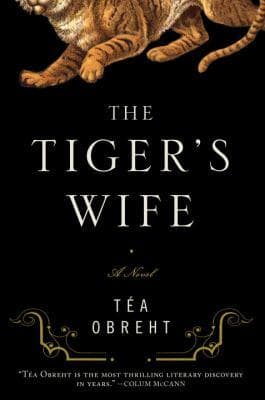
Book details and cover from Google Books.
Ready to read The tiger's wife?
Get your copy on Amazon, or listen to it on Audible. We earn a commission if you buy through these links.