
We earn a commission if you buy through these links. Learn more
The Thirteenth Tale
Guide by the Books of the Day editors · Updated · How we write our guides
Diane Setterfield's Gothic bestseller turns a biographer's commission into a slow, atmospheric study of secrets, storytelling, and the stories people tell about themselves.
What Creators Say About The Thirteenth Tale
2 creators reviewed The Thirteenth Tale on YouTube between 2018 and 2023, with 6.8K views between them. Their opinions are their own; we picked these reviews, we didn't write them.
What It's About
The Thirteenth Tale follows Margaret Lea, a solitary young woman who works in her father's antiquarian bookshop and secretly writes biographies of people nobody remembers. One morning she receives a letter from Vida Winter, a celebrated novelist whose public life has been shadowed by contradictory accounts of her own past. Vida has spent decades telling interviewers different versions of her early life, and now, with time running short, she wants Margaret to write the true one. Margaret is skeptical, but she agrees to visit, and the invitation draws her into a crumbling house, a family with buried histories, and a story she has to piece together herself.
Setterfield tells the story mostly in Margaret's first-person voice, with Vida's account arriving in spoken installments that Margaret records and reflects on. The result is a frame story wrapped around a longer Gothic tale, so you are always aware of two narrators with different motives. The prose is lush and deliberately old-fashioned, full of rain, damp rooms, and overgrown gardens, and the book takes its time. It trades speed for a steady build of atmosphere and suspicion.
Reading it feels like sitting with a storyteller who knows exactly how much to hold back. The pleasure lies in noticing what is left unsaid, and in watching a careful listener slowly become part of the story she came to record. If you enjoy books about books and the odd intimacy between reader and writer, the experience will feel unusually personal.
Read this if you…
- love Gothic novels with crumbling houses and old family secrets
- enjoy novels about books, bookshops, and the obsessions of readers
- want a slow, atmospheric mystery where the tension lies in what is withheld
Skip it if you…
- want fast pacing or a clear mystery with a tidy solution
- find lush, ornate, deliberately old-fashioned prose tiring
Key Ideas
- 1
Stories as shelter and disguise
Vida has built a public identity out of stories, and the book keeps asking what those stories hide and what they protect. Setterfield treats storytelling as something people do to survive, not only as entertainment. Margaret, who has spent her life writing about strangers, is forced to consider whether her own quiet, carefully managed life is a kind of story too. Who gets to tell a life, and at what cost, runs through the whole novel.
- 2
A deliberate Gothic inheritance
The novel borrows the furniture of the nineteenth-century Gothic: an isolated house, a family with a damaged past, weather that mirrors feeling, and a narrator drawn into a web of older secrets. It nods openly to Bronte territory, so readers who know Jane Eyre or Wuthering Heights will catch echoes. Setterfield uses these conventions knowingly, which gives the book warmth and a sense of play rather than imitation for its own sake.
- 3
Two women, one withheld truth
The central relationship is between Margaret and Vida, a reserved listener and a guarded storyteller. Both have learned to keep their real lives out of view, and the tension comes from watching each try to get close without giving everything away. The emotional payoff depends less on surprise than on how these two begin to recognise themselves in each other.
- 4
Books, bindings, and the reader's life
Margaret's work in a secondhand bookshop gives the novel a steady love of physical books: old editions, the smell of paper, the labour of cataloguing and restoring. Setterfield writes about reading as a formative, almost private act. Readers who love the rituals of book collecting will find the setting as absorbing as the plot, and the book quietly argues that the stories we consume shape how we understand our own lives.
- 5
A frame story that doubles back
Rather than running in a straight line, the novel nests one narrative inside another, and the frame keeps changing how you read the inner tale. Setterfield builds suspense through perspective, so much of the tension comes from wondering who is shaping the account and why. It is a demanding structure to hold in mind, but it is also what makes the later turns feel earned.
Limitations
Some readers find the prose overwrought, and the book's reliance on dramatic coincidence and melodrama can feel heavy to people who prefer restraint. Because it draws so openly on familiar Gothic and Bronte-era models, veteran readers of that tradition may guess more than the author intends. The contemporary frame is thinner than the historical story it holds, and some supporting characters feel more like devices than people. It was also a very large bestseller, which sets expectations some readers find hard to meet.
Questions Readers Ask
- Is The Thirteenth Tale a good pick if I loved Jane Eyre?
- Often, yes. The novel openly borrows Gothic settings and atmosphere from the Bronte tradition, including references to Jane Eyre and Wuthering Heights, so fans of those books will enjoy spotting the echoes. It is less a faithful imitation than a modern novel that plays with those conventions, and readers who want a similar mood with a more contemporary narrative voice will find it satisfying.
- Do I need a background in Victorian literature to enjoy it?
- No. The novel is written for general readers and explains what it needs as it goes. Some of the pleasure comes from recognising Gothic conventions, but you do not need to have studied them. If you have never read Victorian fiction, the story still works as a self-contained mystery about a writer, a biographer, and a house full of secrets.
- Is it a ghost story?
- Not in a conventional sense. The Gothic atmosphere is strong, with decaying houses, storms, and a sense of the past pressing on the present, but the book's main concerns are psychological and emotional. Readers expecting supernatural scares may find it quieter than they anticipate, while those who like ambiguous, unsettling family histories will find plenty to hold their attention.
- Published
- 2006
- ISBN
- 9780752875736
- Difficulty
- intermediate
- Category
- Fiction
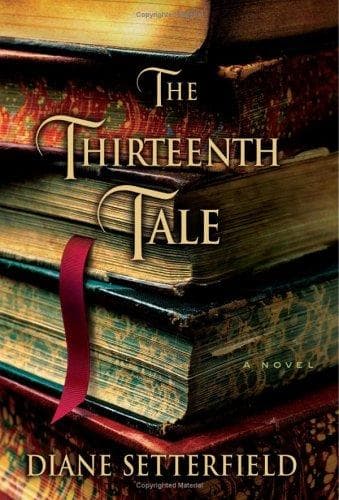
Book details and cover from Google Books.
Ready to read The Thirteenth Tale?
Get your copy on Amazon, or listen to it on Audible. We earn a commission if you buy through these links.