
We earn a commission if you buy through these links. Learn more
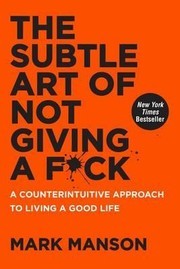
The Subtle Art of Not Giving a F*ck
by Mark Manson
Guide by the Books of the Day editors · Updated · How we write our guides
A blunt, profane guide to choosing what deserves your energy, arguing that a better life comes from accepting problems and caring about fewer things, on purpose.
What Creators Say About The Subtle Art of Not Giving a F*ck
2 creators reviewed The Subtle Art of Not Giving a F*ck on YouTube in 2022, with 381.2K views between them. Their opinions are their own; we picked these reviews, we didn't write them.
What It's About
The Subtle Art of Not Giving a F*ck is a self-help book by Mark Manson, a blogger who built his readership by writing candidly about relationships and personal growth. Its central claim is that everyone has a limited supply of attention and emotional energy, so the real question is not how to care less across the board but which things are worth caring about. Manson argues that much unhappiness comes from trying to feel good about everything and from avoiding the discomfort that comes with real problems.
The style is conversational, direct, and often crude. Manson swears freely, tells stories from his own life, and mixes in ideas from philosophy and psychology without much academic apparatus. The chapters build on one another, so the book reads as one extended argument rather than a collection of tips. It is short and quick to finish, and much of its appeal lies in how it reframes familiar advice in blunter language.
Reading it feels less like being instructed and more like being argued with by a friend who is impatient with your excuses. Some readers find this bracing and clarifying. Others find the constant swearing and self-assured tone grating. Either way, the book works best when read as a prompt to examine your own priorities rather than a checklist to follow.
Read this if you…
- want a blunt, practical reset on how you spend your attention and worry
- find gentle self-help too soft and prefer a provocative voice
- are stuck in a cycle of trying to feel good about everything
Skip it if you…
- dislike profanity or find a heavy-swearing narrator off-putting
- are looking for detailed, evidence-heavy psychology or a structured therapy program
Key Ideas
- 1
Caring is a limited resource
Manson's starting point is that everyone has finite attention and emotional energy, so every value you hold implicitly competes with others. Trying to care about everything leaves you anxious and spread thin. The useful move is to decide consciously what deserves your concern and accept that you will let other things go.
- 2
Choose problems worth having
Manson argues that every life involves problems, and the goal is not to escape them but to pick ones you find meaningful. Discomfort is unavoidable; what varies is whether it is attached to something you value. He suggests many people chase pleasure or certainty and end up with problems that feel empty.
- 3
Responsibility without blame
The book distinguishes between fault, which concerns how a situation arose, and responsibility, which concerns what you do about it now. Manson argues that people often waste energy deciding who is to blame while ignoring what they can change. Owning your responses is presented as empowering rather than punitive.
- 4
Why forced positivity can backfire
Manson is skeptical of constant affirmation and the insistence on always feeling good. He argues that this pressure makes people more anxious when they inevitably feel bad. Acknowledging negative emotions and the limits of your control is presented as a route to steadier confidence.
Limitations
Critics say the central slogan is easy to misread as permission to be indifferent to other people, and that the book's tone can feel more like performance than insight. Its evidence is largely anecdotal and drawn from Manson's own life and blog, so its claims are harder to verify than the confident prose suggests. Some ideas, such as the emphasis on personal responsibility, can be read as dismissive of people facing structural hardship or trauma. It is not a substitute for clinical treatment, and some passages may feel dated.
Questions Readers Ask
- Is this book actually history?
- No. Although some listings place it under History, The Subtle Art of Not Giving a F*ck is a self-help book about values, attention, and emotional resilience. If you want historical narrative, you will need different titles. If you want a modern self-help book, this one is a reasonable place to start.
- How does it compare to Meditations by Marcus Aurelius?
- Manson draws on Stoic ideas, but his book is far more casual and modern. Meditations is short, reflective, and written as private notes, which makes it slower and more spare. Manson is quicker to read and more concrete about relationships and everyday choices. Start here for an accessible entry, and read Meditations for the original source.
- Published
- 2016
- ISBN
- 9780062884022
- Difficulty
- beginner
- Category
- History
Book details and cover from Google Books.
Ready to read The Subtle Art of Not Giving a F*ck?
Get your copy on Amazon, or listen to it on Audible. We earn a commission if you buy through these links.