
We earn a commission if you buy through these links. Learn more
The strain
by Guillermo del Toro, Chuck Hogan
Del Toro and Hogan treat vampires like an epidemic, turning a CDC investigation into a gripping, gleefully gross thriller that is the first of a trilogy.
What It's About
The Strain opens with a flight from Berlin that lands at JFK with its lights out, its cabin silent, and nearly everyone aboard dead. Ephraim Goodweather, a disease investigator at the Centers for Disease Control, is pulled in because the deaths look like an outbreak. The early chapters are patient about how that happens: autopsies, lab results that refuse to make sense, and officials who want the story kept small. The book is a thriller, but it spends real time on the procedural texture of public health work, and that texture is what makes the supernatural feel grounded.
Running alongside the investigation is Abraham Setrakian, an elderly pawnshop owner and Holocaust survivor who recognizes the signs before anyone else does. His sections carry the book's emotional weight and its history, linking the outbreak to older atrocities and to a long, quiet war that officialdom refuses to believe in. Del Toro's visual imagination shows in the set pieces, and Hogan's background in crime fiction shows in the plotting, which moves briskly and sets up many pieces at once.
The result is pulpy, cinematic, and sometimes deliberately lurid, with a cast that is broad rather than deep. Expect a first volume that is more setup than resolution, written to be the opening move in a trilogy.
Read this if you…
- Want a fast, visual thriller where a medical mystery escalates into full-scale horror
- Enjoy vampire fiction that treats the creatures as a biological problem with a dark history behind it
- Like ensemble casts and short chapters that switch locations and viewpoints often
Skip it if you…
- Want literary prose, subtle characterization, or a slow-burn psychological horror experience
- Are looking for a self-contained novel with a satisfying ending rather than the first part of a series
Key Ideas
- 1
Vampirism treated as a contagion
The authors model the vampire problem as an infection that spreads through contact, with incubation, carriers, and containment failures. This lets the horror run on the logic of an outbreak, so readers spend as much time following tests, records, and bureaucratic delays as following monsters. The approach is the book's most distinctive choice and the main source of its tension.
- 2
History as the hidden engine
Setrakian's memories of wartime persecution give the supernatural a moral weight it would otherwise lack. The book asks what it means to remember an evil that official institutions dismiss, and it connects personal grief to a larger story of old crimes resurfacing. These passages are slower, but they give the thriller its sense of stakes.
- 3
An ensemble of flawed professionals
The narrative moves among a doctor, an exterminator, an elderly survivor, and several institutional players, each with private motives. The rotating viewpoints keep the plot moving across many locations. Individual characters are often more functional than psychologically rich, but the mix of skills and temperaments gives the story its momentum.
- 4
Pulp energy with cinematic craft
Del Toro's eye for striking images and Hogan's experience with commercial thrillers combine in short, visual scenes and frequent cliffhangers. The writing favors momentum and set pieces over subtlety, and it leans into gore and grotesque detail. Readers who enjoy genre fiction that feels like a film treatment will find it immediately engaging.
Limitations
Critics have found the prose functional rather than memorable, with dialogue that leans on quips and stock exchanges and characters who are sketched more than developed. The vampire mythology is deliberately pragmatic: the creatures are a biological problem with a theology attached, which some readers will find reductive. Because this is the first book of a trilogy, the story does not close, and the middle stretches can feel like connective tissue. Its 2009 setting also feels dated in places, particularly around technology and media.
Questions Readers Ask
- Is The Strain scary, or is it more of a thriller?
- It is mostly a thriller with gruesome, unsettling moments rather than sustained dread. The tension comes from investigation, deadlines, and escalating danger more than from atmosphere alone. Readers who want slow, creeping horror may find it brisker and louder than they expect, but the grisly scenes are frequent enough to satisfy fans of body horror.
- Do I need to read the sequels?
- The first book is a complete story with its own climax, but it leaves the main conflict open. The sequels, The Fall and The Night Eternal, continue directly from it. If you enjoy the opening volume, you will likely want to read the trilogy, since the first book works more as an opening movement than a standalone arc.
- How does it compare to Dracula?
- Stoker's novel is gothic and told through letters and journals, with vampires as an old, mysterious threat. The Strain is modern and procedural, with vampirism framed as an outbreak handled by public health workers and contained by bureaucracy. Readers who want the classic mood will find it very different, but those interested in modern reinventions of the myth may appreciate the contrast.
- Published
- 2009
- ISBN
- 9780061992674
- Difficulty
- beginner
- Category
- Fiction
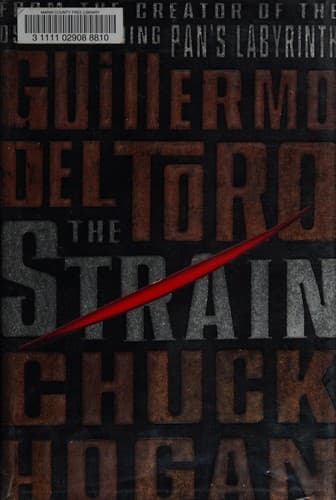
Book details and cover from Google Books.
Ready to read The strain?
Get your copy on Amazon, or listen to it on Audible. We earn a commission if you buy through these links.