
We earn a commission if you buy through these links. Learn more
The story of art
Guide by the Books of the Day editors · Updated · How we write our guides
A warm, opinionated walk through Western art from ancient Egypt to the twentieth century, built around the idea that artists solve problems rather than express a timeless Art.
What Creators Say About The story of art
2 creators reviewed The story of art on YouTube between 2016 and 2019, with 52.5K views between them. Their opinions are their own; we picked these reviews, we didn't write them.
What It's About
The Story of Art is one of the most widely read introductions to art ever written, first published in 1950. E. H. Gombrich, an Austrian-born art historian who spent much of his career in London, goes through art history in roughly chronological order, starting with the earliest civilisations and moving through Greece, the Middle Ages, the Renaissance, and the centuries that follow, before arriving at modern painting and sculpture. He is less interested in cataloguing styles than in asking why artists made the choices they did, and what they were trying to achieve with the tools they had.
The prose is conversational and direct. Gombrich speaks to the reader as an intelligent companion rather than a specialist, and the book is generously illustrated, so you can follow his arguments by looking at the works he discusses. Reading it feels less like studying a textbook and more like being guided through a gallery by someone who clearly loves the subject and has opinions about it.
Expect a book that moves briskly and makes confident judgments. It is short enough to finish in a few evenings, but it rewards slow reading, especially when you stop to compare the plates with what he says about them.
Read this if you…
- are curious about art but feel intimidated by specialist books or museum labels
- want a single, readable overview before deciding which periods or artists to explore further
- enjoy being argued with and prefer a clear point of view to a neutral catalogue
Skip it if you…
- want a detailed account of contemporary art, photography, or art markets
- are looking for a rigorous academic study with extensive footnotes and primary sources
Key Ideas
- 1
Art is made by artists solving problems
Gombrich's central move is to treat art as the product of practical problems that particular makers faced, such as how to show a body in motion or depth on a flat surface. Instead of asking whether a work is beautiful in some timeless sense, he asks what the artist was trying to do and what obstacles stood in the way. This framing makes earlier works feel purposeful rather than primitive, and it gives the whole survey a consistent logic.
- 2
Skill at depicting the visible world drives change
A recurring thread is the gradual mastery of tools like perspective, foreshortening, anatomy, and the rendering of light. Gombrich shows how each generation inherited techniques from the last and extended them, so that later styles often build on earlier attempts rather than replacing them. You come away seeing that a shift in how a figure is drawn often reflects a practical discovery, not just a change of fashion.
- 3
Style reflects aims as well as taste
Gombrich argues that differences between Egyptian, Greek, medieval, and Renaissance images are better understood as differences in purpose and convention than as a simple ladder of improvement. Sacred images, portraits, and public monuments each asked for different things. Reading the book, you learn to ask what a work was for before judging how well it succeeds.
- 4
Modern art as a break with tradition
The later chapters take up the revolt against academic painting in the late nineteenth and twentieth centuries, when many artists stopped trying to match appearances at all. Gombrich engages with these developments seriously but not uncritically, and he is candid about his own uncertainty. The result is a useful account of why the modern break happened and why it still divides viewers.
Limitations
The book's scope is largely Western and centred on European and, to a lesser extent, American painting and sculpture. Its narrative of progress toward naturalism can read as teleological, treating the Renaissance as a goal that earlier art was approaching. Women artists and non-European traditions receive little attention, and later editions have added some material but not transformed the framework. Gombrich's treatment of modern art is sympathetic but sometimes reads as sceptical, and the coverage of the last century is brief. Historians have since developed more varied and critical approaches, so treat this as a classic starting point rather than the final word.
Questions Readers Ask
- Is The Story of Art suitable for complete beginners?
- Yes. It was written to be accessible to readers without any background in art history, and Gombrich avoids jargon and explains technical terms as he goes. Its illustrations are central, so having the book open alongside a web search or museum visit makes it more rewarding. It is a good first book, though it is more of a guided tour than a complete reference.
- How does it compare with Ernst Gombrich's other major work or with newer surveys?
- Gombrich's later book Art and Illusion is more theoretical and demanding, focusing on how perception shapes representation. Newer surveys often cover a wider range of cultures, women artists, and contemporary practice. The Story of Art is best seen as a readable, opinionated introduction that you can pair with a more current survey if you want a broader view.
- Published
- 1950
- ISBN
- 9780714822761
- Difficulty
- beginner
- Category
- History
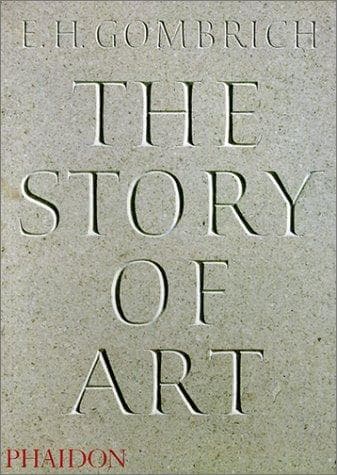
Book details and cover from Google Books.
Ready to read The story of art?
Get your copy on Amazon, or listen to it on Audible. We earn a commission if you buy through these links.