
We earn a commission if you buy through these links. Learn more
The Spiderwick Chronicles
by Tony DiTerlizzi, Holly Black
Guide by the Books of the Day editors · Updated · How we write our guides
A five-book middle-grade fantasy where three siblings discover a field guide to hidden creatures in their new house, with illustrations that are as much a part of the story as the text.
What Creators Say About The Spiderwick Chronicles
2 creators reviewed The Spiderwick Chronicles on YouTube between 2010 and 2015, with 7.3K views between them. Their opinions are their own; we picked these reviews, we didn't write them.
What It's About
The Spiderwick Chronicles, written by Tony DiTerlizzi and Holly Black, is a middle-grade fantasy series that begins when three siblings move with their mother into an old country house. Jared, the restless twin, drifts toward trouble, and the family's new home turns out to be harboring creatures that most adults cannot see. The story turns on a reference book: a field guide written by an old naturalist, thick with notes and sketches that someone has kept annotating. Its catalogue of brownies, boggarts, and other beings becomes the children's manual for a world they never knew existed.
The approach is what sets the series apart. DiTerlizzi's pen-and-ink drawings run through the text, and the books are designed to feel like a found document, with marginalia and sketches that give the reader the sense of handling a real, slightly battered object. The prose is brisk and often funny, with short chapters, clear stakes, and a sibling dynamic that feels lived-in rather than sugary. The rules of the fairy world are inventive without being fussy, so readers learn them alongside the characters.
Reading it feels like a cross between an adventure story and a scrapbook. The core books move from small, mischievous discoveries toward a darker and more serious conflict, so the series grows up as its readers do. It rewards attention to the pictures and the field-guide details, and it works well read aloud or alone. Expect a quick, comfortable pace rather than dense prose or a slow-burn mystery.
Read this if you…
- enjoy fantasy with humor and a real edge of danger
- want a series that rewards looking closely at pictures and small details
- love stories about siblings, hidden worlds, and kids who figure things out together
Skip it if you…
- want a dense adult fantasy with complex politics and large casts
- need a single self-contained novel rather than a series you will want to continue
Key Ideas
- 1
A hidden world beside ordinary life
The creatures in the story live in the gaps of everyday routine, in old houses, gardens, and woods. Adults overlook them, which makes the children the only people positioned to notice. The book keeps returning to the idea that paying attention is a form of courage, and that what seems ordinary may be hiding something strange.
- 2
The field guide as storytelling device
Much of the world is delivered through a reference book with entries, notes, and warnings written by different hands. This structure lets the reader learn the rules of the magic at the same pace as the characters. Knowledge becomes a kind of power, and the guide itself becomes a character with its own history and secrets.
- 3
Siblings who disagree and still hold together
The three children have different temperaments: one is reckless, one is curious, and one is more cautious. Their arguments and resentments feel real, and the story treats loyalty as something they have to choose and rebuild rather than something that comes automatically. This emotional core gives the adventure its weight.
- 4
Illustration as part of the narrative
DiTerlizzi's drawings do more than decorate the page. They carry information about creatures, set mood, and make the field guide conceit believable. Readers who skip the pictures miss a meaningful part of how the story is told, and the books are best experienced in a format that preserves them.
- 5
Fairy lore with genuine moral weight
The creatures are not simply cute or quaint. Some are playful, some are dangerous, and many operate by rules that do not bend for human feelings. The book suggests that choices have consequences in a world where bargains and promises matter, which gives the fantasy a sharper edge than its light tone first suggests.
Limitations
The early books are short and episodic, and the plot can feel repetitive to readers used to more sustained storytelling. The characters, especially the adults, get less depth than the children, which some adult readers find frustrating. The prose is simple by design, so readers who want lyrical writing may be disappointed. The 2008 film adaptation takes significant liberties with the books and is a different experience. Ebook editions can lose the illustrations, which are central to the reading experience.
Questions Readers Ask
- Is The Spiderwick Chronicles only for children?
- It is written for middle-grade readers, roughly ages eight to twelve, and its scares and humor are calibrated for that audience. Many adults still enjoy it, especially for the illustrations, the sibling relationships, and the inventive creature lore. It is a quick read for adults, so it works well as a light, pleasurable book.
- How does it compare to Harry Potter?
- Both feature children discovering a hidden magical world beside ordinary life. Spiderwick is shorter, more episodic, and built around a field guide rather than a school. It suits readers who want a lighter, more illustrated fantasy with fewer pages to commit to.
- Do I need to read the companion books?
- No. The five core books tell the main story, and the companion titles expand the world with additional guides and background. Start with the core series and decide afterward whether you want more of the world's lore.
- Published
- 2003
- ISBN
- 9781471121425
- Difficulty
- beginner
- Category
- Fiction
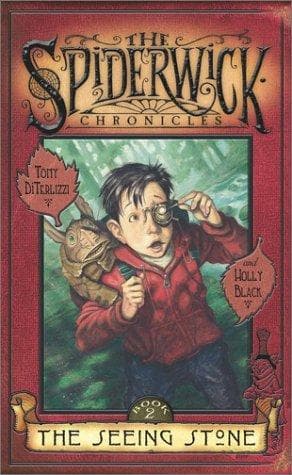
Book details and cover from Google Books.
Ready to read The Spiderwick Chronicles?
Get your copy on Amazon, or listen to it on Audible. We earn a commission if you buy through these links.