
We earn a commission if you buy through these links. Learn more
The Sense of an Ending
Guide by the Books of the Day editors · Updated · How we write our guides
A short, sharp Booker Prize winner about how an ordinary man rewrites his own past, and how the cost of that rewriting arrives late, all the more painful for its restraint.
What Creators Say About The Sense of an Ending
2 creators reviewed The Sense of an Ending on YouTube between 2012 and 2023, with 14.2K views between them. Their opinions are their own; we picked these reviews, we didn't write them.
What It's About
The Sense of an Ending follows Tony Webster, a retired man in England who has settled into a quiet, orderly life. When an unexpected bequest reopens questions from his student years, he begins to reconsider the friendships, the romance and the youthful choices that he has long told himself were understandable, even admirable. The novel is narrated by Tony himself, so everything comes filtered through a voice that is reflective, dry, self-aware in patches and often unreliable in ways the reader gradually notices before he does.
Barnes writes in plain, controlled sentences and keeps the book brief. There are no dramatic set pieces. Much of the tension comes from Tony's habit of explaining, qualifying and second-guessing his own memories, which makes the reading feel like watching someone sift through old letters with growing unease. Its emotional weight builds slowly and then lands hard in the final section.
The experience is less about plot than about the feeling of looking back and realising that a familiar story about yourself may not be true. It is a book about memory, self-justification and the gap between how a life felt at the time and how it reads afterwards. It works best in a single sitting or two, when the narrator's voice is still close.
Read this if you…
- want a short novel about memory and self-deception that rewards careful attention
- enjoy unreliable narrators whose unease is gradually visible to the reader
- are interested in how middle-aged and older people reckon with their youthful choices
Skip it if you…
- want plot-driven suspense or a fast-moving story with many events
- find narrators who constantly explain and second-guess themselves tiring
Key Ideas
- 1
Memory as a self-edited story
Tony's recollections are shaped by what he needs to believe about himself. Barnes shows how people smooth out inconvenient details over decades, and how a memory can feel perfectly coherent while being quietly wrong. The book invites readers to notice where the narrator is protecting himself, which is often where the real story sits.
- 2
Unreliable narration that reveals itself slowly
The narrator's account seems measured and reasonable at first. As documents and old relationships resurface, the gaps in his version become visible. The effect is less a twist than a gradual recalibration, where the reader's trust in Tony shifts as his own admissions accumulate.
- 3
Regret and the cost of small cruelties
The novel is preoccupied with the consequences of youthful behaviour that seemed minor at the time. Barnes asks whether a person can be judged by an act they have long forgotten or reframed, and what it means to live with a past that others remember differently.
- 4
Ageing and the weight of the past
Tony's retirement gives him time to reflect, and the book captures the particular melancholy of later life, when old friends are gone, records are incomplete and the stories people told about their youth begin to harden. The reflection feels earned rather than sentimental.
- 5
Restraint as the source of its power
Barnes rarely raises his voice. The novel's force comes from precise, understated prose and a short length that does not waste words. Readers who prefer lush description or sprawling plots may find it spare, but many find its compression is exactly what makes the ending linger.
Limitations
Some readers find the narrator's self-analysis repetitive or the central mystery too easy to guess once the early clues accumulate. The book is also deliberately narrow in scope, focused on one man's inner life and a small circle of characters, so it does not offer a broad social picture. Its portrait of women is often filtered through Tony's perspective, which some critics have found limiting. The prose is intentionally restrained, and readers used to richer, more ornate writing may feel it lacks texture.
Questions Readers Ask
- Is The Sense of an Ending a good first Julian Barnes novel?
- Yes, for many readers it is a good entry point. It is short, its language is clear, and its themes are immediately accessible. Barnes's other novels, such as Flaubert's Parrot and The Only Story, are more formally playful or more demanding, so starting here gives you a sense of his concerns without a steep learning curve.
- Does the book work if I dislike the narrator?
- It can still work, and some readers find that disliking Tony adds to the experience. The novel is built on his blind spots, so you are meant to see more than he does. If you find him unbearable from the start, though, you may struggle to stay engaged through the slower middle section.
- How does it compare to Ishiguro's The Remains of the Day?
- Both are quiet, first-person novels by British writers about an older narrator reassessing a life shaped by self-deception. Ishiguro's book is more formally elegant and focused on professional duty, while Barnes's is more compact and more directly concerned with memory itself. Readers who liked one often enjoy the other.
- Published
- 2011
- ISBN
- 9780792784647
- Difficulty
- beginner
- Category
- Fiction
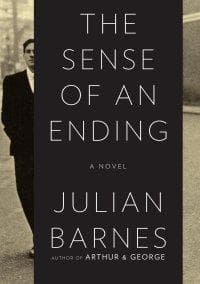
Book details and cover from Google Books.
Ready to read The Sense of an Ending?
Get your copy on Amazon, or listen to it on Audible. We earn a commission if you buy through these links.