
We earn a commission if you buy through these links. Learn more
The Sellout
by Paul Beatty
A sharp, often outrageous satire of race, Los Angeles, and American self-invention, following a man who tries to bring back segregation in his hometown and ends up before the Supreme Court.
What It's About
The Sellout is a satirical novel narrated by a Los Angeles man known only as Me. He was raised by a single father, an eccentric sociologist who treated the small farming community of Dickens as a laboratory, and the novel begins with Me's bizarre, deliberately provocative attempt to restore the town's segregation. The premise is absurd, but Beatty uses it to pull apart questions about race, class, and what it means to be seen as a representative of anything.
The prose is the main attraction. Beatty writes in a fast, digressive voice that jumps between sharp one-liners, long riffs on Hollywood history, and hard-edged set pieces. The narrator talks directly to the reader, admits when he is being unreliable, and runs his arguments into the ground with a comic energy that feels closer to a stand-up set than to a conventional realist novel. The humor is constant, and it often lands on uncomfortable targets, including the audience's own assumptions.
Reading it is an intense, sometimes exhausting experience. The plot moves in loops rather than a straight line, and the book asks you to keep up with its shifts in tone. Readers who enjoy being provoked, and who are willing to laugh at things they would normally feel uneasy about, will find it rewarding. Readers who want a steady story or gentle comedy will likely find it wearing.
Read this if you…
- enjoy satire that is aggressive, sharp, and willing to offend in order to make a point
- like novels with a restless, digressive narrator who talks directly to you
- want to read a funny, challenging book about race in America that does not offer easy answers
Skip it if you…
- want a conventional plot with clear stakes and a steady, linear structure
- find jokes about race and identity more tiring than illuminating
Key Ideas
- 1
Segregation as a joke that turns serious
The novel's central gag is a man trying to reinstate a practice most people treat as a settled moral wrong. Beatty uses that absurdity to expose how casually America has moved on from its past while still living inside its consequences. The comedy works because the narrator's logic is coherent enough to be unsettling.
- 2
Race as performance and expectation
Much of the book is about the roles people are assigned and the roles they choose to play. Characters perform identities for audiences, for money, for approval, or for survival, and the narrator is never sure which is which. Beatty treats identity as something enacted under pressure rather than simply possessed.
- 3
Hollywood and the afterlife of stereotypes
A former child actor from an old comedy series appears as a lingering reminder of how Hollywood packaged Black characters for white audiences. Through him, the novel examines how images outlive the people who made them and how past exploitation keeps shaping the present.
- 4
A community erased from the map
Dickens is a town that officially no longer exists, and that disappearance becomes a symbol of how marginalized places are forgotten. The novel asks what a community owes to its own history and whether a place can be defended even when its defense looks ridiculous.
- 5
Comedy as a way of telling hard truths
Beatty's jokes are not decoration. They carry the argument, letting him say things that would be hard to say in a serious register. The reader is constantly invited to laugh, then asked why they laughed, which is the book's most distinctive effect.
Limitations
The book's relentless energy is also its weakness for some readers. The rapid shifts in tone and the stream of jokes can blur together, and the satire sometimes feels more interested in provocation than in carefully developed characters. Some critics found the middle sections loose or repetitive. Because the book is so tied to a specific Los Angeles and a specific cultural moment, some references and targets may feel less immediate to readers who did not live through them. It also does not offer a systematic argument about policy or history; its arguments are dramatized and comic, not analytical.
Questions Readers Ask
- Is The Sellout worth reading if I usually avoid satire?
- It depends on how you feel about satire that is blunt and uncomfortable. The Sellout is less gentle than many comic novels, and its jokes often make the reader complicit in laughing at painful material. If you enjoy that kind of provocation, it can be very rewarding. If satire usually feels too cold or cruel to you, it may not work.
- How does The Sellout compare to Catch-22 or Mark Twain?
- Readers often connect it to the tradition of Mark Twain and Joseph Heller because of its sharp, irreverent voice and its willingness to expose national hypocrisy through absurd situations. The Sellout is more directly focused on race and contemporary American identity, and its narrator is more personally involved, which gives it a different emotional edge.
- Published
- 2015
- ISBN
- 9781786071477
- Difficulty
- intermediate
- Category
- Fiction
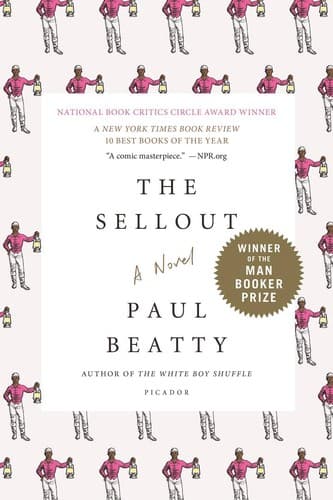
Book details and cover from Google Books.
Ready to read The Sellout?
Get your copy on Amazon, or listen to it on Audible. We earn a commission if you buy through these links.