
We earn a commission if you buy through these links. Learn more
The Ruin of Kings
by Jenn Lyons
Guide by the Books of the Day editors · Updated · How we write our guides
A layered, slow-building epic fantasy that rewards patient readers with a sprawling world, sharp dialogue, and a story that keeps reframing itself until its final pages.
What Creators Say About The Ruin of Kings
2 creators reviewed The Ruin of Kings on YouTube between 2020 and 2021, with 2.1K views between them. Their opinions are their own; we picked these reviews, we didn't write them.
What It's About
The Ruin of Kings is a large, ambitious epic fantasy that begins with a street-level story and gradually widens into something much older and stranger. Its central figure is a young man whose life is shaped by poverty, petty crime, and a sense that he does not belong where he was raised. As the plot unfolds, that personal story runs into questions about royal bloodlines, prophecy, and the powers that have shaped the world for centuries.
Lyons tells the story in a deliberately layered way. The main narrative is interrupted by interludes and framing material that shift perspective and add context, so the reader is constantly reassessing what they think they know. Some readers find this rewarding because each revelation reframes earlier scenes; others find the structure slows momentum, especially early on when the cast and places pile up quickly.
The reading experience is immersive and talky in the best sense. The dialogue is sharp, the characters are vivid, and the world feels lived in, with its own history, factions, and religious assumptions. It is a book that rewards attention and a tolerance for not being told everything at once. Expect a long read with a slow-building payoff rather than a fast, self-contained adventure.
Read this if you…
- enjoy long, character-driven epic fantasy with intricate political and magical backstory
- like stories that reveal their truths slowly and reward rereading
- want a fantasy world with a deep, layered history rather than a simple quest map
Skip it if you…
- want a fast, self-contained adventure you can finish in a few sittings
- find frequent shifts in perspective and framing material frustrating
Key Ideas
- 1
Identity shaped by what others claim
The protagonist spends much of the book learning that his past, his worth, and his place in the world are being defined by people who want something from him. The question of who he really is becomes tangled with who others insist he must be. This gives the adventure an emotional core beyond the spectacle, and it makes the character's choices feel personal rather than simply plot-driven.
- 2
Layered narration that reframes the story
The book uses interludes and framing passages that change perspective and reveal how the telling itself is shaped. Earlier scenes take on new meaning as more is disclosed. Readers who enjoy puzzles about reliability and point of view will find this one of the book's main pleasures, though it asks for close attention.
- 3
Power, legitimacy, and inherited history
Kingdoms and empires in the book rest on claims about bloodline, divine favor, and old agreements that few people fully understand. The story is interested in how authority is maintained and who benefits when the past is rewritten. Its politics feel grounded in the way ruling families protect their stories as much as their thrones.
- 4
A world built from its own past
Lyons gives the setting a deep backstory of gods, dragons, ancient wars, and religious practice that surfaces gradually. The sense of history is one of the strongest aspects of the book. Readers who like worlds that feel old and contested, rather than tidy and freshly invented, will likely appreciate how much texture is packed into the setting.
Limitations
The most common complaint is pacing. The opening sections introduce many characters, places, and factions at once, and some readers find it hard to get oriented before the story gains momentum. The interludes that reshape the narrative are admired by many but seen as needlessly complicated by others. Readers who want a clear, linear plot may feel the book holds back information for too long. As the first volume of a larger series, it also leaves major threads open, so it works best for those prepared to commit to more reading.
Questions Readers Ask
- Is The Ruin of Kings a good starting point for epic fantasy?
- It can be, but it is demanding for a first epic fantasy. The world is dense and the structure is nonlinear, so newcomers may find the early chapters slow. If you enjoy complex worldbuilding and are willing to be patient, it is a rewarding entry. If you want something simpler to begin with, a more conventional standalone might suit you better.
- Who is this book best suited to?
- It suits readers who enjoy ambitious fantasy with political intrigue, layered storytelling, and a strong sense of history. Fans of sprawling series with intricate mythology will likely find it engaging. Readers who prefer tight, fast plotting or simple good-versus-evil conflicts may find it slow and more complicated than they want.
- Published
- 2019
- ISBN
- 9781250318268
- Difficulty
- intermediate
- Category
- Fantasy
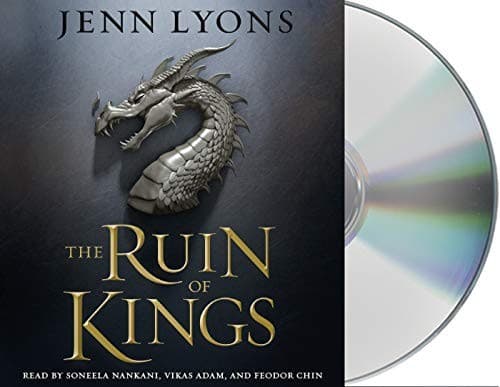
Book details and cover from Google Books.
Ready to read The Ruin of Kings?
Get your copy on Amazon, or listen to it on Audible. We earn a commission if you buy through these links.