
We earn a commission if you buy through these links. Learn more
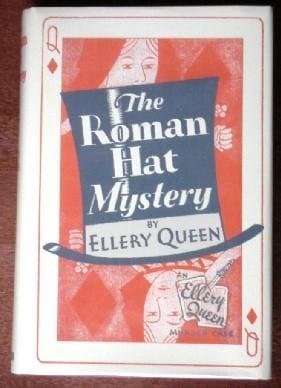
The Roman Hat Mystery
by Ellery Queen
Guide by the Books of the Day editors · Updated · How we write our guides
The 1929 novel that launched Ellery Queen: a fair-play puzzle where every clue sits on the page for you to crack before the detective does.
What Creators Say About The Roman Hat Mystery
2 creators reviewed The Roman Hat Mystery on YouTube between 2024 and 2026, with 69 views between them. Their opinions are their own; we picked these reviews, we didn't write them.
What It's About
The Roman Hat Mystery (1929) is the first novel by Ellery Queen, the joint pen name of cousins Frederic Dannay and Manfred B. Lee. It introduced the young amateur detective who would anchor their long-running series. The story centers on a murder investigated by the New York police, with Inspector Richard Queen running the official inquiry and his son Ellery, a self-assured and somewhat vain writer, supplying the reasoning that cracks the case.
The book's main appeal is its puzzle. Queen plays fair: the evidence is laid out in plain sight, and the authors invite you to test your own deductions before the answer arrives. The prose is brisk and the pace is driven by dialogue, interviews, and the back-and-forth of a 1920s police investigation. It reads more like a logic game than a study of character, and it rewards close attention to small details.
Expect the conventions of its era. Characters are sketched rather than developed, the social attitudes are of their time, and the emphasis falls on the mechanics of the crime and its solution. Read it as a crisp example of the Golden Age detective novel and as a historical artifact of New York in the late 1920s, rather than as a modern thriller with emotional depth.
Read this if you…
- love classic whodunits where you can try to solve the case yourself
- want to see where the modern detective novel's fair-play tradition began
- enjoy dialogue-driven mysteries with a crisp, unfussy style
Skip it if you…
- want richly drawn characters and emotional depth
- expect a fast-paced thriller with action and danger
Key Ideas
- 1
Fair-play clues on every page
The novel's central promise is that a careful reader has everything needed to solve the case. Clues are presented openly, often in the middle of ordinary conversation, so the satisfaction comes from noticing what matters before the detective spells it out. This makes the book feel more like a shared game than a passive story.
- 2
Deduction as the engine of the plot
Rather than building suspense through chases or danger, the book moves forward through questioning, reconsidering witness statements, and reassessing what seemed obvious. Ellery's method is a demonstration of reasoning under pressure, and the book is most engaging when you watch a theory form, collapse, and get rebuilt.
- 3
The father and son partnership
Inspector Queen brings the procedural grounding and the official authority, while Ellery brings the theoretical flair and the willingness to challenge assumptions. Their friction and reliance on each other gives the investigation a human texture that the puzzle alone would lack, and it set the pattern for much of the series.
- 4
A snapshot of 1920s New York
The city, its institutions, and its social codes are part of the appeal. The police methods, the class and gender assumptions, and the everyday details of the period give the book a historical flavor that modern mysteries rarely try to capture. Readers interested in the period will find it as useful as readers interested in the puzzle.
Limitations
The characterization is thin by modern standards. Most people are functions of the plot, and the emotional stakes are low. Some of the social attitudes, particularly about gender, class, and ethnicity, reflect the late 1920s and can feel dated or jarring. The pacing, which is deliberate and built on interrogation, will strike some readers as slow. Ellery himself can be arrogant, which some find charming and others find tiresome. The book is a foundation for the genre more than a polished example of its later refinements.
Questions Readers Ask
- Is The Roman Hat Mystery still worth reading today?
- Yes, especially if you enjoy classic detective fiction or want to see where fair-play puzzles began. The plotting is still satisfying, though the characters and some attitudes feel of their time. It is short and direct, so it is an easy read even if you approach it as a period piece.
- How does it compare to Agatha Christie's mysteries?
- Both are puzzle-focused Golden Age novels, but Christie usually offers sharper characterization and more atmosphere, while Queen leans harder into the logic of the clues and the procedural side of the investigation. If you liked Christie's knack for misdirection, you will likely enjoy Queen's emphasis on the reader's own deduction.
- Published
- 1929
- ISBN
- 9781453229989
- Difficulty
- beginner
- Category
- Fiction
Book details and cover from Google Books.
Ready to read The Roman Hat Mystery?
Get your copy on Amazon, or listen to it on Audible. We earn a commission if you buy through these links.