
We earn a commission if you buy through these links. Learn more
The Ranger
by Ace Atkins
A returning Army Ranger takes on a Mississippi county where old loyalties, drug money, and small-town power have gone unchecked, in a crime novel with real heart and a strong sense of place.
What It's About
The Ranger opens Ace Atkins's Quinn Colson series, set in Tibbehah County, a fictional town in north Mississippi. Quinn comes home after his years in the Army, carrying a soldier's discipline and private wounds, but he finds a place where everyone knows everyone's business and few people ask the questions that matter. The story runs on a familiar crime-fiction engine: a troubling case, a web of local interests, and a protagonist who must decide how far he will fight for a community that has not always fought for him.
Atkins writes in a brisk, muscular style with a strong feel for place. Scenes are short and dialogue-driven, and the South comes through in weather, church, family ties, and the rhythm of small-town talk rather than in long lectures. He has also worked on Robert B. Parker's Spenser novels, so readers familiar with that hard-edged, principled hero tradition will recognize the template, here moved to rural Mississippi and given a more brooding, morally tangled lead.
Reading it feels like a page-turner that cares more about character and consequence than about clever twists. It moves quickly, but it rewards attention to how Quinn's loyalty to home is tested by people he grew up with. Violence is sudden when it comes and not gratuitous, and the book works both as a thriller and as a portrait of a county in transition.
Read this if you…
- want a crime novel where the detective's personal history matters as much as the case
- enjoy Southern settings where community loyalty creates the central conflict
- like rural thrillers in a series and want to start at the beginning
Skip it if you…
- want a puzzle-box mystery built around clues, red herrings, and a surprise solution
- are put off by brutal violence or dark depictions of drug crime
Key Ideas
- 1
Home as a place of obligation
Quinn discovers that the bonds of family, church, and friendship make it harder to see wrongdoing and harder to act against it. The book treats loyalty as a real moral force that can protect people and also shield those who do harm, and that tension drives much of the emotional weight.
- 2
Small-town power and quiet complicity
The corruption here is less about cartoon villains than about favors, silence, and institutions that protect their own. Atkins shows how a county's officials, businesses, and neighbors can each look away, so that wrongdoing stays hidden in plain sight for years.
- 3
The soldier who comes home
Quinn's military training gives him discipline, nerve, and a clear sense of duty, but those same habits don't map neatly onto a community that runs on personal relationships. The gap between his instincts and local expectations creates friction that feels true to the experience of veterans returning to small towns.
- 4
Southern place as character
Rural Mississippi is not just a backdrop. Its landscape, economy, and social codes shape who has power and who gets ignored. Readers who enjoy novels where setting drives plot will find the county nearly as vivid as the people in it.
- 5
Crime fiction with moral weight
The mystery matters, but the book is more interested in what the investigation costs the people involved. Readers looking for a thriller that asks what justice means in a place where everyone is connected will find the series' central question established here.
Limitations
Some readers find the plot's resolutions tidy and the supporting cast of corrupt officials and local characters more familiar than fresh. The mystery itself is straightforward, so those who want a complicated whodunit may feel underserved. The portrayal of rural Southern life comes largely from the viewpoint of the central white protagonist, and some readers feel that Black characters and community perspectives are thinner than the main cast. Atkins works within genre conventions, so the emotional beats can feel familiar to experienced crime readers.
Questions Readers Ask
- Do I need to read the Quinn Colson books in order?
- You don't have to, since each book has its own case, but the series builds on Quinn's relationships, the county's politics, and recurring characters. Starting with The Ranger gives you the background that makes later books land harder. Reading in sequence is the best way to experience the full arc.
- How does it compare to Ace Atkins's Spenser novels?
- Both feature a principled lone protagonist who refuses to look away from wrongdoing, and fans of Spenser will recognize the pacing and moral clarity. The Ranger is darker, more rooted in rural place, and more concerned with community loyalty and the pull of home than with wit and banter.
- Is the book still relevant today?
- Its themes of veterans returning home, drug trafficking in small towns, and local power protecting itself remain widely discussed. The specific details reflect the era in which it was written, but the core conflict between personal loyalty and public duty is timeless enough to resonate with contemporary readers.
- Published
- 2011
- ISBN
- 9780399157486
- Difficulty
- beginner
- Category
- Fiction
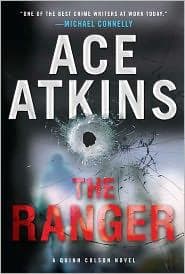
Book details and cover from Google Books.
Ready to read The Ranger?
Get your copy on Amazon, or listen to it on Audible. We earn a commission if you buy through these links.