
We earn a commission if you buy through these links. Learn more
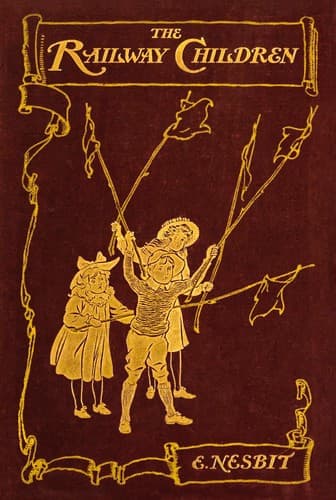
The Railway Children
by Edith Nesbit
A warm, unhurried Edwardian classic about three siblings who turn a sudden move to a railway-side house into a season of courage, kindness, and small wonders.
What It's About
The Railway Children follows Roberta, Peter, and Phyllis, a well-off London family whose comfortable life collapses without much warning when their father is taken away and the household has to move to a quiet house in the country. Nesbit, writing in 1906, keeps the drama low-key. The children are not orphans and are never in real danger of starving, and money worries are handled mostly in the background. The emotional center is the children's attempt to be useful and brave in a world that suddenly feels much smaller.
What makes the book distinctive is its tone. The narrator talks to the reader directly, half amused and half earnest, and the chapters move episodically through the seasons. There are small schemes and rescues, friendships with the people who work the local line, and a steady stream of practical problem-solving. The railway itself becomes a kind of companion, a daily clock and a source of wonder that the children watch with real attention.
Reading it now is a slightly different experience than it was in 1906. The prose is warm and sometimes sentimental, the social assumptions belong to their period, and the pace is leisurely. Expect a book that rewards patience and a willingness to enjoy a chatty narrator's asides, rather than a fast-moving adventure.
Read this if you…
- want a classic children's story with real emotional weight and no pandering
- enjoy warm, episodic books about siblings making their own fun and meaning
- are reading aloud to a child who loves trains or stories of resourcefulness
Skip it if you…
- need a fast plot with modern pacing and frequent cliffhangers
- want a hard-edged portrayal of poverty or of the period's social realities
Key Ideas
- 1
Courage without melodrama
The children face loss and reduced circumstances with calm resourcefulness rather than tears or despair. Nesbit treats quiet competence as the real heroic virtue, and the hardships are handled with a lightness that keeps the book buoyant. The result is a story about endurance that never asks the reader to wallow.
- 2
The railway as a daily ritual
Trains structure the book, giving each day a rhythm of anticipation and routine. The children's fascination with signals, engines, and passengers shows how ordinary machinery can become a source of meaning. Nesbit makes the mundane feel newly exciting, which is much of the book's pleasure.
- 3
Kindness across class lines
The children form warm bonds with station staff and other working people, and goodwill repeatedly crosses social boundaries. The book sees these friendships as sincere, though it views them through the period's assumptions about class. Readers will notice both the generosity and the limits of its vision.
- 4
A narrator who speaks to you
The narrator addresses the reader in a conversational voice, sharing opinions and asides. This makes the reader feel like a confidant rather than an outside observer. For many, this chattiness is the main reason to read the book, and for others it is the main obstacle.
- 5
Waiting, uncertainty, and family
Beneath the cheerful surface runs a thread about separation and the strain of not knowing. Nesbit handles this with restraint, letting the children's hope and steadiness carry the emotional weight. The family bond is the anchor the whole story depends on.
Limitations
Modern readers often find the prose old-fashioned and the pace slow, with long stretches of gentle incident and frequent authorial asides. The class attitudes, including a tendency to present working people as cheerfully deferential, belong to their era. The hardships are softened, so this is a comforting view of struggle rather than a hard one. The book also leans sentimental toward the end, which some readers find moving and others find overdone.
Questions Readers Ask
- Is The Railway Children only for children?
- No, many adults reread it with pleasure. The plot is accessible and the chapters are short, but the gentle irony and affection for ordinary people reward older readers. Expect a slightly formal voice and a nostalgic mood, which are part of the book's charm rather than obstacles to enjoying it.
- How does it compare to Nesbit's Five Children and It?
- Five Children and It is more fantastical, built around a sand-fairy who grants wishes that tend to backfire. The Railway Children is realistic in its setting and grounded in everyday life, though it keeps the same warm narrator. If you want magic, choose Five Children and It. If you want quiet adventure rooted in a real place, this is the better pick.
- Published
- 1900
- ISBN
- 9798779792448
- Difficulty
- beginner
- Category
- Children's Books
Book details and cover from Google Books.
Ready to read The Railway Children?
Get your copy on Amazon, or listen to it on Audible. We earn a commission if you buy through these links.