
We earn a commission if you buy through these links. Learn more
The Push
A sharp, unsettling debut about motherhood, memory, and the question of whether a mother's doubts about her child are a warning or a failure of love.
What It's About
The Push follows Blythe, a woman who feels a distance from her daughter, Violet, almost from the beginning. She carries a persistent sense that something is wrong, and the people around her are quick to dismiss it. Ashley Audrain's debut novel is a psychological story about motherhood, inherited damage, and the family stories we tell ourselves. Its premise is familiar in outline, but the book is more interested in how a mother's unease gets treated as a personal failing rather than something worth examining.
The novel is told in the first person, with Blythe looking back over her life and reflecting on her own childhood and the wounds she believes shaped her. The prose is spare and direct, and the narration is persuasive enough that you keep asking whether you are seeing the child or the mother's fear. Tension builds through ordinary domestic moments rather than big set pieces, so the dread accumulates slowly.
Reading it is uncomfortable and fast. It rewards attention to small details and to what Blythe leaves out or reframes. The book is designed to make you doubt, and to make you notice how quickly you take sides when a woman's account of her own child is in question.
Read this if you…
- want a psychological novel about motherhood that refuses easy answers
- enjoy domestic suspense driven more by character and dread than by plot twists
- are interested in how family stories shape the people who grow up inside them
Skip it if you…
- need a warm, reassuring story or a narrator you can easily like
- find stories about difficult children or a mother's ambivalence too painful to sit with
Key Ideas
- 1
Motherhood as a private, unspoken struggle
The novel takes seriously the gap between how motherhood is supposed to feel and how it sometimes feels. Blythe's ambivalence is treated as something she has to hide, which puts pressure on her to perform contentment while privately falling apart. The book asks what happens to a mother when there is no room to say she is struggling.
- 2
Inherited patterns and the weight of the past
Blythe keeps returning to her own upbringing and to the emotional habits she believes she passed on or failed to escape. The novel explores whether damage travels through families and whether the people involved can ever see it clearly. It treats the past as something that keeps arriving in the present, not as a closed chapter.
- 3
Who gets believed in a family
Much of the tension comes from the gap between Blythe's account and the way others see her and her daughter. The story is built around credibility: whose version of events is trusted, and how easily a mother's word can be set aside. Readers are invited to notice their own assumptions along the way.
- 4
Blame and the expectations placed on mothers
The book examines how quickly responsibility for a child's behavior lands on the mother, and how that expectation shapes what women are willing to admit. It is less a verdict on any single character than a portrait of a social script that leaves little room for doubt or failure.
Limitations
Some readers find the voice repetitive and the emotional pitch relentless, with the same anxieties circling back again and again. The supporting characters are sometimes sketched more than developed, so the story rests heavily on Blythe's perspective. The focus is on a fairly narrow, comfortable social world, and the book does not offer much on how class or race shape these experiences. Its treatment of postpartum struggles and parental blame may feel either bracing or frustratingly one-sided, depending on the reader. The ending divides readers, so expect strong reactions.
Questions Readers Ask
- Is The Push a thriller?
- It has suspense and a steady sense of dread, so some readers take it as domestic suspense. But it reads more like literary fiction about motherhood and family than a plot-driven thriller. The tension comes from what Blythe reveals and withholds, and from how much you trust her, rather than from a series of set-piece chases or reveals.
- I liked Gone Girl. Will I like this?
- Many readers make that comparison because both books use an unreliable narrator inside a troubled marriage or family. The Push is quieter and more focused on motherhood, memory, and the scrutiny mothers face. If you wanted the twisty, glossy pace of Gone Girl, this may feel slower and more inward.
- Is the book still relevant?
- Yes. Its questions about maternal ambivalence, postpartum struggles, and how quickly women are blamed for their children's behavior remain widely discussed. The book's emotional concerns have not dated, though some readers may find its framing of these issues more intense than they expected.
- Published
- 2021
- ISBN
- 9781984881687
- Difficulty
- beginner
- Category
- Fiction
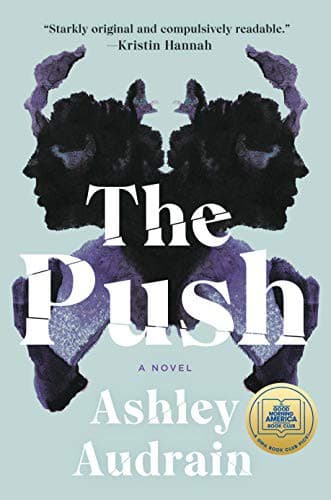
Book details and cover from Google Books.
Ready to read The Push?
Get your copy on Amazon, or listen to it on Audible. We earn a commission if you buy through these links.