
We earn a commission if you buy through these links. Learn more
The Princess Diaries
by Meg Cabot
On screen: The Princess Diaries (film, 2001)
Guide by the Books of the Day editors · Updated · How we write our guides
Meg Cabot's diary-style teen novel is a light, funny romance whose real strength is Mia's wry voice and her awkward, believable transformation.
What Creators Say About The Princess Diaries
2 creators reviewed The Princess Diaries on YouTube between 2008 and 2017, with 9K views between them. Their opinions are their own; we picked these reviews, we didn't write them.
What It's About
The Princess Diaries is told as the private journal of Mia Thermopolis, a fifteen-year-old in New York who is shy, unsure of herself, and far more comfortable with her notebook than with her classmates. The diary format is the book's main engine. Mia's entries are quick, self-deprecating, and full of the small observations that make teenage life feel immediate, so the reader gets close to her embarrassment and her hopes without any heavy narration in between.
The story is light in tone and built around comedy of manners. Much of the pleasure comes from watching an ordinary, slightly clumsy girl try to make sense of a life that suddenly demands poise, public appearances, and a set of rules she never asked for. Cabot writes family, school friendships, and first crushes with a brisk, affectionate eye, and the humor usually lands because Mia is so aware of how ridiculous her situation looks from the outside.
Reading it feels like spending an afternoon with a funny, honest friend. It is quick, easy to finish, and more interested in mood and character than in complicated plotting. Readers looking for a rich, layered world or a sharply literary style may find it breezy, but those who want warmth, humor, and a teenage voice that rings true will likely enjoy it.
Read this if you…
- want a funny, quick read with a strong first-person voice
- enjoy teen romances built on awkward, relatable self-consciousness
- are looking for a feel-good story about family and self-discovery
Skip it if you…
- want a complex plot with many twists or a serious literary style
- are looking for a realistic portrayal of royal life or politics
Key Ideas
- 1
A diary voice that carries the whole book
Because the story is entirely Mia's own writing, the humor and emotion come from how she sees things. Her candor about her looks, her family, and her crushes gives the book its charm, and the reader learns to trust her perspective even when she is clearly wrong about something.
- 2
Identity under pressure
The central question is how a teenager holds onto her sense of self when the world expects her to become someone else. Mia's reluctance and self-doubt are treated seriously. The book suggests that being thrust into a role can be as much an ordeal as a fantasy, and it keeps returning to what she wants for herself.
- 3
Family as both comfort and complication
Mia's relationships with her mother, her grandmother, and the people who surround her are a constant source of both warmth and friction. Cabot uses these dynamics to explore expectation and love, showing how family can push a person in directions she did not choose.
- 4
Romance as tension and wish-fulfilment
The romantic threads supply much of the book's momentum. They are sweet and often comic rather than intense, and they work best as a way of showing Mia's insecurity and her growing willingness to trust her own judgment.
Limitations
The book is lightweight by design, and readers who want depth in its characters or world may find them thin. Mia's voice is charming but can feel repetitive over the length of the series. Its portrayal of royalty is more fairy-tale than realistic, and some readers may find the romance predictable. The diary format also limits the story to Mia's perspective, so other characters stay largely at a distance. Its early-2000s setting and references may feel dated to some modern readers, though the core appeal of its voice remains intact.
Questions Readers Ask
- Is The Princess Diaries suitable for younger readers?
- Yes, it is generally considered a teen and middle-grade-friendly read. The language is accessible, the romance is mild, and the humor is light. Parents of younger readers may want to know that it deals with teenage self-consciousness and family pressure, but it does so in a gentle, comic way that suits most readers in their early teens and up.
- How does it compare to other teen princess stories?
- It is less fantasy-driven than many fairy-tale retellings and grounds its premise in everyday school life and family awkwardness. Readers who enjoy Mia's voice often find it more relatable than more formal royal romances, though it is lighter and less dramatic than those that lean heavily on court intrigue.
- Does the book still hold up today?
- Mostly, because the core appeal is Mia's voice and the comedy of her situation, which do not depend on the era. Some details of technology, pop culture, and social habits feel dated, so modern readers may notice those, but the emotional core about self-doubt and family expectations still reads clearly.
- Published
- 2000
- ISBN
- 9781405051347
- Difficulty
- beginner
- Category
- Children's Books
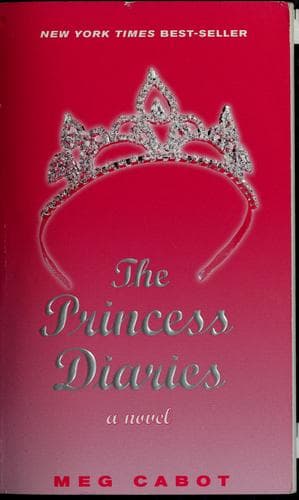
Book details and cover from Google Books.
Ready to read The Princess Diaries?
Get your copy on Amazon, or listen to it on Audible. We earn a commission if you buy through these links.