
We earn a commission if you buy through these links. Learn more
The Princess Bride
On screen: The Princess Bride (film, 1987)
Guide by the Books of the Day editors · Updated · How we write our guides
A witty, self-aware adventure in which William Goldman pretends to abridge a beloved fairy tale, delivering swordplay, romance and a running commentary that is funny without being cynical.
What Creators Say About The Princess Bride
2 creators reviewed The Princess Bride on YouTube between 2017 and 2026, with 8.6K views between them. Their opinions are their own; we picked these reviews, we didn't write them.
What It's About
The Princess Bride presents itself as an abridgment. William Goldman tells us that his father once read him a beloved adventure by a Florinese author, S. Morgenstern, and that he has cut the long political digressions to leave only the good parts. The story itself is a fairy tale: a farm girl named Buttercup, the farm boy she loves, a pirate, a cruel prince, and a band of hired swordsmen, giants and villains who keep the plot moving.
What makes the book distinctive is its voice. Goldman keeps interrupting with asides about his childhood, his father, his editing choices and his opinions of the original, so you always feel two narrators at work. The jokes are dry and quick, and the tone shifts easily between parody of fairy-tale conventions and genuine suspense, with real feeling underneath.
Reading it feels like sitting in on a storytelling session that knows it is a storytelling session. It is light, playful and fast, and most readers finish it in a few sittings. Its pleasures come from the banter, the set-piece encounters and the obvious affection Goldman has for the genre he is mocking.
Read this if you…
- enjoy witty, self-aware adventure with plenty of banter
- want a fairy tale that teases its own clichés but still cares about its lovers
- are looking for a fast, funny read you can finish in a weekend
Skip it if you…
- want serious or realistic fantasy with stakes that never let up
- find sarcasm and meta-commentary tiring rather than charming
Key Ideas
- 1
Fairy-tale conventions examined with a wink
The book takes familiar tropes such as the cruel royal, the impossible quest and the true love that conquers all, and treats them with knowing amusement. The parody never becomes so heavy that the story stops mattering. You laugh at the conventions and still want the characters to get what they deserve.
- 2
A narrator who never leaves the room
The frame of a father reading to a child, and the adult editor who keeps stepping in, gives the book its personality. These interruptions make it feel personal and conversational. They also let Goldman comment on what the reader is seeing, which is the source of much of the humor.
- 3
Adventure built from memorable set pieces
Much of the momentum comes from a sequence of tense, inventive encounters, each with its own rules and its own comic edge. The structure is episodic, so the book moves quickly and rewards attention to small details that pay off later.
- 4
Romance that stays sincere beneath the jokes
Under the satire is a love story that the book takes seriously. The jokes about it are affectionate rather than dismissive, which is why the emotional beats land even in a book this playful. Readers who expect pure cynicism may be surprised by how earnest it becomes.
Limitations
Some readers find the constant meta-commentary wears thin, and the frame's interruptions can slow the story when you just want it to move. Parts of the humor are clearly of their era, and the female characters, Buttercup especially, are drawn lightly, which many modern readers notice. Because so much of the book is parody, readers unfamiliar with fairy-tale and adventure conventions may miss some of the jokes. It is also deliberately slight in emotional and political depth.
Questions Readers Ask
- Do I need to know fairy tales or have seen the film first?
- No. The book stands on its own. Knowing the conventions it mocks adds a layer of enjoyment, but it is not required. Rob Reiner's 1987 film follows the main story closely but trims many of the asides, so readers who loved the movie will find the book richer in the narrator's commentary.
- How does it compare to Terry Pratchett's comic fantasy?
- Goldman is less interested in building a world or satirizing institutions than Pratchett is in the Discworld novels. The Princess Bride is closer to a single fairy tale told with a knowing smile. It suits readers who want a self-contained story rather than a long series.
- Is it still worth reading today?
- For most readers, yes. The swordplay, banter and romance hold up well, although a few jokes reflect 1970s attitudes. It is short enough to try in a single sitting, so the commitment is low even if the humor does not suit you.
- Published
- 1973
- ISBN
- 9780345242259
- Difficulty
- beginner
- Category
- Fiction
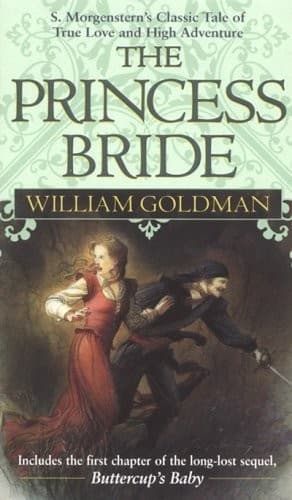
Book details and cover from Google Books.
Ready to read The Princess Bride?
Get your copy on Amazon, or listen to it on Audible. We earn a commission if you buy through these links.