
We earn a commission if you buy through these links. Learn more
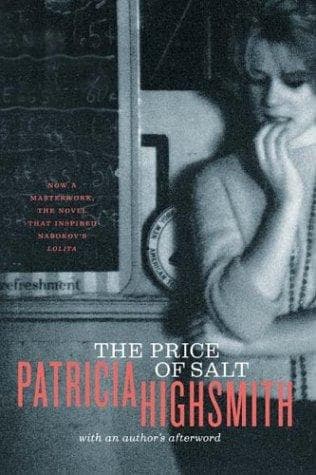
The Price of Salt
A daring 1952 novel about an unlikely attraction in mid-century New York, written with a sharp eye for loneliness, money, and the real cost of living honestly.
What It's About
The Price of Salt follows Therese Belivet, a young woman in New York in the early 1950s who works behind the toy counter of a Manhattan department store and dreams of becoming a stage designer. When an older, elegant customer named Carol Aird leaves a glove behind, the two begin a tentative friendship that slowly becomes something neither of them can easily name or hide.
Highsmith writes in close third person from Therese's side, so the narrative stays inside her head: her uncertainty about her own feelings, her half-formed plans, and her awareness of how little room a young woman without money or family has to make her own choices. The prose is spare and observant, full of small physical details like rooms, trains, clothes, and meals, which give the emotional stakes their weight. Much of the tension comes from what cannot be said aloud in 1950s America, where a relationship like this could cost someone a child, a job, or a reputation.
Reading it now is an unusual experience. The book was first published in 1952 under the pseudonym Claire Morgan, and its refusal to end in the punishing way many novels of its era did was rare. It is less a plot-driven thriller than a study of longing and nerve. Expect patience with interiority and a slow build, and a reward that comes from watching two people test how much of themselves they can afford to show.
Read this if you…
- want a literary novel about queer love in mid-century America, written before such stories could be told openly
- prefer quiet, observant prose and interior drama over plot-driven suspense
- are interested in how work, money, and social pressure shape romantic choices
Skip it if you…
- need fast pacing or a clear mystery to keep you turning pages
- find period attitudes toward sexuality and gender hard to read without frustration
Key Ideas
- 1
Attraction as something to admit, not just feel
Therese spends much of the book unsure what her reactions mean, and the novel treats desire less as a thunderbolt than as a recognition she must decide whether to accept. Her hesitation is not a plot device but the emotional core. Watching her move from confusion toward clarity is one of the book's most absorbing pleasures.
- 2
Money, class, and the cost of independence
Therese's precarious job and modest income shape every decision she makes, from where she lives to what she is willing to risk. Highsmith shows freedom as something expensive, available only to those who can absorb the consequences. The economics of a single woman's life sit underneath the romance throughout.
- 3
Secrecy as a daily discipline
Concealment in the novel is not a dramatic act but a routine, shaping conversations, travel, and even small gestures. Characters measure what they say against who might be listening. This constant low-level vigilance gives the book its tension and makes the cost of openness feel concrete rather than abstract.
- 4
Travel that strips away ordinary structures
A stretch of journeying loosens the couple from the city routines that normally define them. Away from familiar rules and onlookers, their closeness is tested and revealed in new ways. The shift in setting works as a kind of pressure test, showing what their relationship looks like when the usual scaffolding falls away.
Limitations
The pace is deliberately slow, and some readers will find long stretches of introspection repetitive or flat. Therese can seem passive for long periods, which frustrates readers who want her to drive the story. The book uses the clinical and judgmental language of its time when characters discuss same-sex desire, and its perspective is narrow, centered on white, middle-class Manhattan. The 2015 film adaptation, Carol, is warmer and more visual, so readers who know it may find the novel colder and more inward than they expect.
Questions Readers Ask
- Is The Price of Salt still worth reading today?
- Yes, especially if you care about how fiction handled queer love before it was widely accepted. The writing holds up well, and the emotional questions about secrecy, money, and self-knowledge remain sharp. Some period language and attitudes will feel dated, but the core story is still affecting and far less melodramatic than many novels of its moment.
- How does the novel compare to the film Carol?
- The 2015 film Carol follows the novel's broad outline but changes its texture. The film is more visual and emotionally warm, while the novel stays closely inside Therese's thoughts and moves more slowly. If you enjoyed the film, the book will reward you with a richer view of Therese's inner life and hesitations.
- Why was it originally published under another name?
- The novel first appeared in 1952 under the pseudonym Claire Morgan, reflecting the real risks of publishing a sympathetic story about a same-sex relationship at the time. Highsmith later reissued it under her own name. The pseudonym is a useful reminder of the social pressures that shaped the book from the start.
- Published
- 1952
- ISBN
- 9788483002971
- Difficulty
- beginner
- Category
- Fiction
Book details and cover from Google Books.
Ready to read The Price of Salt?
Get your copy on Amazon, or listen to it on Audible. We earn a commission if you buy through these links.