
We earn a commission if you buy through these links. Learn more
The Poisoned Chocolates Case
Guide by the Books of the Day editors · Updated · How we write our guides
A clever, funny Golden Age novel that turns one poisoned-chocolate murder into a debate among amateur sleuths, and shows how a single set of facts can support several convincing stories.
What Creators Say About The Poisoned Chocolates Case
2 creators reviewed The Poisoned Chocolates Case on YouTube between 2022 and 2024, with 3.9K views between them. Their opinions are their own; we picked these reviews, we didn't write them.
What It's About
The Poisoned Chocolates Case (1929) is a detective novel about a murder that the police cannot crack. A box of chocolates has been laced with poison, someone has died, and the case has landed in the newspapers. Rather than follow a single detective through the investigation, Anthony Berkeley gathers a London club of crime-minded amateurs who take the puzzle on as a sort of intellectual parlour game. Each member is handed the same evidence and asked to reason their way to the truth.
The result is less a chase than a series of arguments. Each theory is built with care, tested against the facts, and shown to be plausible, so the reader is constantly asked to weigh one explanation against another. The narrative voice is witty and a little sly, and Berkeley is clearly enjoying himself at the expense of the genre's conventions, including the vanity of clever men who love the sound of their own deductions. It is a book to read slowly, with a pencil or a notebook nearby if you enjoy tracking clues.
Expect a playful, talkative novel rather than a tense thriller. The pleasure comes from watching ideas collide and from the satisfaction of seeing how much a confident theory can hide. If you want atmosphere, danger, or deep emotional stakes, this will feel light. If you want to think like a detective without leaving your chair, it is a delight.
Read this if you…
- enjoy classic puzzle mysteries where the fun is working out the solution yourself
- like witty, self-aware narration that pokes fun at detective fiction
- are curious about how the Golden Age of British crime fiction was built
Skip it if you…
- want fast action, suspense, or a strong emotional arc with a central hero
- find long stretches of talk and debate tiring rather than entertaining
Key Ideas
- 1
Armchair detection as a social game
The club approach turns investigation into conversation. Members are not gathering new evidence; they are interpreting the same facts. That makes the book a study of how people reason together, argue for pride as much as truth, and fall for their own cleverness.
- 2
Several plausible solutions to one crime
Berkeley shows that a set of facts can support more than one neat story. Each member's theory has internal logic, which forces the reader to notice how easily an investigator can fit evidence to a favourite explanation. The fun is in the competing cases and in spotting where each one strains.
- 3
Satire of the clever amateur
The novel gently mocks the型 of the brilliant, self-assured sleuth who treats crime as a stage for his wit. Berkeley's characters are often vain, impatient, or eager to be right first, and their flaws become part of the book's commentary on the genre's heroes.
- 4
Puzzle-driven, dialogue-heavy storytelling
Much of the book happens in talk, letters, and accounts of what each person has noticed. Plot momentum comes from the question of who is right rather than from physical danger. Readers who like precise clue-trails and a sense of fair play will find the structure rewarding.
- 5
Early Golden Age craftsmanship
The book is an early and influential example of the puzzle-centred British mystery. Its experiments with rival solutions and self-aware narration show a writer thinking about the form, which gives it interest for anyone curious about how the genre developed.
Limitations
The characters are deliberately sketched rather than deeply drawn, and the women and servants in particular reflect the class and gender assumptions of 1929. The prose is formal by modern standards and the pace is leisurely. Because the book is built on competing solutions, some readers find the structure repetitive or the final resolution less satisfying than the puzzle promised. Its experiments can feel more like a clever demonstration than a fully emotional novel.
Questions Readers Ask
- Is The Poisoned Chocolates Case a good first Golden Age mystery?
- It can be, especially if you enjoy talk and wit more than action. It is short, clearly structured, and focused on reasoning rather than gore. Readers new to the period may find it a helpful way in, though Agatha Christie's more streamlined puzzles might suit those who want a tighter plot first.
- How does it compare to Agatha Christie?
- Christie usually gives you one detective and one carefully built solution. Berkeley is more playful and self-conscious, using several rival theories and mocking the genre's heroes. Fans of Christie's cleverness will enjoy the puzzle, but the tone is drier and more satirical.
- Does the book still hold up today?
- As a puzzle and a piece of literary history, it holds up well. The social attitudes and some characterisation are clearly of their time, so modern readers should expect that. The logic-driven game and the sharp, sometimes cynical humour remain enjoyable.
- Published
- 1929
- ISBN
- 9785267002431
- Difficulty
- beginner
- Category
- Fiction
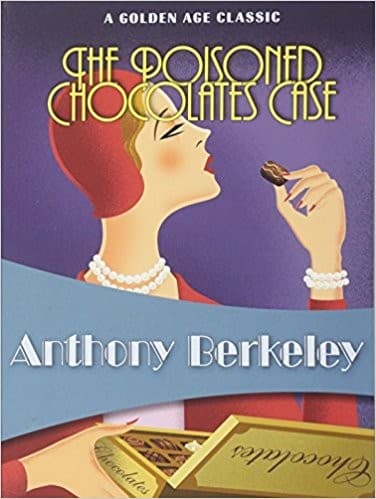
Book details and cover from Google Books.
Ready to read The Poisoned Chocolates Case?
Get your copy on Amazon, or listen to it on Audible. We earn a commission if you buy through these links.