
We earn a commission if you buy through these links. Learn more
The Passage
Justin Cronin's The Passage starts as a military thriller and grows into a sprawling post-apocalyptic epic. Who will it suit, and who should skip it?
What It's About
The Passage opens as a government thriller. A secret military program looking for a weapon, and perhaps a cure, pulls together a condemned prisoner, an FBI agent, and a small girl no one seems to want, then sends them toward a virus drawn from the Bolivian jungle. The early chapters move with the momentum of a conspiracy novel, full of cover-ups, bad decisions, and people who realize too late what they have done. Then the book breaks open into something far larger: a collapse of civilization followed by a long afterlife in which survivors try to rebuild a fragile human community.
Cronin writes with a wide lens. The book jumps between characters, places, and decades, and its prose shifts from cinematic action to quiet, almost pastoral passages about daily life in a walled settlement. Stretches of the middle are slow and reflective, which some readers find rewarding and others find padded. The emotional core is less about the monsters than about the people who must keep faith with one another when the old rules no longer apply.
Reading it feels like settling into a long saga. The horror is real but not constant, and the tone leans toward myth, with a mood of dread and tenderness that many readers compare to Stephen King's The Stand. Be prepared for a story that ends as the first part of a trilogy rather than a complete arc, so committing to it means committing to the sequels.
Read this if you…
- enjoy sprawling post-apocalyptic epics in the vein of The Stand
- want a thriller that slowly turns into a meditation on community and loss
- are willing to commit to a trilogy and let the story unfold at its own pace
Skip it if you…
- want a tight, self-contained novel with a clear and satisfying ending
- dislike large casts, frequent time jumps, and slow reflective middle sections
Key Ideas
- 1
Scientific hubris as the origin of catastrophe
The collapse begins with a government project that treats a dangerous biological discovery as a tool for national advantage. Cronin uses this setup to explore how institutions justify extreme choices in the name of security, and how the people carrying out those orders often understand the risks only after it is too late.
- 2
Found family and the making of community
Much of the book's power comes from the settlement that forms after the collapse. Cronin pays close attention to how strangers become a community through shared work, rituals, and loyalty, and how fragile those bonds are when fear and scarcity arrive.
- 3
A child as the fragile center of hope
The girl at the heart of the story is more than a plot device. Her uncertain nature and the attention other characters give her make her a symbol of possibility, and the book keeps asking what the future might owe to someone who did not choose her position.
- 4
Storytelling across generations and memory
Later sections are shaped by how events are remembered, retold, and distorted over decades. Cronin lets the reader see the gap between what happened and what survivors believe happened, which gives the mythic scale of the book a grounded, human texture.
- 5
Hope and cruelty existing side by side
The book does not settle into simple good versus evil. Its characters commit acts of kindness and violence with the same conviction, and the narrative keeps returning to the question of what people will do to remain human when survival seems to demand otherwise.
Limitations
Common criticisms focus on length and pacing. The opening is fast, but the book slows considerably in its middle, and some readers find the large cast and shifting timelines hard to track. Female characters have been criticized as underdeveloped in places, and some sentimental passages can feel heavy-handed. The book also leaves much unresolved, which may frustrate readers who want a complete story. The science behind the virus is loose, and the mechanics matter less than the emotional arc.
Questions Readers Ask
- Is The Passage a vampire novel?
- The infected creatures in the book are often called virals, and they behave in ways that recall vampires. Cronin, however, treats them as the product of a biological experiment rather than folklore. Readers expecting a gothic vampire story may be surprised by how scientific and sprawling the book is, with much of its length given to ordinary human life.
- Do I need to read the sequels?
- Yes, if you want resolution. The Passage delivers real emotional payoffs, but it leaves major questions open. The later volumes, The Twelve and City of Mirrors, carry the story forward, and readers who enjoy the first book usually continue with them.
- Published
- 2010
- ISBN
- 9782221111130
- Difficulty
- intermediate
- Category
- Fiction
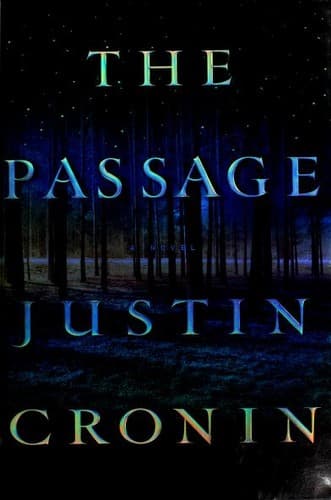
Book details and cover from Google Books.
Ready to read The Passage?
Get your copy on Amazon, or listen to it on Audible. We earn a commission if you buy through these links.