
We earn a commission if you buy through these links. Learn more
The Nickel Boys
by Colson Whitehead, JD Jackson
Guide by the Books of the Day editors · Updated · How we write our guides
Whitehead's Pulitzer Prize-winning novel turns a wrongful conviction into a sharp, painful look at how a Florida reform school failed the Black boys sent to it, and at the friendship that carries one of them through.
What Creators Say About The Nickel Boys
2 creators reviewed The Nickel Boys on YouTube between 2019 and 2024, with 24.2K views between them. Their opinions are their own; we picked these reviews, we didn't write them.
What It's About
The Nickel Boys follows Elwood Curtis, a bright, principled Black teenager in 1960s Tallahassee who believes in education and in the promise that doing things the right way will be rewarded. A wrongful conviction sends him to the Nickel Academy, a reform school in the Florida Panhandle where boys are beaten, exploited, and held in a climate of fear and silence. Whitehead draws on the real Dozier School for Boys to build the institution, and the novel's power comes from how precisely it shows the machinery of abuse.
Whitehead's prose is controlled and exact. Long, flowing sentences give way to short, cutting observations, and the narrative keeps its focus tight on Elwood's experience and his friendship with Turner, a streetwise boy who understands how the school really works. The structure is part of the argument. Whitehead uses shifts in point of view to show how memory, witness, and responsibility operate, and a late turn reframes what has come before.
Reading it is harrowing without being gratuitous. Violence is present, but Whitehead rarely lingers on it for shock. The experience is short, fast, and emotionally heavy, the kind of book you finish in a few sittings and keep thinking about for days. The audiobook, narrated by JD Jackson, suits the rhythm of the prose and gives the characters distinct voices.
Read this if you…
- want a historical novel that deals directly with racial injustice and the failures of the American justice system
- appreciate precise, controlled prose that builds emotional weight through restraint
- are interested in how fiction can draw on real institutions and real harm to make an argument
Skip it if you…
- need a light or escapist read, since the subject matter is consistently dark and painful
- want a sprawling plot with many subplots and a wide cast of characters
Key Ideas
- 1
Belief in fairness meeting an unfair world
Elwood starts out convinced that hard work, honesty, and the rule of law will protect him. The novel tests that faith again and again, asking what a person should do when the systems meant to protect them are built to punish. His idealism is not mocked; it is shown to be both admirable and dangerously unprepared for the place he ends up.
- 2
Friendship as a moral choice
Elwood's relationship with Turner is the emotional center of the book. The two boys represent different strategies for survival, and their bond raises hard questions about loyalty, compromise, and what one person owes another when the adults around them offer no help at all.
- 3
Institutional silence and everyday complicity
Much of the cruelty at the Nickel Academy depends on people who look away, follow orders, or benefit from the system's secrecy. Whitehead makes the reader see how an institution sustains itself through routine, paperwork, and the reluctance of outsiders to ask questions.
- 4
Structure that reflects how we remember
The novel's narrative choices are not decoration. Shifts in perspective and a late reframing make the reader consider who gets to tell a story and whose version is lost. The form asks you to pay attention to what is withheld as well as what is shown.
Limitations
Some readers find the characterization more schematic than the rest of the book, with figures who serve as moral signposts more than fully rounded people. The novel's focus on Elwood and Turner means the wider world, including women and life beyond the school, receives limited attention. Because it is fiction built on a real and still-painful history, some critics argue that its emotional arc is shaped to deliver a clear message. Others feel the late structural move, while effective, is more a device than a natural consequence of the story.
Questions Readers Ask
- Is The Nickel Boys based on a true story?
- Yes, in the sense that it is inspired by the Dozier School for Boys in Marianna, Florida, a real reform school with a documented history of abuse. Elwood, Turner, and the Nickel Academy are fictional, and Whitehead compresses and invents events for the novel. Readers who want the historical background should look into the real school's records and investigations after finishing.
- Should I read The Nickel Boys before Whitehead's The Underground Railroad?
- You can read them in either order, since they are independent novels. The Nickel Boys is shorter and more focused, with a narrower cast and a tighter timeframe. The Underground Railroad is more sweeping and uses an alternate-history frame. If you want a single, direct novel about institutional injustice, start with The Nickel Boys.
- Published
- 2019
- ISBN
- 9780385537070
- Difficulty
- intermediate
- Category
- Fiction
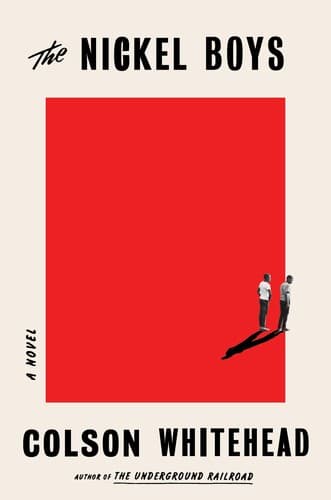
Book details and cover from Google Books.
Ready to read The Nickel Boys?
Get your copy on Amazon, or listen to it on Audible. We earn a commission if you buy through these links.