
We earn a commission if you buy through these links. Learn more
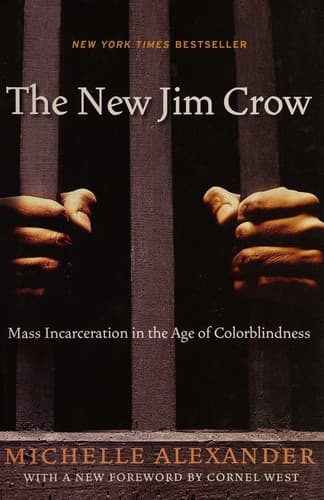
The New Jim Crow
A pointed, influential argument that mass incarceration in the US functions as a racial caste system, useful for readers who want the legal history behind the debate.
What It's About
The New Jim Crow is nonfiction, despite the Fiction category on this listing. Michelle Alexander, a law professor and former civil rights lawyer, argues that the rapid growth of US incarceration since the 1970s, driven largely by the war on drugs, has built a system of social control that works much like the racial caste system it followed. She builds the case from legal history, court decisions, and policy analysis, and she writes for general readers rather than specialists.
The approach mixes policy history, close reading of legal doctrine, and first-person accounts of people navigating life after release. The tone is urgent and argumentative. Alexander is making a case and wants you to feel what is at stake, so this reads more like being walked through an argument by a committed advocate than like working through a reference text.
The book is short enough to finish in a week, and its strongest sections on the lived consequences of a criminal record land hard. Some readers find the moral framing insistent, and parts of the argument repeat the same central claim in new settings. Expect a book that asks you to reconsider familiar assumptions about punishment and race, not one that offers a balanced menu of reforms.
Read this if you…
- are interested in how criminal justice policy has shaped American race relations since the 1970s
- want a readable legal and historical argument rather than a dense policy report
- are willing to have your assumptions about race, punishment, and citizenship challenged
Skip it if you…
- want a neutral, data-heavy survey of competing criminal justice reform options
- prefer writing that stays within legal doctrine or quantitative research without a strong moral argument
Key Ideas
- 1
Incarceration as a lasting caste system
Alexander argues that the scale of imprisonment, particularly of Black men, combined with the legal penalties that follow release, creates a permanent underclass. A criminal record shuts people out of voting, jury service, public benefits, housing, and many jobs, so the punishment does not end when the sentence does.
- 2
The drug war as the engine of growth
She traces the explosion in prison populations to drug enforcement policy beginning in the 1980s. Sentencing gaps between crack and powder cocaine serve as a key example, and she argues that enforcement concentrated on poor Black neighborhoods even though drug use across racial groups was broadly similar.
- 3
Racial control without openly racist rules
Alexander contends that the system persists through colorblind rhetoric and legal standards that make discrimination very hard to prove. Outcomes can look race-neutral on paper while producing sharply racial results, and she draws parallels to earlier eras of formal segregation.
- 4
Why courts have been slow to intervene
The book examines Supreme Court rulings that set a high bar for showing discriminatory intent. Alexander argues that the courts have largely declined to correct these disparities, so she concludes that meaningful change has to come from organized political pressure rather than litigation alone.
- 5
Building a movement to end the system
The closing argument urges readers to recognize the system for what she believes it is, support people affected by it, and build broad coalitions. She uses the civil rights movement as her model for how sustained public pressure can change law.
Limitations
Critics argue that the Jim Crow comparison is overstated and flattens real differences between the segregation era and today. Some scholars dispute specific causal claims about drug enforcement and racial targeting, and the book can underplay the harm of violent crime and the interests of victims. Because it was published in 2010, its statistics and policies are dated. Many states have since changed sentencing, bail, and record-restriction rules, so treat the book as a foundation for the debate rather than a current policy guide. Its focus is the United States.
Questions Readers Ask
- Is The New Jim Crow fiction?
- No. It is nonfiction, a work of legal and historical argument about mass incarceration in the United States. The Fiction category on this listing is incorrect. It is written for general readers, so the legal material is explained in plain language, but it is an argued case rather than a story.
- Is the book still relevant?
- Yes, the core argument about the lasting effects of a felony record remains widely discussed. Some reforms, such as ban-the-box hiring rules and rights restoration in certain states, have come since 2010. Read the book for its argument and history, and check current sentencing and incarceration data for specifics.
- How does it compare to Just Mercy?
- Bryan Stevenson's Just Mercy centers on individual cases and the author's work defending people on death row, so it is more narrative and personal. The New Jim Crow is broader and more analytical, tracing policy and legal doctrine across decades. Readers who want stories first may prefer Stevenson, while those wanting a systemic argument will likely prefer Alexander.
- Published
- 2000
- ISBN
- 9781511832236
- Difficulty
- intermediate
- Category
- Fiction
Book details and cover from Google Books.
Ready to read The New Jim Crow?
Get your copy on Amazon, or listen to it on Audible. We earn a commission if you buy through these links.