
We earn a commission if you buy through these links. Learn more
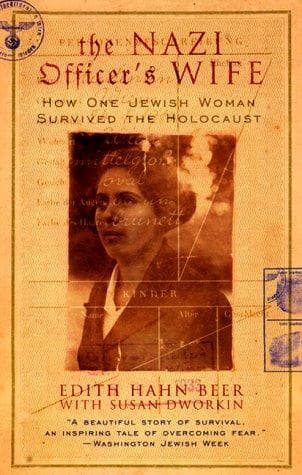
The Nazi Officer's Wife
Guide by the Books of the Day editors · Updated · How we write our guides
A survival memoir from inside Nazi-era Vienna, where a Jewish woman's marriage to a German officer becomes both shelter and a moral trap.
What Creators Say About The Nazi Officer's Wife
2 creators reviewed The Nazi Officer's Wife on YouTube between 2016 and 2018, with 1.9K views between them. Their opinions are their own; we picked these reviews, we didn't write them.
What It's About
The Nazi Officer's Wife is Edith Hahn Beer's memoir of living as a Jewish woman in Nazi-occupied Vienna. She was first pushed out of her studies and work by anti-Jewish laws, then went into hiding under a false identity. Its central episode is her marriage to a Wehrmacht officer, a union that gave her a respectable cover and a measure of protection no document could fully supply. The book is written in the first person, in a plain and direct voice rather than an elevated literary one.
What makes it an unusual reading experience is the constant tension between safety and complicity. The stretches of hiding feel tight and claustrophobic, full of small calculations about who might recognize her, what she can say, and when silence is safer. The marriage complicates things further. She is living inside the household of a man who wears the uniform of the system hunting her people, and the book does not let the reader settle into easy judgment about either of them.
Expect a memoir that moves through episodes and personal observation rather than sweeping historical analysis. Beer is more interested in daily texture and private decisions than in explaining the machinery of the Holocaust, so readers who want a full account of policy or the wider war will need other sources. It is an absorbing read that rewards attention to what is left unsaid.
Read this if you…
- are drawn to first-person civilian testimony from the Holocaust rather than camp narratives
- want to think seriously about survival, compromise, and moral gray zones
- are interested in Vienna and the experience of Jews living hidden in plain sight
Skip it if you…
- want a broad historical overview of the Holocaust or the Second World War
- prefer fiction with a tightly plotted structure or heavy stylistic ambition
Key Ideas
- 1
Survival as a daily negotiation
Much of the book is about the unglamorous work of staying alive: managing appearance, papers, language, and social contact. Beer shows how survival in hiding was built from many small decisions rather than one heroic act, and how fear became a routine part of ordinary days.
- 2
Marriage as both refuge and risk
The marriage offers real protection, but it also demands emotional and moral accommodation. Beer explores what it means to depend on a partner whose role in the wider system is dangerous to people like her, and how intimacy and suspicion can coexist in the same household.
- 3
Moral ambiguity without easy verdicts
The memoir resists sorting people into heroes and villains, including the author herself. Readers are asked to weigh the choices that kept her alive against the compromises they required, and to notice how the same circumstances can produce very different behavior.
- 4
Memory, testimony, and what is left out
Written long after the events, the book carries the uncertainties of recollection. Paying attention to gaps, omissions, and the way the narrator frames her past is part of reading it well, and it encourages a careful, questioning approach to personal testimony.
Limitations
Some reviewers have found the narrative episodic, with certain stretches less detailed than others and reflection sometimes lagging behind the events. As a memoir, it rests on one person's recollection, given decades after the events, so readers should check its claims against historical sources. Questions have also been raised about how fully the husband's role and motivations are explored. The book is strongest as a personal account, not as a complete record of the period.
Questions Readers Ask
- Is this book suitable for readers new to Holocaust literature?
- Yes, reasonably so. The prose is direct and needs no specialist knowledge, though some background on Austria after the 1938 annexation will help you follow the setting. Because the material is emotionally heavy, it is worth reading at a pace that suits you rather than rushing through it.
- How does it compare to The Diary of a Young Girl?
- Anne Frank's diary is written by a child hiding in a single attic. Beer's memoir covers years of moving through a city under a false identity, and the marriage gives it a more unsettling, adult moral texture. Readers who want a personal account of hidden life will find both valuable, but they ask different questions.
- Is the book still relevant today?
- Yes. Questions about survival under a false identity, and about how ordinary people navigate authoritarian rule and their own complicity, remain central to Holocaust studies and to wider discussions of how societies respond to persecution.
- Published
- 2000
- ISBN
- 9780688177768
- Difficulty
- intermediate
Book details and cover from Google Books.
Ready to read The Nazi Officer's Wife?
Get your copy on Amazon, or listen to it on Audible. We earn a commission if you buy through these links.