
We earn a commission if you buy through these links. Learn more
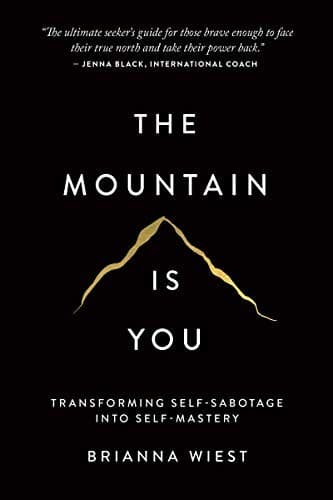
The Mountain Is You
Guide by the Books of the Day editors · Updated · How we write our guides
A direct, reflective look at why people repeat self-defeating patterns, useful for readers who want to examine their own habits rather than just motivate themselves.
What Creators Say About The Mountain Is You
2 creators reviewed The Mountain Is You on YouTube in 2025, with 645.5K views between them. Their opinions are their own; we picked these reviews, we didn't write them.
What It's About
The Mountain Is You argues that most self-sabotage is not a failure of discipline or laziness. Brianna Wiest's central claim is that people often undermine their own goals because familiar patterns, even painful ones, feel safer than the uncertainty of change. The title points to the idea that the obstacles we blame on circumstances usually trace back to internal habits, beliefs, and old emotional reflexes.
The book is written in short, essay-like sections in a direct, second-person voice. It reads more like a long, reflective letter than a manual. Wiest draws on ideas about childhood conditioning, self-worth, relationships, and identity, and she leans on pointed observations more than on research, so citations and data are relatively light.
Reading it is quick and often affecting, sometimes like having a familiar pattern named precisely. It rewards slow reading. Readers tend to get the most from it by pausing after a section and testing the idea against their own recent choices, rather than treating it as a checklist to finish.
Read this if you…
- keep repeating a painful pattern even though you understand it intellectually
- prefer reflective, essay-style writing to step-by-step programs
- want a gentle, emotionally focused starting point for self-examination
Skip it if you…
- want a research-heavy book full of studies and citations
- need practical habit-tracking or productivity systems to get things done
Key Ideas
- 1
Self-sabotage as a protective strategy
The book reframes self-defeating behavior as a way of avoiding something that feels more threatening, such as disappointment, rejection, or the vulnerability of trying. Seen this way, a stalled project or a repeated relationship mistake makes sense as a defense, which means it can be understood rather than simply condemned.
- 2
Origins in early emotional conditioning
Wiest suggests many adult patterns were learned early, in family or formative relationships, and continue unnoticed. The useful move she encourages is tracing where a belief about safety or worth first came from, since a pattern that was once adaptive can keep operating long after it stops serving you.
- 3
Identity and the stories we tell ourselves
Behavior tends to follow self-image, so the book argues that lasting change depends on revising the story you tell about who you are. Willpower applied to a habit that conflicts with that story is usually temporary, while a shift in self-concept makes new choices feel consistent rather than forced.
- 4
Responsibility without self-blame
A recurring theme is that owning your patterns is the starting point for change, while shame tends to keep them in place. The distinction matters: accountability points toward the next action, whereas self-criticism mostly produces more avoidance and more of the same behavior.
- 5
Repeated choices rather than one breakthrough
The book treats growth as a series of small, recurring decisions to act differently, not a single moment of insight. This framing is encouraging for readers who have failed at dramatic resolutions before, though it asks for patience and a willingness to keep returning to the same lessons.
Limitations
Critics often say the book is more repetitive than its length suggests, and that its short, aphoristic sections can feel generic when read in a row. Its evidence is mostly anecdotal and observational rather than drawn from clinical research, so readers looking for scientific grounding will need to look elsewhere. The focus on internal patterns can also understate the role of trauma, poverty, illness, or discrimination, and the book is not a substitute for therapy when deeper problems are involved.
Questions Readers Ask
- Is The Mountain Is You useful if I am not in therapy?
- Yes, many readers find it a helpful entry point for self-reflection. It offers language for patterns you may already notice. However, it is not a clinical treatment, and if your struggles involve depression, anxiety that disrupts daily life, or past trauma, working with a professional alongside the book is a better approach.
- How does it compare to Atomic Habits?
- Atomic Habits focuses on building behavior systems through small, structured changes. The Mountain Is You focuses more on the emotional reasons behind self-defeating behavior. If you want practical tactics, James Clear's book is the better fit. If you want to understand why you resist change in the first place, Wiest's book goes deeper into that question.
- Is the book still relevant after its publication?
- Its core themes about avoidance, self-worth, and repeated patterns are long-standing human concerns, so the ideas have not dated much. The book is less useful as a source of current research or specific techniques, so treat it as a framework for reflection rather than a scientific reference.
- Published
- 2020
- ISBN
- 9781949759945
- Difficulty
- beginner
- Category
- Self-Improvement
Book details and cover from Google Books.
Ready to read The Mountain Is You?
Get your copy on Amazon, or listen to it on Audible. We earn a commission if you buy through these links.