
We earn a commission if you buy through these links. Learn more
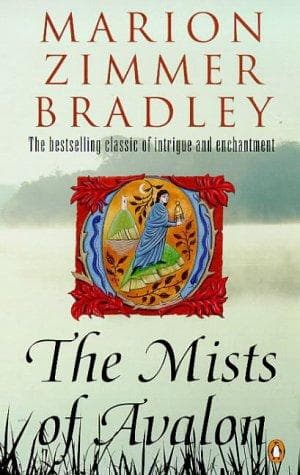
The Mists of Avalon
Marion Zimmer Bradley retells the Arthurian legend from the women's side, turning Morgaine, Viviane and Gwenhwyfar into the people whose choices shape the story, and asking what is lost when an old faith gives way to a new one.
What It's About
The Mists of Avalon retells the Arthurian legend, from the early years of Uther and Igraine through the rise and fall of Camelot, but it puts women at the center. Most of the narration belongs to Morgaine, the sister usually painted as a villain, along with Viviane, the priestess of the Lady of the Lake, and Gwenhwyfar, the queen. Because several women take turns telling events, the same moment can look very different depending on who is watching, and loyalties keep shifting.
The book's deepest concern is religion. The old worship of the Goddess, tied to the land, the seasons and the sacred isle of Avalon, is gradually pushed aside by a Christian church that treats it as heresy. Bradley does not present this as simple progress. She asks the reader to feel the pull of both sides, and to notice how faith, politics and family obligation tangle together. The prose is leisurely and immersive, built on domestic detail, ritual and court intrigue more than on battles or quests.
Reading it is a slow, absorbing experience. It rewards patience with atmosphere and emotional stakes, though the pacing sags in places and the long span of years can make the story feel episodic. Expect a novel that is less about knights and swords than about who gets to tell the story and whose gods are remembered.
Read this if you…
- enjoy long, immersive historical fiction that values atmosphere and character over quick plot
- want the Arthurian legend told from the perspective of the women who are usually sidelined
- are curious about the clash between older nature-based religion and Christianity
Skip it if you…
- want fast-paced adventure, battles and tight plotting from start to finish
- find long stretches of domestic detail and court intrigue tedious
Key Ideas
- 1
The old faith as a living religion
Bradley builds the worship of the Goddess as a full, lived religion, with priestesses, seasonal rites and sacred places. Rather than treating it as quaint folklore, she makes it feel like something worth defending, which gives the conflict its emotional weight.
- 2
Power for women within narrow limits
The women hold real influence through religion, counsel and family ties, but their options are sharply limited by a male-dominated court and church. The novel explores how they use the power they have, often at personal cost, and how that power can turn against them.
- 3
Competing loyalties between sisters and queens
Morgaine and Gwenhwyfar are drawn into opposing camps, and both believe they are acting rightly. Their rivalry and eventual understanding of each other drive much of the drama, and the reader is encouraged to judge neither too quickly.
- 4
Retelling a legend from the margins
Because the story is told from the edges of the traditional narrative, familiar events take on new meaning. Bradley reframes well-known figures and episodes, so the pleasure lies partly in seeing the legend reassembled from a different angle.
Limitations
Critics often point to the book's pacing, which can feel slow across its many years, and to a melodramatic streak in some romantic and emotional scenes. The Christian characters are sometimes drawn as one-dimensional, which weakens the book's argument about faith. Its picture of a unified ancient Goddess religion draws on modern neopagan ideas rather than solid historical evidence, so it should be read as a novel, not a history. Some readers also find the sexual content and the handling of consent in a few scenes dated.
Questions Readers Ask
- Is The Mists of Avalon a good starting point for Arthurian fiction?
- It can be, if you like emotional, character-driven stories. It assumes you know the basic legend and does not explain its background. Readers new to the material may enjoy it more after reading a shorter, more action-driven retelling first, or simply by letting the familiar names come to them as they go.
- How does it compare to T. H. White's The Once and Future King?
- White's book is lighter, funnier and more focused on Arthur himself, with a comic, episodic tone. Bradley's novel is longer, more serious and centered on women and religion. If you want the king's story, White suits you better; if you want the perspective of those around him, Bradley is the stronger choice.
- Is it still worth reading today?
- Yes, especially for readers interested in feminist retellings of myth, which have become much more common since it appeared. Some of its attitudes and scenes feel dated, but its central question about who controls a culture's stories still resonates, and it remains one of the best-known examples of the genre.
- Published
- 1979
- ISBN
- 9783898971072
- Difficulty
- intermediate
- Category
- Fiction
Book details and cover from Google Books.
Ready to read The Mists of Avalon?
Get your copy on Amazon, or listen to it on Audible. We earn a commission if you buy through these links.