
We earn a commission if you buy through these links. Learn more
The mastery of self
A practical Toltec-inspired guide to spotting the inherited beliefs that quietly run your inner life, useful for newcomers to self-help who want exercises over theory.
What It's About
The Mastery of Self presents itself as a practical guide to personal freedom, drawn from the Toltec-inspired teachings associated with the Ruiz family. Its central claim is that much of our suffering comes from an inner "domestication": beliefs, rules, and self-images we absorbed as children and now enforce on ourselves without noticing. The book asks readers to identify these inherited agreements and decide which ones they still want to keep.
The style is direct and conversational, closer to a spiritual self-help primer than a scholarly study. Ideas are repeated in different words and illustrated with everyday examples, and the book leans on reflection and exercises rather than heavy argument. Readers who expect citations, research, or a tightly built structure may find it loose.
Reading it feels less like gaining new information and more like being asked to pay closer attention to your own habits of thought. It works best slowly, in short sittings, with a notebook nearby. The tone is encouraging and gentle, though some readers will find the repetition and spiritual framing comforting while others will find them unconvincing.
Read this if you…
- want a gentle, exercise-based introduction to examining your own beliefs
- are interested in Toltec-inspired ideas and the broader Ruiz family body of work
- find that you react strongly to criticism or shame and want to understand where those reactions come from
Skip it if you…
- want evidence-based psychology, clinical methods, or research citations
- prefer tightly argued books with a clear, linear structure
Key Ideas
- 1
Inherited beliefs shape everyday self-judgment
The book argues that many of the rules you apply to yourself were learned early, from family, culture, and authority figures, and were never chosen. Because they feel like plain facts, they go unexamined. The first step it recommends is simply noticing which of these inner voices are yours and which were handed to you.
- 2
Personal freedom begins with self-observation
Rather than trying to change behavior directly, the book emphasizes watching your reactions as they happen. Anger, shame, and anxiety become useful signals pointing to a belief you have been holding. The practice is patient and repetitive, built on returning to awareness again and again.
- 3
Choosing your agreements deliberately
A recurring theme is that you can consciously replace old agreements with ones you actually endorse. This is presented as an ongoing choice rather than a single breakthrough. The emphasis falls on honesty with yourself about what you truly believe, not on adopting a new set of positive slogans.
- 4
Spiritual framing over empirical evidence
The ideas draw on a mythic and spiritual worldview rather than psychological research. This gives the book its warmth and sense of tradition, but it also means its claims are offered as wisdom to test through your own experience. Readers who want clinical grounding will need to look elsewhere for it.
Limitations
The book's main limitation is its evidence base. Its claims rest largely on tradition and personal insight rather than studies, so readers who want to verify its ideas will find little to check. Its repetitive, conversational style can feel thin to those used to more rigorous writing. It also says little about how these practices fit alongside therapy or treatment for serious anxiety, depression, or trauma, and it should not be read as a substitute for professional care when those issues are present.
Questions Readers Ask
- Is The Mastery of Self a good first self-help book?
- It can be, especially for readers who like reflective exercises and a warm tone. The ideas are simple and the chapters are short enough to digest. Readers who are new to the Toltec-inspired tradition may find the spiritual language a little unfamiliar at first, but it is not technical and does not assume prior knowledge.
- How does it compare to the author's other book, The Four Agreements?
- The Four Agreements is shorter and more focused on a handful of principles. This book tends to go deeper into the process of noticing and revising inherited beliefs, and it asks for more sustained personal reflection. If you want a quick framework, start with the shorter book; if you want more practice, this one offers it.
- Is the advice still relevant today?
- Its core questions about self-criticism and inherited expectations remain widely relevant, and many readers find them useful. The spiritual framing may feel dated or unconvincing to some, and the book predates much of the current research on self-compassion and cognitive habits. Treat it as one perspective among several.
- Published
- 2016
- ISBN
- 9781938289538
- Difficulty
- beginner
- Category
- Psychology
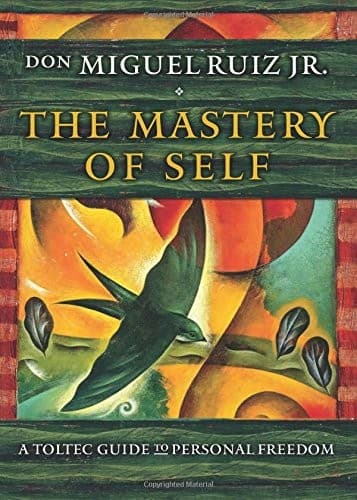
Book details and cover from Google Books.
Ready to read The mastery of self?
Get your copy on Amazon, or listen to it on Audible. We earn a commission if you buy through these links.