
We earn a commission if you buy through these links. Learn more
The Man in the High Castle
Dick's unsettling picture of America under Axis rule asks what history, fate, and ordinary choices really mean, without preaching.
What It's About
The Man in the High Castle, published in 1962, imagines a United States that lost the Second World War. Germany and Japan have divided the country between them, with the Nazis controlling the East and Japan the Pacific states. The story follows several people in San Francisco and the Rocky Mountain region, including a jewelry maker, a Japanese trade official, a dealer in American antiques, and a restless woman who gets pulled into a dangerous world. Their paths gradually converge.
Dick's prose is plain, conversational, and often domestic. He spends as much time on small irritations, money worries, and social awkwardness as on politics, which makes the occupation feel lived-in rather than theoretical. The book also contains a novel-within-the-novel, an alternate history imagining an Allied victory, and that device gives the reader a second mirror to hold up against the first.
Reading it is a slow, quietly disorienting experience. There is little conventional action, and several threads move at different speeds. What lingers is the mood of unease and the questions it raises about authenticity, complicity, and whether any one version of reality is more real than another. It rewards patience more than it rewards plot-hungry readers.
Read this if you…
- are curious about alternate history but want it anchored in character rather than battles
- enjoy novels that leave you turning over moral and philosophical questions for days afterward
- can tolerate a slow, episodic pace in exchange for atmosphere and ideas
Skip it if you…
- want a fast, plot-driven thriller with clear heroes and villains
- need a tidy, fully resolved ending to feel satisfied
Key Ideas
- 1
Alternate history as a mirror
Dick is less interested in the mechanics of how the Axis won than in what a defeated world would feel like from the inside. The counterfactual setup is a lens for examining the real 1960s, its anxieties about power, conformity, and national identity, rather than a puzzle to be solved or a battle to be won.
- 2
Ordinary lives under occupation
Most characters are not heroes or resistance fighters. They are shopkeepers, craftsmen, and office workers making accommodations to get by. The book is interested in how people rationalize their compromises, and how a regime becomes normal through countless small decisions that no one feels responsible for.
- 3
Fate, chance, and the I Ching
Several characters consult the ancient Chinese oracle before making important decisions. The device raises a persistent question: are the characters choosing their paths, or are they being steered by forces they cannot see? The book never fully settles the matter, which is part of its appeal.
- 4
Which reality is the real one
The novel-within-a-novel, an alternate history in which the Allies won, invites comparison with the world the characters inhabit. Dick uses this to probe questions of authenticity, fiction, and what gives any version of history its authority, questions he returns to throughout his career.
Limitations
The book is often criticized for its thin portrayal of women, who tend to be defined by their relationships to men or by their unease with their lives. Its depiction of Japanese and Nazi characters is filtered through an American perspective and can feel stereotyped by modern standards. The multi-threaded structure can feel scattered, and the 1960s prose style is dated in places. Readers expecting the polished worldbuilding of later genre fiction may find it rough around the edges.
Questions Readers Ask
- Is The Man in the High Castle good for readers who don't usually read science fiction?
- Yes, if you enjoy historical fiction or literary novels about ordinary people under pressure. The book reads more like a character-driven novel about occupation than a space opera or gadget story. The science fiction element is the premise itself, and there are no technical explanations to wade through.
- How does it compare to Dick's Do Androids Dream of Electric Sheep?
- Androids is more overtly philosophical and has a sharper, more linear narrative with a detective structure. The High Castle is more grounded in history and politics, with a quieter, more diffuse plot. Readers who liked Androids' questions about reality often find the High Castle richer in atmosphere but slower to get going.
- Does the book still feel relevant?
- Many readers find it more unsettling now than when it was published, because its questions about propaganda, collaboration, and how authoritarian systems normalize themselves remain pressing. The historical details are dated, but the psychology of compliance and self-deception feels current.
- Published
- 1962
- ISBN
- 9780441518098
- Difficulty
- intermediate
- Category
- Fiction
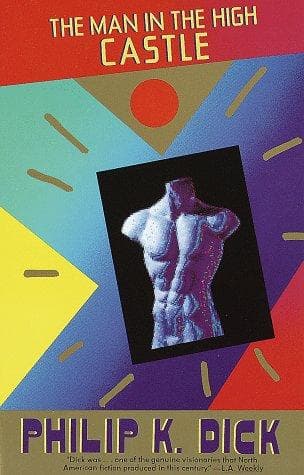
Book details and cover from Google Books.
Ready to read The Man in the High Castle?
Get your copy on Amazon, or listen to it on Audible. We earn a commission if you buy through these links.