
We earn a commission if you buy through these links. Learn more
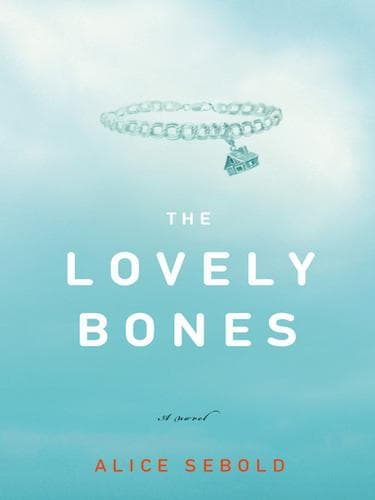
The Lovely Bones
by Alice Sebold
On screen: The Lovely Bones (film, 2009)
Guide by the Books of the Day editors · Updated · How we write our guides
A murdered fourteen-year-old narrates her family's grief from the afterlife, making this an emotionally absorbing, unusually voiced novel about loss rather than a conventional whodunit.
What Creators Say About The Lovely Bones
2 creators reviewed The Lovely Bones on YouTube in 2020, with 37K views between them. Their opinions are their own; we picked these reviews, we didn't write them.
What It's About
The Lovely Bones follows Susie Salmon, a fourteen-year-old girl killed in 1973 in a quiet Pennsylvania suburb, who narrates the aftermath from a place she describes as her own version of heaven. She watches her family, her friends, and the neighbor she knows is responsible as the case unfolds on earth. The premise sounds like a thriller, but the book is less interested in solving a crime than in grief: what it does to the people left behind, how ordinary routines fall apart, and how a family keeps or loses itself.
Sebold's voice is the engine. Susie is observant, wry, and young, and her narration moves between sharp childhood detail and a dreamy, slightly unreal afterlife. The prose is clear and conversational, built from short scenes that shift between the family home, school, and Susie's vantage point above it all. Passages about the afterlife are imaginative and sometimes whimsical, which some readers find consoling and others find jarring against the violence underneath.
Reading it feels like being pulled through a long, painful stretch of time alongside a narrator who can only watch. Suspense comes from wondering whether anyone will notice what Susie sees, not from clever clues. The book is emotionally heavy, dealing directly with sexual violence and its aftermath, and it asks you to sit with uncomfortable grief rather than resolve it neatly.
Read this if you…
- want an emotionally absorbing novel told from an unusual vantage point
- are drawn to stories about grief, family rupture, and the people left behind
- like a narrator with a distinct, observant, and sometimes funny voice
Skip it if you…
- find stories centered on the rape and murder of a child too painful to read
- want a tightly plotted mystery with fair clues and a satisfying detective solution
Key Ideas
- 1
Grief that spreads through a whole family
The novel gives each family member their own way of falling apart. Susie's father becomes consumed by the search, her mother drifts away, and her siblings are forced to grow up in a hurry. Sebold treats mourning as something that changes the shape of a household over years, not as a single moment of sorrow that fades on schedule.
- 2
The dead watching the living
Susie can see her loved ones but cannot reach them, which turns the story into a study of helplessness. Her watching makes the reader complicit in her frustration, since we know what she knows while the living stumble toward the wrong answers. That gap between knowing and being unable to act is the book's sharpest source of tension.
- 3
Justice that depends on being noticed
The investigation moves slowly and is shaped by suspicion, assumptions, and who happens to pay attention. The novel asks how much a victim's truth depends on the people around her listening closely enough. It is less a procedural than a portrait of how easily an obvious answer can be missed.
- 4
An afterlife built from imagination
Susie's heaven is constructed from her own memories, longings, and tastes, and it changes as she changes. These sections offer consolation and a sense of continued growth after death. They also divide readers, since they can feel either tender and original or too sweet next to the story's darker material.
- 5
A coming-of-age story cut short
Much of the book is about who Susie was becoming: her crushes, her friendships, her sense of humor, and her unfinished plans. Sebold makes these ordinary teenage concerns feel vivid enough that their abrupt ending hurts. The loss is less about a body than about a future the reader has come to care about.
Limitations
Critics have pointed to the afterlife sections as sentimental or overly neat, and some readers find the mix of whimsy and brutal violence uneven in tone. The killer is clear from early on, so the book's suspense rests on other questions, which frustrates readers hoping for a puzzle. The 1970s setting is lightly drawn, and some secondary characters serve the plot more than they feel fully realized. Its enormous popularity and film adaptation have also led some readers to come to it with expectations it does not always meet.
Questions Readers Ask
- Is The Lovely Bones a mystery or a thriller?
- Not really in the usual sense. The identity of the killer is known early, so the book is driven more by emotional tension than by detection. If you want clues, twists, and a detective solving a case, you will likely be disappointed. If you want to watch a family and a community respond to a terrible loss, it delivers that powerfully.
- Who is this novel best suited for?
- Readers who enjoy literary fiction with a strong narrative voice, and those comfortable with heavy emotional material. It works well for book clubs because it raises questions about grief, justice, and how communities fail or support victims. It is a quick, readable novel, but it is not a light one, so expect to feel unsettled.
- Is it still worth reading today?
- Yes, especially for its handling of grief and its unusual point of view, which still feel fresh. Some of its choices about the afterlife and tone may read as dated to some readers, but the core of the story about a family's loss remains affecting. Readers who want a darker, more formally adventurous take on similar themes might also look elsewhere.
- Published
- 2000
- ISBN
- 9781407405988
- Difficulty
- beginner
- Category
- Fiction
Book details and cover from Google Books.
Ready to read The Lovely Bones?
Get your copy on Amazon, or listen to it on Audible. We earn a commission if you buy through these links.