
We earn a commission if you buy through these links. Learn more
The Love Hypothesis
On screen: The Love Hypothesis (film, September 23, 2026)
Guide by the Books of the Day editors · Updated · How we write our guides
A fake-dating academic romance with fast, funny banter and a nervous narrator, it is an easy, warm read for anyone who wants escapism with a sharp workplace setting.
What Creators Say About The Love Hypothesis
2 creators reviewed The Love Hypothesis on YouTube between 2025 and 2026, with 205.3K views between them. Their opinions are their own; we picked these reviews, we didn't write them.
What It's About
The Love Hypothesis is a contemporary romance by Ali Hazelwood, published in 2021, and it became one of the most widely read romances of its moment. Its heroine, Olive, is a doctoral student in biology who has built her life around staying organized and out of sight. When a rumor about her spreads through her department, she strikes a bargain with a senior colleague who has his own reasons to want the gossip to die down: they agree to pretend to date.
The book is written in close first person, so you live inside Olive's anxious, self-deprecating head. Much of the humor comes from her overthinking every glance, touch, and comment. Hazelwood leans on the workplace as more than backdrop. Lab politics, grant pressure, and the rhythms of academic life shape how the two leads relate to each other. The tone is light and quick, with a lot of teasing dialogue, and the romantic and sexual content is frequent enough that readers should expect it.
Reading it feels like a comfortable, high-momentum evening rather than a challenge. The prose is easy to follow, and the science references are there for flavor, so you do not need a lab background to enjoy it. What you get is a steady push and pull, plenty of mutual needling, and a satisfying emotional payoff.
Read this if you…
- you want a fast, funny romance with a strong workplace setting
- you enjoy first-person narrators who are anxious, witty, and self-aware
- you like enemies-to-something-more arcs built on banter and slow tension
Skip it if you…
- you want a romance with little or no sexual content on the page
- you find constant internal worrying tiring rather than charming
Key Ideas
- 1
The fake relationship as a truth-forcing device
The pretend arrangement is a clever engine. Because the two leads have to act out intimacy in front of colleagues, they keep getting pushed into moments where their real feelings leak out. The premise works less as a gimmick than as a way to test what each character wants when the stakes feel low and the pressure feels high.
- 2
Career ambition colliding with private life
Hazelwood takes academic pressure seriously. Publishing expectations, funding worries, and the fear of being judged by peers shape the characters' choices. The book treats a PhD as a real emotional and professional strain, which gives the romance more weight than a purely playful setup would have.
- 3
Anxiety as the narrator's comic and emotional lens
Olive's internal monologue is the main source of both humor and vulnerability. She second-guesses constantly, and the reader sees how her insecurity colors every interaction. This makes the book intimate, though some readers find the repeated spiraling wears thin over a long stretch.
- 4
Rivalry and banter as the romantic foundation
The early relationship between the leads runs on needling, competitiveness, and sharp exchanges. Much of the attraction is built through dialogue rather than grand gestures, so the reader feels the tension grow from conversations that seem to be about something else.
- 5
Science as flavor rather than puzzle
Biology and lab details appear throughout, but they serve the characters and setting rather than asking the reader to solve anything. If you enjoy a touch of authenticity in a workplace romance, the scientific texture adds credibility without demanding expertise.
Limitations
The book leans heavily on familiar romance tropes, so readers who have read widely in the genre may find the main beats predictable. Olive's self-doubt is central to the appeal, but it can feel repetitive across a long book. The academic world is also somewhat idealized and streamlined, and secondary characters receive less development than the leads. Some readers have raised concerns about the portrayal of power dynamics between a senior academic and a junior student, and the story's handling of those dynamics is a matter of reader judgment. The writing prioritizes pace and charm over depth, which suits its goals but limits its ambitions.
Questions Readers Ask
- Is The Love Hypothesis a good first romance novel?
- Yes, for most adult readers it is an accessible entry point. The prose is simple, the chapters move quickly, and the premise is easy to grasp. Because the book includes frequent sexual content, readers who prefer a gentler romance may want to look at a clean-romance title first.
- Do I need a science background to enjoy it?
- No. The biology details are present but are used mostly as setting and character texture. The plot depends on relationships and workplace dynamics, so you can follow it comfortably without knowing lab procedures or academic terminology.
- Who should read it if they liked other contemporary romances?
- Readers who enjoy fake-dating or enemies-to-lovers stories with witty dialogue will likely feel at home. If you want more emotional complexity or a slower, more literary romance, you may find this one lighter than you hoped, but it delivers reliable pleasure for its genre.
- Published
- 2021
- ISBN
- 9780593336823
- Difficulty
- beginner
- Category
- Romance
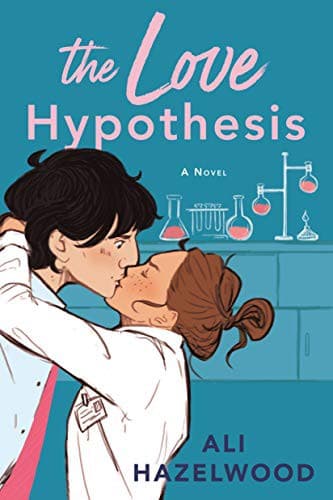
Book details and cover from Google Books.
Ready to read The Love Hypothesis?
Get your copy on Amazon, or listen to it on Audible. We earn a commission if you buy through these links.