
We earn a commission if you buy through these links. Learn more
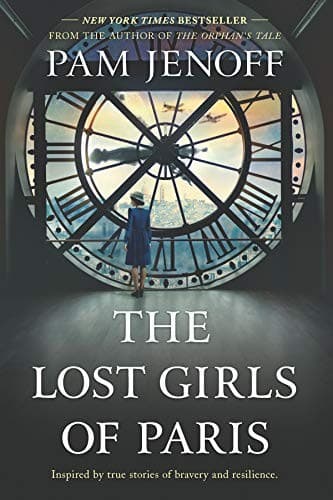
The Lost Girls of Paris
by Pam Jenoff
A postwar mystery built around missing women agents from occupied France, it works well for readers who want a historical page-turner with an emotional core and a sense of what secrecy cost ordinary people.
What It's About
The Lost Girls of Paris is a historical novel that moves between the Second World War and the years just after it. Its engine is a mystery: a found collection of photographs points toward a group of women who served as agents behind enemy lines and then vanished. The book takes its inspiration from the real women who were sent into occupied France by British wartime intelligence, and it uses that history as a frame for a fictional investigation.
The structure alternates between past and present. The present-day search pulls you forward with questions about who these women were and what happened to them, while the wartime chapters gradually fill in the gaps. The prose is clear and brisk, and the chapters are short, so the book reads quickly. It is closer to a page-turner with a historical setting than to a dense literary novel.
Reading it feels like following a trail of clues through a painful period, with a steady focus on personal stakes over military detail. If you want a comfortable, suspenseful way into wartime fiction about women's courage and the strain of living a double life, it delivers that. If you want intricate tactical history or experimental form, you will find it lighter than you might hope.
Read this if you…
- enjoy historical fiction about World War II with a strong mystery at its center
- want a quick, emotionally engaging read rather than dense military history
- are interested in the overlooked roles women played in wartime intelligence
Skip it if you…
- want detailed accounts of espionage tradecraft or battle operations
- prefer experimental or highly literary prose over straightforward storytelling
Key Ideas
- 1
Women's wartime service made invisible
The novel's central concern is how women who took real risks in the war were often forgotten afterward. Their work was secret, their records were thin, and official recognition came slowly or not at all. The book treats this neglect as a second loss layered over the first, which gives the mystery its moral weight.
- 2
Mystery as a way to reconstruct the past
The search for the missing women works as a method of piecing together history from fragments like photographs, half-remembered names, and incomplete accounts. The reader experiences the past the way the investigator does, assembling it bit by bit, which makes the historical material feel like something being discovered rather than lectured.
- 3
The cost of secrecy after the war
Secrecy protected agents during the fighting, but it also isolated them and their families once peace came. The novel shows how the habits of concealment can outlast the danger that required them, shaping relationships and silences for years. This theme gives the postwar sections more emotional texture than a simple search plot would have.
- 4
Friendship and loyalty under pressure
Much of the emotional force comes from the bonds between women who depend on one another in dangerous situations. The book is most affecting when it looks at how trust is tested by fear, compromise, and separation. These relationships matter as much as the puzzle itself.
Limitations
Critics of books like this often point to a tendency toward tidy plotting and characters who are more defined by their circumstances than by inner complexity. The narrative leans on coincidence and emotional beats more than some readers would like. Historical detail is present but kept light, so readers seeking rigorous accuracy about the real agents or the wartime operations should consult dedicated nonfiction. The book also reflects the conventions of popular historical fiction of its time, so it may feel familiar to those already well read in the genre.
Questions Readers Ask
- Is The Lost Girls of Paris based on a true story?
- It draws on the real history of women sent into occupied France by British wartime intelligence, but the central characters and the investigation are fictional. The novel uses that history as a backdrop and inspiration rather than retelling specific events. If you want the factual record, pair it with nonfiction about those agents.
- Who is this book best suited for?
- It suits readers who like accessible historical fiction with a mystery at its core and an emotional focus on women's experiences. It is a good choice for a weekend read or for someone new to the World War II novel. Readers wanting dense historical analysis may find it too light.
- Published
- 2019
- ISBN
- 9780778308614
- Difficulty
- beginner
- Category
- Mystery & Thriller
Book details and cover from Google Books.
Ready to read The Lost Girls of Paris?
Get your copy on Amazon, or listen to it on Audible. We earn a commission if you buy through these links.