
We earn a commission if you buy through these links. Learn more
The Lost
Guide by the Books of the Day editors · Updated · How we write our guides
A classicist's detective-style memoir about reconstructing how six relatives died in the Holocaust, braided with a reading of Homer's Odyssey about loss, recognition, and the search for what is missing.
What Creators Say About The Lost
1 creator reviewed The Lost on YouTube in 2026, with 3 views between them. Their opinions are their own; we picked these reviews, we didn't write them.
What It's About
The Lost (2006) begins as a family mystery. Daniel Mendelsohn, a scholar of classics, learns that several relatives on his grandfather's side were murdered during the Second World War, and that his family knew almost nothing about their fate. The book is his attempt to rebuild their lives and deaths from fragments: documents, photographs, family rumor, and the memories of the few people who knew them or survived.
The structure moves between research trips, interviews, and Mendelsohn's own reflections. He uses his training as a classicist, bringing in the Odyssey and especially Odysseus's long return home as a lens for thinking about how we piece together the past. The reading experience is searching and digressive rather than tidy. The author is candid about his doubts, his relationship with his father and the wider family, and the limits of what can ever be known.
The result is less a finished history than an account of an investigation. Its emotional force comes from the gap between what Mendelsohn can document and what he can only imagine. Expect a mix of narrative, interview, and meditation, with the Holocaust material handled with restraint.
Read this if you…
- enjoy family history where the research itself becomes part of the story
- want to understand how descendants, not only survivors, carry the Holocaust
- like memoir that draws on literature without requiring you to already know it
Skip it if you…
- want a broad history of the Holocaust or of Galicia beyond one family
- prefer a tightly plotted narrative with a clear arc and steady pace
Key Ideas
- 1
Rebuilding a life from scraps
The book's core method is research: archives, photographs, scattered records, and rumor. Mendelsohn shows how much a small paper trail can reveal and how much it stubbornly refuses to say. Readers see the craft of historical inquiry from the inside, including the frustration of dead ends and the small victories of a single confirmed fact.
- 2
Family silence and what it hides
The relatives were rarely discussed in the author's childhood, and that reticence shapes the entire project. The book examines how families decide what to remember and what to leave unspoken, and how a missing branch of the family tree can affect a person's sense of identity long after the fact.
- 3
Homer as a framework for return
The Odyssey is not decoration here. Its themes of wandering, recognition, and coming home give Mendelsohn a way to think about his own quest. Readers who know the poem will get more out of these passages, but the connections are explained clearly enough for those who do not.
- 4
Testimony and the limits of memory
Mendelsohn interviews survivors and people who remember the family, and he treats their accounts with care. Memory is shown to be partial, contradictory, and shaped by time. The book asks how much weight any single testimony can bear and how a researcher should handle conflicting stories.
- 5
Grief without a grave
Without remains or a known place of death, mourning takes a different shape. The author explores how an unknown death differs from a documented one, and why the act of finding out can feel both necessary and inadequate. The question of what the living owe the dead runs through the whole book.
Limitations
The book is long and digressive, and some readers find the classical references and the author's self-questioning indulgent or repetitive. Its scope is a single family, so it cannot stand in for wider histories of the period. Because the sources are fragmentary, much of the narrative rests on careful speculation, which frustrates readers who want firm answers. Research tools have also expanded since 2006, so readers doing their own genealogy may find newer online archives more useful than the methods described here.
Questions Readers Ask
- Do I need to know Homer to read The Lost?
- No. The Odyssey passages are explained as they arrive, and the family story stands on its own. Readers with classical background will recognize more of the allusions, but the book does not depend on that knowledge to be moving and clear.
- How does The Lost compare to Maus?
- Maus is built around a survivor's own testimony, told in comic form. The Lost is written by a descendant searching for people who did not survive, so its focus is investigation and absence rather than firsthand memory. Readers who value one often find the other rewarding as well.
- Is The Lost still worth reading today?
- Yes. The emotional and ethical questions it raises about remembering the dead have not aged. The main change is practical: archives and genealogical databases are now far more accessible, so the research methods described are best read as one example of the work rather than a guide.
- Published
- 2006
- ISBN
- 9780061246043
- Difficulty
- intermediate
- Category
- Biographies
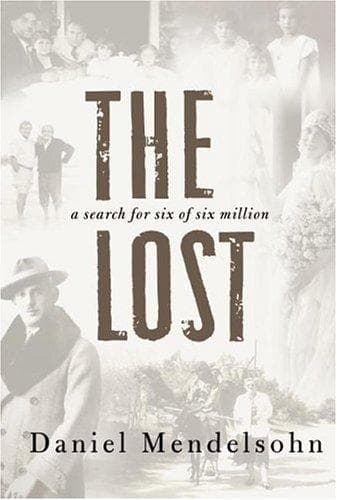
Book details and cover from Google Books.
Ready to read The Lost?
Get your copy on Amazon, or listen to it on Audible. We earn a commission if you buy through these links.