
We earn a commission if you buy through these links. Learn more
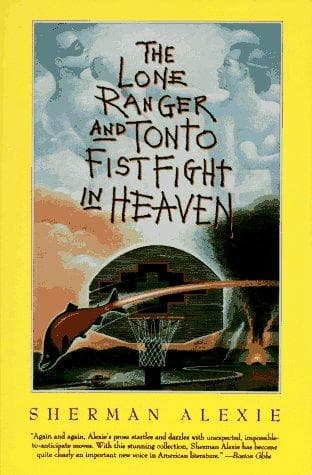
The Lone Ranger and Tonto fistfight in heaven
Guide by the Books of the Day editors · Updated · How we write our guides
A sharp, funny, and heartbreaking set of linked stories about contemporary Native American life on a Spokane-area reservation, where grief, humor, and identity collide in every chapter.
What Creators Say About The Lone Ranger and Tonto fistfight in heaven
2 creators reviewed The Lone Ranger and Tonto fistfight in heaven on YouTube between 2015 and 2019, with 16.1K views between them. Their opinions are their own; we picked these reviews, we didn't write them.
What It's About
The Lone Ranger and Tonto Fistfight in Heaven is a 1993 collection of linked short stories set on and around the Spokane Indian Reservation in eastern Washington. Its characters are mostly Native Americans trying to get through ordinary days shaped by poverty, alcoholism, family damage, and a long history of others deciding who they are. Two figures, Victor and Thomas Builds-the-Fire, recur throughout and give the book its spine, though many stories shift to other voices and other corners of the community.
Alexie writes in short, plain sentences, and his humor often turns bitter or tender without warning. Some pieces are vignettes that run a page or two; others are longer and move between past and present. Characters drift in and out of each other's lives, so the book builds a community rather than following one plot. Reading it feels like sitting in a room where someone tells you a joke and then, without changing tone, tells you something that hurts.
The experience is uneven by design. Some stories land with real force, while others read more like sketches. The collection rewards attention to what comes back: names, objects, grudges, and half-remembered events that resurface in later pieces. It is a quick read on the page, but its emotional weight builds steadily, and many readers find the last stories linger longest.
Read this if you…
- want contemporary fiction that deals honestly with Native American life without a tourist's gaze
- enjoy linked stories where characters return and the picture builds slowly
- like dark humor that stays close to real pain
Skip it if you…
- need a plot-driven novel with a clear arc and resolution
- find repeated scenes of drinking, violence, and despair hard to sit through
Key Ideas
- 1
Humor as a way of surviving pain
Alexie uses wit, exaggeration, and gallows jokes as a survival tool for characters who have little else. The laughter is not a way of escaping the hurt but a way of living alongside it. Readers should expect jokes that arrive in the middle of grief and make the grief harder to dismiss, not easier.
- 2
Pop-culture images of Native people
The title points to a familiar Western pairing, the masked hero and his sidekick, and the stories repeatedly test the stock images Americans grew up with. Characters are constantly measured against movies, television, and stereotypes they never chose. The book asks what it costs to be seen through someone else's script.
- 3
Community built from overlapping lives
Because the stories share characters, places, and history, the reservation emerges as a whole. A minor figure in one piece may become the center of another, and the reader gradually understands how small slights and kindnesses echo across years. The book is closer to a web of relationships than a single narrative arc.
- 4
Fathers, brothers, and damaged inheritance
Family ties are central, often strained by addiction, absence, and unspoken resentment. Many stories deal with men who cannot express love directly and with the ways parents pass down pain. Alexie treats these bonds with honesty, neither sentimentalizing them nor writing them off.
- 5
Plain language carrying dense feeling
The prose is deliberately simple, with few ornaments and quick shifts in tone. That simplicity makes the emotional blows more direct. The style is part of the book's argument: difficult lives do not always need elaborate language to be understood.
Limitations
Critics have argued that the collection leans heavily on certain bleak images, particularly alcoholism and despair, and that some readers may take these portraits as the whole story of the community. The stories vary in strength, and a few feel slight beside the stronger pieces. The book is also very much of its early-1990s moment in its references and attitudes. Its perspective is mainly male, and women's voices are less developed than the men's. Readers looking for a broad survey of Native life today should look elsewhere.
Questions Readers Ask
- Is this a novel or a collection of stories?
- It is a collection of linked short stories rather than a novel. Characters and places recur across the pieces, so the book has a cumulative effect, but each story can also stand alone. You can read it in one sitting or in small portions without losing the thread, though the connections reward a continuous read.
- Is The Lone Ranger and Tonto Fistfight in Heaven still worth reading?
- Yes, especially if you want a direct, funny, and unsentimental look at reservation life. Some references feel of their time, but the core themes of grief, family, and identity remain strong. It is also a useful entry point for Alexie's later work, including the 1998 film Smoke Signals, which drew on material from these stories.
- What should I read if I want something similar?
- If you like the blend of humor and hardship, try Louise Erdrich's novels set in North Dakota, which also follow multiple generations of connected characters. For short fiction with a similar sharp voice about marginalized communities, Alexie's own later collections are a natural next step.
- Published
- 1993
- ISBN
- 9780802141675
- Difficulty
- beginner
- Category
- Fiction
Book details and cover from Google Books.
Ready to read The Lone Ranger and Tonto fistfight in heaven?
Get your copy on Amazon, or listen to it on Audible. We earn a commission if you buy through these links.